Introduction
When most travelers plan an escape, their minds default to overcrowded hill stations or commercialized coastal strips where you spend more time navigating crowds than absorbing the atmosphere. Ranchi offers a refreshing antidote to that sensory overload. Sitting gracefully atop the Chota Nagpur Plateau, the capital of Jharkhand is a realm of cascading natural waterfalls, ancient tribal heritage, and dense Sal forests that whisper centuries of untold history.
Stepping into Ranchi feels like reclaiming the lost soul of authentic Indian travel. It is a destination where monsoon mists cling to green valleys, local street corners sizzle with traditional spices, and indigenous traditions form the heartbeat of daily life. If you seek deep roots, raw wilderness, and a genuine cultural connection away from tourist traps, this plateau city awaits your footprint.
Why Ranchi is a must-visit city
Ranchi serves as a pivotal bridge between Jharkhand’s rich Indigenous history and its modern regional evolution. Geographically elevated at roughly 650 meters above sea level, the city boasts a pleasant climate year-round, earning it historical renown as a favored summer retreat. Historically, it stands as the heartland of sacred tribal movements led by legendary figures like Birsa Munda, infusing the terrain with profound cultural pride and ancestral identity.
Accessibility is remarkably seamless for modern travelers. Birsa Munda Airport connects directly to major metro hubs, while Ranchi Junction links the city to national rail corridors. Well-paved state highways make road trips across neighboring valleys a dream for motorists, whether you are a solo backpacker, a couple on a road trip, or a family seeking nature retreats.
The core travel circuit revolves around two primary loops: the eastern Waterfall Circuit encompassing dramatic cascades like Hundru and Dassam, and the northern Valley & Scenic Circuit featuring Patratu and urban lakeside hubs.
| Travel Dimension | Regional Highlight |
|---|---|
| Elevation & Climate | ~650m altitude; temperate winters and lush, misty monsoons |
| Primary Airport | Birsa Munda Airport (IXR), ~5 km from city center |
| Key Rail Hubs | Ranchi Junction (RNC) & Hatia (HTE) |
| Signature Landscape | Plateau terrain, Sal forests, natural waterfalls, and serpentines |
| Cultural Heritage | Tribal art, Sohrai wall craft, ancient stone temples |
Best Places or Experiences
Hundru Falls
Hundru Falls stands as one of the most magnificent spectacles in Jharkhand, where the Subarnarekha River plunges down a sheer 320-foot drop over carved rock formations. The sheer force of the falling water creates mist clouds that hover over the rocky pool below, surrounded by dense greenery that blossoms during the rainy season.
Walking down the flight of stairs to the base of the falls reveals a landscape shaped over millennia by rushing waters. The surrounding rocks bear smooth, bizarrely sculpted grooves that attract nature lovers, photographers, and geology enthusiasts alike
.
Hundru Falls on the Subarnarekha River.
- Location: Ranchi District, approximately 45 km east of the main city center.
- Why it is worth visiting: It is one of the highest cascades in the state, offering breathtaking scale and pristine natural surroundings.
- Best things to do: Hike down the stone steps for panorama shots, explore the unique rock formations, and sample fresh local boiled corn at shoreline stalls.
- Best time to visit: Post-monsoon months from September to February for ideal water volume and comfortable trekking temperatures.
- Ideal for whom: Adventure seekers, nature photographers, and fitness enthusiasts capable of handling stair climbs.
- Travel tip: Guard your footing on wet granite surfaces, and avoid swimming in deep rocky basins where currents remain dangerously unpredictable.
Dassam Falls
Tucked away near Taimara village, Dassam Falls is formed by the Kanchi River breaking into ten distinct streams as it leaps across a horseshoe-shaped cliff. The roar of the water echoing through the surrounding forest creates an invigorating natural amphitheater.
The surrounding forest reserve offers quiet walking paths shielded under a thick canopy of leaves. Indigenous flora thrives along the riverbank, giving visitors an authentic slice of the Chota Nagpur woodland ecosystem
.
Multi-tiered stream flow at Dassam Falls.
- Location: Bundu precinct, around 40 km southeast of central Ranchi along the Tata Highway.
- Why it is worth visiting: The unique multi-stream drop creates a stunning natural spectacle unmatched by single-drop waterfalls.
- Best things to do: Capture wide-angle landscape photos from designated viewing platforms, enjoy a picnic along shaded forest trails, and observe regional birds.
- Best time to visit: October through January when the air is crisp and the cascade flow is clear and steady.
- Ideal for whom: Photographers, road trippers, couples, and small travel groups looking for scenic day trips.
- Travel tip: Strictly adhere to barrier signs; the submerged rocks are deceptively slippery and water depths increase suddenly.
Patratu Valley
Patratu Valley is a masterclass in civil engineering merged with natural grandeur. The winding road snakes through deep green hills with sharp hairpin curves, offering elevated viewpoints over the shimmering blue expanse of Patratu Dam below.
Driving along this corridor provides an exhilarating experience as sunlight filters through the mountain ridges. At the base, the dam reservoir features modern waterfront parks, boat rides, and peaceful spots to watch the sunset over distant hilltops
.
Serpentine bends of Patratu Valley.
- Location: Ramgarh district border, roughly 35 km north of Ranchi city.
- Why it is worth visiting: It features one of India’s most scenic ghat drives, offering sweeping panoramic vistas.
- Best things to do: Drive the hairpin turns, take a speedboat ride on Patratu Dam Lake, and photograph the sunset from peak lookout points.
- Best time to visit: Late afternoon around 4:30 PM to catch golden hour lighting over the curves and the lake.
- Ideal for whom: Motorbike riders, road-trip enthusiasts, couples, and landscape photography buffs.
- Travel tip: Drive cautiously around blind hairpin bends as local trucks and buses often swing wide across center lanes.
Jagannath Temple Ranchi
Perched high atop a small hillock in Dhurwa, this 17th-century shrine built by King Aani Nath Shahdeo closely resembles the iconic architectural silhouette of the Puri Jagannath Temple. The climb up the stone steps provides both a spiritual journey and an expansive view of Ranchi’s urban skyline.
The temple hosts a vibrant annual Rath Yatra festival that draws devotees from across eastern India. The peaceful atmosphere at the hilltop makes it a wonderful place to reflect, especially during early morning prayers.
- Location: Dhurwa hill top, approximately 10 km southwest of Ranchi Railway Station.
- Why it is worth visiting: It combines 300-year-old historic architecture with elevated city views.
- Best things to do: Climb the historic stone steps, attend the peaceful evening aarti, and admire traditional Orissa-style temple stone carvings.
- Best time to visit: Early morning between 6:00 AM and 8:30 AM or late afternoon for cooler temperatures and tranquil reflection.
- Ideal for whom: Culture enthusiasts, history buffs, families, and senior travelers.
- Travel tip: Avoid carrying leather items up into the main sanctum, and utilize the vehicle access ramp at the rear if climbing stairs poses accessibility challenges.
Rock Garden and Kanke Dam
Carved directly out of the granite formations surrounding Gonda Hill, Ranchi’s Rock Garden sits beside the quiet waters of Kanke Dam. The park features imaginative stone sculptures, iron bridge pathways, and terraced seating areas overlooking the reservoir.
It serves as a favorite urban sanctuary where locals unwind in the evening. Watching the sun dip below the dam horizon while soft breezes blow off the lake offers a relaxing contrast to daytime excursions.
Rock Garden terraces overlooking Kanke Dam.
- Location: Gonda Hill, Kanke Road, roughly 8 km north of Ranchi city core.
- Why it is worth visiting: It blends creative eco-landscaping with direct lake views right within city limits.
- Best things to do: Stroll across the wrought-iron footbridges, photograph sunset reflections across Kanke Dam, and enjoy street food snacks near the main entrance gates.
- Best time to visit: 4:00 PM to 6:30 PM for cool lake breezes and golden twilight hues.
- Ideal for whom: Families with children, couples seeking relaxed evening walks, and casual strollers.
- Travel tip: Pair this visit with a warm culinary stop along Kanke Road to sample local evening street delicacies like Dhuska.
Offbeat Exploration: Hidden Gems Tourists Miss
McCluskieganj Colonial Enclave
Located roughly 60 km northwest of Ranchi, McCluskieganj is a quiet town founded in the 1930s as a haven for the Anglo-Indian community. Walking through its shady avenues reveals old European-style bungalows, old stone churches, and overgrown orchards that feel frozen in time. It offers a nostalgic peek into a forgotten chapter of regional history.
Jonha Falls (Gautamdhara)
While Hundru draws larger crowds, Jonha Falls offers a quieter experience. Legend holds that Lord Buddha spent time meditating near these waters. Visitors descend roughly 500 well-maintained stone steps into a wooded gorge where the Raru River tumbles over granite terraces. An adjacent monastery adds to the serene environment.
Tagiri Hill and Tagore Hill Art Precinct
Named after the family of Nobel laureate Rabindranath Tagore—whose elder brother Jyotirindranath built a retreat here—Tagore Hill rises abruptly above Morabadi. The isolated hilltop tower was a quiet creative refuge. Climbing its steps rewarded Tagore with sweeping views of the plateau landscape that inspired his late literary works.
Detailed Practical Guidance for Travelers
| Destination | Standard Entry Fee | General Timings | Best Local Food Options Nearby | Recommended Nearby Attractions |
|---|---|---|---|---|
| Hundru Falls | ₹10 – ₹20 entry | 8:00 AM – 5:00 PM | Local roadside Chana Ghugni & Tea stalls | Getalsud Dam |
| Dassam Falls | ₹10 – ₹20 entry | 8:30 AM – 4:30 PM | Fresh boiled corn, Dhuska vendors near parking | Sita Falls |
| Patratu Valley | Free road access | Open 24 Hours (Park: 9 AM – 6 PM) | Lakeview resort cafes, fried river fish stalls | Patratu Dam Lake |
| Jagannath Temple | Free entry | 5:00 AM – 12:00 PM, 4:00 PM – 8:30 PM | Traditional sweets, Sattu Sharbat outside complex | JSCA International Stadium |
| Rock Garden | ₹20 per head | 9:00 AM – 7:00 PM | Street food carts (Puchka, Chowmein, Dhuska) | Kanke Dam Park |
Logistics & On-Ground Navigation
Local Transport Options
- Auto-Rickshaws & E-Rickshaws: Excellent for short hops within city districts like Main Road, Lalpur, and Old Hazaribagh Road. Shared autos operate along fixed routes at economical rates.
- App-Based Taxis: Uber and Ola operate reliably within city bounds, ideal for transfers between hotel quarters, railway stations, and airport terminals.
- Private Cab Rentals: Renting a car with a driver for a full day (8–10 hours) is the most stress-free option for navigating out-of-town spots like Hundru, Dassam, and Patratu Valley.
- Two-Wheeler Rentals: Local rental outlets cater to solo travelers and couples looking to ride through Patratu Valley independently.
Budget Planning
- Backpacker Tier (₹1,200 – ₹1,800 per day): Stays in budget guesthouses near the railway station, meals at local eateries serving Dhuska and Thalis, and travel via shared autos and state buses.
- Comfort & Mid-Range Tier (₹3,500 – ₹6,000 per day): Stay in a 3-star business or boutique hotel, enjoy meals at casual dining restaurants, and hire private cabs for out-of-town trips.
Safety and Inclusivity Tips
- For Families: Stick to well-traveled daytime hours for waterfall visits. Ensure children keep a safe distance from slippery cliff edges at view points.
- For Couples: Patratu Valley and Rock Garden offer romantic sunset settings. It is best to return from remote forest routes back to city limits before dusk.
- General Safety Advice: Carry adequate cash when venturing into rural waterfall zones, as cellular signals can drop, affecting digital payments. Always keep hydrated during outdoor treks.
Strategic Travel Planning Guardrails
Travel Planning Tips for Ranchi
- Timing Your Trip: Visit between October and March for cool, pleasant weather. Monsoon months (July–September) make the waterfalls rage dramatically, but require caution on slippery trails.
- Payment Flexibility: While digital UPI payments work across city stores, carry paper currency for parking fees, forest entry gates, and rural snack vendors.
- Smart Packing: Bring sturdy trail shoes with non-slip grips for waterfall staircases, along with lightweight jacket layers for cooler plateau evenings.
- Local Culinary Etiquette: Always try local street food freshly made and hot. Dhuska served with spicy chickpea curry makes an authentic local breakfast.
- Respect Indigenous Sites: Many woodland areas carry sacred significance for tribal communities (Sarna grounds). Avoid littering or disturbing pristine nature.
Common Mistakes to Avoid
- Do not attempt to pack Hundru, Dassam, and Patratu into a single day; spread out your route geographically to avoid long drives.
- Avoid staying exclusively within modern commercial malls when historic neighborhoods like Morabadi offer richer cultural experiences.
- Don’t rely solely on public transport for remote waterfalls; hiring a dedicated vehicle saves hours of transit time.
- Don’t skip authentic local food joints in favor of standard multi-cuisine hotel menus.
- Never cross safety barriers at waterfall zones just to take close-up selfies on wet granite rocks.
Suggested Itinerary Blueprints
1-Day Quick Dash (Express Ranchi Highlights)
Ideal for business travelers with a day to spare. Start early at Jagannath Temple for morning views, drive directly down to Dassam Falls for a morning nature walk, return to the city for a traditional lunch, and end your afternoon catching the sunset at Patratu Valley.
2-Day Deep-Dive (The Classic Plateau Circuit)
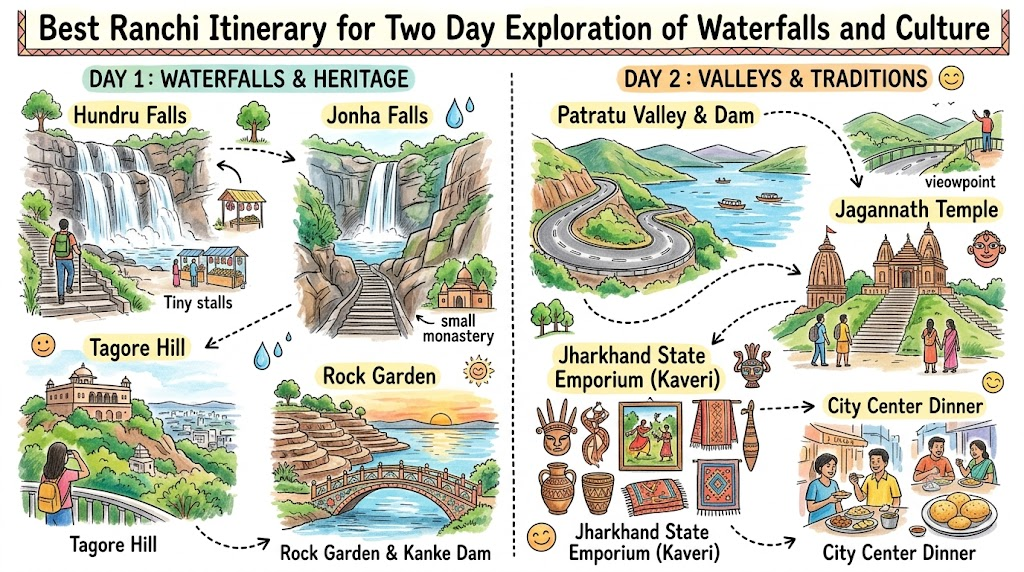
- Day 1: Waterfalls & Heritage: Start early by exploring the stunning drop at Hundru Falls. Head to Jonha Falls for lunch and relaxation, then return to the city by late afternoon to explore Tagore Hill and end with a relaxed evening around Rock Garden and Kanke Dam.
- Day 2: Valleys & Traditions: Drive through the winding turns of Patratu Valley and enjoy morning boating on Patratu Lake. Return via Jagannath Temple, shop for local handicraft souvenirs at Jharkhand State Emporium (Kaveri), and enjoy dinner in the city center.
3-Day Complete Weekend Travel Plan (Ultimate Jharkhand Experience)
- Friday: Arrive in Ranchi, check into your hotel, and spend a relaxed evening sampling street food near Morabadi Ground before watching the sunset at Rock Garden.
- Saturday: Take a full-day waterfall road trip covering Hundru Falls and Dassam Falls, stopping for authentic regional meals at roadside dhabas along the highway.
- Sunday: Take a morning excursion out to the scenic hairpin bends of Patratu Valley, followed by a afternoon trip to McCluskieganj or a tour of Jagannath Temple before your departure flights or train connections.
Common Tourist Mistakes to Avoid
- Geographic Blunders: Trying to visit Hundru Falls (east) and Patratu Valley (north) on the same morning will leave you stuck in transit for hours. Group your destinations by region.
- Commercial Traps: Spending your time in air-conditioned shopping malls deprives you of Ranchi’s charm. Spend your evenings at lively open-air spots like Morabadi Ground instead.
- Neglecting Modern/Alternative Zones: Skipping the artsy cafes, green avenues, and quiet book corners of Morabadi and Bariatu means missing out on the city’s modern cultural vibe.
- Transport Overpayment: Always negotiate auto-rickshaw fares in advance or cross-reference pricing on ride-hailing apps to ensure fair rates.
- Luxury Dining Bias: Eating only inside hotel dining rooms misses out on iconic local street-side flavors like piping-hot Dhuska, Pitha, and fresh Sattu Sharbat.
Frequently Asked Questions
1. What is the best time of year to visit Ranchi for waterfalls?
The ideal months to visit Ranchi’s waterfalls are from September to February. During this post-monsoon window, water levels remain impressive while the weather stays pleasantly cool for outdoor exploration.
2. How far is Patratu Valley from Ranchi Airport?
Patratu Valley is located approximately 40 kilometers north of Birsa Munda Airport. The drive takes about 1 hour and 15 minutes via the Kanke road route.
3. Is it safe to swim in Hundru and Dassam Falls?
Swimming in the plunge pools at Hundru and Dassam Falls is strongly discouraged. Deep underwater currents and submerged granite edges make swimming dangerous despite how calm the surface might look.
4. What is the iconic local breakfast food to try in Ranchi?
The most popular regional breakfast is Dhuska, a deep-fried snack made from a fermented batter of rice and chana dal. It is served hot alongside a spicy chickpea curry (Ghoogni) and sweet chutney.
5. How many days are sufficient for a complete Ranchi tour?
A 2-day itinerary covers all major landmarks, waterfalls, and scenic drives comfortably without feeling rushed. A 3-day trip allows for a more relaxed pace and offbeat exploring.
6. Can I hire cab services easily for full-day sightseeing in Ranchi?
Yes, private cabs can be easily hired through local travel agencies or app-based rental services for 8 to 12-hour packages to cover distant spots like Patratu and Dassam.
7. Is Ranchi suitable for a family vacation with elderly members?
Ranchi is very family-friendly. While steep waterfall steps require moderate physical effort, spots like Patratu Lake, Rock Garden, and Jagannath Temple offer easy ramp or vehicle access.
8. What unique souvenirs should I buy in Ranchi?
Look for authentic tribal handicrafts, bamboo decor items, brass figurines, Dokra craft, and handmade Sohrai paintings available at state-run emporiums.
9. Are digital UPI payments widely accepted across Ranchi?
Digital UPI payments are accepted almost everywhere within city bounds. However, carrying physical cash is advisable for parking fees and small vendors near distant waterfall reserves.
10. How cold does Ranchi get during winter months?
Winter temperatures between November and January range from 8°C to 22°C. Light to medium woolen clothing is recommended for cool mornings and evenings.
11. Is public transport available directly to Dassam Falls?
Direct public buses to Dassam Falls are limited and infrequent. Hiring a private auto or cab from Ranchi is the most reliable way to visit.
12. Why is Ranchi referred to as the City of Waterfalls?
Ranchi earned this nickname because the surrounding Chota Nagpur Plateau features numerous rivers tumbling over steep rock escarpments, creating a dense cluster of spectacular cascades within a 50 km radius.
Conclusion
Choosing Ranchi over a standard, crowded tourist destination rewards you with raw nature, rich cultural history, and calm plateau vistas. Standing beneath misty waterfall canopies, driving along the scenic curves of Patratu Valley, and sharing local street food allows you to connect with the authentic heart of Jharkhand. It is an invitation to slow down, breathe deeply, and uncover a destination where every winding road tells a genuine story.
