Introduction
While mainstream travelers flock to overcrowded, commercialized hill stations, discerning explorers seek places where nature and culture retain their raw, unvarnished soul. Tucked away on the undulating Chota Nagpur Plateau, Ranchi presents a refreshing escape defined by misty forest canopies, thunderous cascading waterfalls, and ancient tribal heritage.
This city does not put on an artificial show for tourists. Instead, it invites you into an authentic sanctuary where ancient Sal trees whisper centuries of folklore and sacred river bends carve through granite amphitheaters. Stepping onto this plateau connects you directly with the vibrant pulse of Jharkhand.
Why Ranchi is a must-visit city
Ranchi serves as the beating heart of Jharkhand, boasting immense historical, geographical, and cultural significance. Perched at an elevation of roughly 650 meters, its pleasant plateau climate historically earned it the title of the summer capital of Bihar. Modern infrastructure makes the city easily accessible via Birsa Munda Airport, a robust direct railway network, and well-maintained national highways.
The travel circuit around Ranchi offers an incredible blend of eco-tourism, spiritual heritage, and tribal storytelling. Within a short drive from the city center, urban roads give way to winding serpentine ghats, dense reserve forests, and pristine river basins.
| Regional Attribute | Highlights & Specifications |
|---|---|
| Geographic Setting | Chota Nagpur Plateau (650m elevation) |
| Primary Attractions | Cascading waterfalls, serpentine valleys, tribal heritage |
| Best Travel Season | September to March (Post-monsoon clarity) |
| Transit Access | Birsa Munda Airport (IXR), Ranchi Junction (RNC) |
| Local Culinary Staples | Dhuska with Ghugni, Pittha, Rugra, Bamboo Shoot Curry |
Best Places or Experiences in Ranchi
1. Hundru Falls
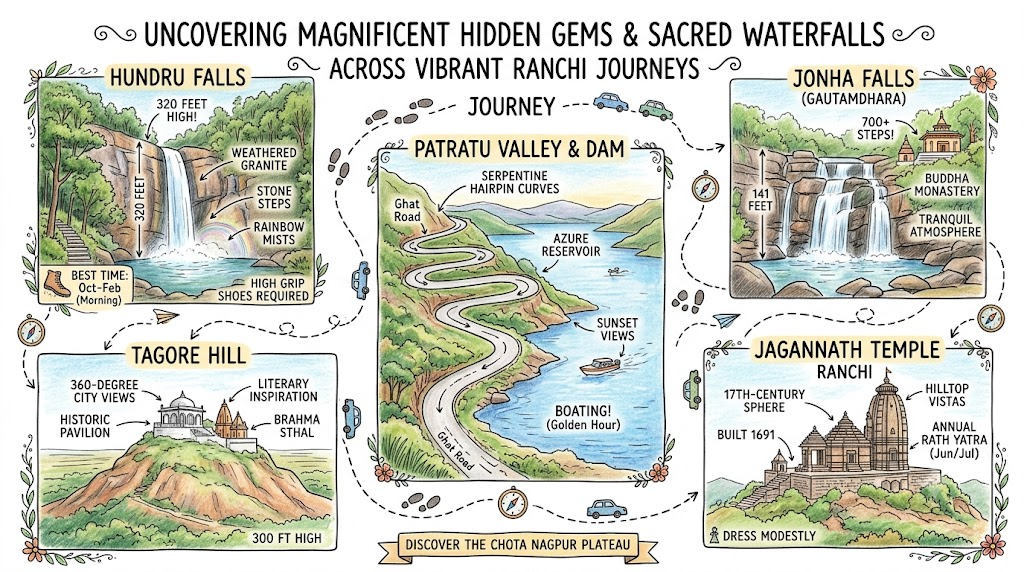
Hundru Falls represents one of nature’s most spectacular displays on the Chota Nagpur Plateau. Formed by the Subarnarekha River plunging from a staggering height of 320 feet, the falls cascade over massive, weathered granite rocks into a foaming pool below.
Over millennia, the sheer force of the falling water has sculpted extraordinary rock formations and natural pools around the base. Surrounded by dense, green forest cover, reaching the base via a series of stone steps offers an exhilarating sensory experience filled with roaring waters and cool mist
.
Hundru Falls plunging down weathered granite cliffside.
- Location: Purulia Road, approximately 45 km east of Ranchi city center.
- Why it is worth visiting: It is the 34th highest waterfall in India and offers unmatched grand visual scale during post-monsoon months.
- Best things to do: Hike down the stone stairwell, photograph the rainbow mists at the base pool, and explore nearby riverbed rock formations.
- Best time to visit: October through February, ideally between 8:00 AM and 11:00 AM for soft morning light.
- Ideal for whom: Adventure seekers, landscape photographers, and nature enthusiasts.
- Travel tip: Wear sturdy footwear with high rubber grip, as wet granite surfaces near the plunge pool are extremely slick.
2. Patratu Valley and Dam
Patratu Valley delivers a world-class scenic driving experience that rivals famous mountain passes across the globe. As the road winds down toward the azure reservoir, travelers are treated to a dramatic ribbon of hairpin curves carved into lush green hillsides.
At the base lies Patratu Dam, an expansive water reservoir built across the Nalkari River. The peaceful waterfront combined with scenic boating options makes it an irresistible spot for unwind sessions during golden hour
.
Aerial perspective of the serpentine Patratu Valley pass.
- Location: Ramgarh district, around 35 km north of Ranchi center.
- Why it is worth visiting: Breathtaking panoramic viewpoints over serpentine hairpin turns leading to a serene lake shoreline.
- Best things to do: Drive the winding ghat road, take a motorboat ride at Patratu Lake Resort, and capture sunset shots from higher road overlooks.
- Best time to visit: November to March; late afternoon hours (4:00 PM to 6:30 PM) provide spectacular golden hour lighting.
- Ideal for whom: Road-trip lovers, couples, photography enthusiasts, and weekend wanderers.
- Travel tip: Avoid driving back during late night hours; mist and sharp turns require careful daylight navigation.
3. Jonha Falls (Gautamdhara)
Jonha Falls, affectionately known as Gautamdhara, carries both exceptional natural beauty and deep spiritual mythology. The waterfall plunges 141 feet down an edge carved out by the edge of the plateau, nestled inside lush foliage.
Legend holds that Lord Buddha spent time meditating at this tranquil site, giving rise to its secondary name. A sacred monastery and temple perched near the top of the waterfall steps reinforce the peaceful, reflective atmosphere of the valley
.
Terraced cascades of Jonha Falls plunging into a natural basin.
- Location: Ranchi-Purulia Highway, nearly 40 km east of the capital.
- Why it is worth visiting: A unique combination of tranquil Buddhist spiritual legacy and dramatic tiered waterfall architecture.
- Best things to do: Descend the 700+ clean stone steps, visit the Buddha shrine at the hilltop, and relax beside the calm downstream currents.
- Best time to visit: September to January, preferably early morning before weekend crowds arrive.
- Ideal for whom: Peace seekers, culture explorers, and active walkers.
- Travel tip: The climb back up the steps can be strenuous, so carry adequate drinking water and take deliberate rests along the covered benches.
4. Tagore Hill
Rising prominently above the city landscape, Tagore Hill holds a honored spot in the literary and artistic history of Eastern India. Standing at 300 feet, this isolated hillock served as an inspirational retreat for Jyotirindranath Tagore, the elder brother of Nobel laureate Rabindranath Tagore.
The hilltop houses Brahma Sthal and historic structures where literary masterworks and musical compositions were penned. The elevated vantage point provides sweeping views of the urban skyline framed by distant green hills
.
Sunset view from the historic pavilion atop Tagore Hill.
- Location: Morabadi, just 7 km from Ranchi Railway Station.
- Why it is worth visiting: Intimate connection to the Tagore family legacy paired with unmatched 360-degree city views.
- Best things to do: Tour the restored heritage buildings, photograph the city skyline during sunset, and enjoy peaceful meditation on the breeze-swept summit.
- Best time to visit: Year-round; best between 4:30 PM and 6:30 PM for sunset views.
- Ideal for whom: History buffs, writers, poets, and casual urban explorers.
- Travel tip: Combine this visit with a stroll through nearby Morabadi Ground and local handicrafts stalls.
5. Jagannath Temple Ranchi
Built in 1691 AD by King Aani Nath Shahdeo, this architectural icon closely resembles the world-famous Puri Jagannath Temple. Perched majestically atop a small hillock, its white-washed stone spire stands as a symbol of regional faith and historical resilience.
The temple comes alive during the annual Rath Yatra festival, drawing thousands of devotees from across Jharkhand. Climbing the elevated stone ramp reveals impressive views of the surrounding countryside and city outskirts
.
The classic elevated architecture of Ranchi Jagannath Temple.
- Location: Dhurwa, approximately 10 km southwest of the city core.
- Why it is worth visiting: A 17th-century architectural masterpiece offering rich spiritual tradition and hilltop panoramic vistas.
- Best things to do: Attend the tranquil evening aarti, admire the intricate stone carvings, and participate in the vibrant Rath Yatra if visiting in June/July.
- Best time to visit: October to March for pleasant weather; morning hours offer quiet reflection.
- Ideal for whom: Heritage enthusiasts, families, and spiritual travelers.
- Travel tip: Dress modestly out of respect for temple traditions and remove footwear before ascending the main temple steps.
Offbeat Exploration: Hidden Gems Tourists Miss
McCluskieganj Colonial Settlement
Founded in the 1930s as a haven for the Anglo-Indian community, this quiet hamlet situated 60 km from Ranchi feels frozen in time. Old colonial bungalows with tiled roofs, sprawling lawns, and quiet forest pathways offer an authentic retro retreat away from modern noise.
Pithoria Fort and Chutia Temple Trail
Dating back centuries, the ruined fort at Pithoria and the historic Chutia temple complex represent forgotten chapters of Nagvanshi royal heritage. Exploring these weathered brick ruins reveals ancient stone inscriptions and unique regional masonry styles unknown to mainstream tourists.
Sita Falls and Surda Forest Circuit
Hidden beyond the popular waterfall trails, Sita Falls drops gracefully into a deep gorge surrounded by untouched Sal forest cover. The trek through dense canopy trails offers absolute silence interrupted only by bird song and rushing stream currents.
Detailed Practical Guidance for Travelers
| Destination | Standard Entry Fee | General Timings | Best Local Food Options Nearby | Recommended Nearby Attractions |
|---|---|---|---|---|
| Hundru Falls | ₹10 per head | 8:00 AM – 5:00 PM | Local tea stalls, fried Dhuska with spicy curry | Getalsud Dam, Jonha Falls |
| Patratu Valley | Free access | Open 24 Hours (Boating: 9 AM – 6 PM) | Lakeview resorts, fresh water fish fry | Patratu Thermal Power Plant lake |
| Jonha Falls | ₹10 per head | 8:00 AM – 4:30 PM | Small roadside eateries selling Sattu drinks | Sita Falls, Sita Temple |
| Tagore Hill | Free access | 6:00 AM – 6:30 PM | Morabadi street food stalls, Chana Bhatura | Rock Garden, Kanke Dam |
| Jagannath Temple | Free access | 5:00 AM – 12:00 PM, 4:00 PM – 8:30 PM | Traditional sweets, Prasad stalls outside | JSCA International Cricket Stadium |
Logistics & On-Ground Navigation
Local Transport Options
Navigating Ranchi requires matching your transport mode to your specific itinerary:
- Railways & Buses: Ranchi Junction and Hatia Station link directly to major Indian metros. State and private buses connect suburban districts efficiently.
- Auto-Rickshaws & E-Rickshaws: Excellent for short-distance inner-city travel (e.g., Main Road, Lalpur, Morabadi) at very low rates.
- App-Based Cabs & Rentals: Services like Ola and local car rentals are strongly recommended when visiting outer waterfall circuits like Hundru, Dassam, or Patratu Valley.
Budget Planning
- Backpacker / Low-Budget Tier: ₹1,200 – ₹1,800 per day (Homestays, local bus/shared auto travel, authentic street stalls).
- Mid-Range / Comfort Tier: ₹3,500 – ₹5,500 per day (3-star boutique hotels, private cab hires, dine-in regional restaurants).
Safety and Inclusivity Tips
- For Families: Stick to well-maintained sites like Rock Garden, Patratu Lake Resort, and Tagore Hill during standard daytime hours.
- For Couples: Respect local cultural sensitivities in public spaces and ensure return transport from distant waterfalls is secured before dusk.
- General Safety: Waterfalls feature powerful underwater currents and slippery rock edges; strictly obey safety boundary fences.
Strategic Travel Planning Guardrails
Travel Planning Tips for Ranchi
- Book seasonal trips in advance: Post-monsoon months (October to February) see higher tourist footfall; reserve hotels early.
- Carry physical cash: Digital payment connectivity can be spotty around rural waterfall zones and forest valleys.
- Respect local tribal customs: Always seek permission before photographing tribal villagers or sacred grove rituals (Sarna sites).
- Pack appropriate footwear: Sturdy trekking shoes with high grip are essential for negotiating wet staircases and rocky forest trails.
- Layer your clothing: Winter mornings and evenings on the plateau drop down to 8°C–10°C, requiring light woolens.
Common Mistakes to Avoid
- Over-packing daily routes: Attempting to visit Hundru, Dassam, and Patratu on a single day leads to exhausting driving hours.
- Ignoring monsoon safety warnings: Venturing into plunge pools during heavy rain surges carries extreme drowning hazards.
- Skipping authentic local cuisine: Sticking exclusively to hotel buffets deprives you of tasting genuine Dhuska, Rugra, and Chilka Roti.
- Assuming late-night cab availability: Ride-hailing apps rarely operate late at night in distant suburban waterfall sectors.
- Overpaying unmetered auto drivers: Always negotiate auto fares beforehand or cross-check rates on app interfaces.
Suggested Itinerary Blueprints
1-Day Quick Dash (Cascades & Heights Express)
- Target Audience: Express travelers and short business transit visitors.
- Morning: Early 7:30 AM drive to Hundru Falls to enjoy morning mist and light.
- Afternoon: Return toward town, visit Tagore Hill for literary heritage and lunch nearby.
- Evening: Sunset drive up to Jagannath Temple followed by street food exploration at Morabadi.
2-Day Deep-Dive (Heritage, Hills, & Waterfalls Route)
- Day 1: Explore Jonha Falls and Sita Falls circuit in the morning. Afternoon visit to Jagannath Temple and evening relaxing at Rock Garden / Kanke Dam.
- Day 2: Scenic morning drive across Patratu Valley with boating at Patratu Dam. Afternoon trip to Tagore Hill and shopping for authentic tribal handicrafts on Main Road.
Complete Weekend Travel Plan (Ultimate Chota Nagpur Expedition)
- Friday: Arrive in Ranchi, check-in, and spend a relaxing evening at Tagore Hill followed by dinner featuring local delicacies.
- Saturday: Full-day waterfall expedition covering Hundru Falls and Dassam Falls. Evening stroll through urban cultural hubs.
- Sunday: Day trip to the stunning serpentines of Patratu Valley, followed by offbeat exploration at McCluskieganj before evening departure.
Common Tourist Mistakes to Avoid
Geographic Blunders
Attempting to group Patratu Valley (North) and Dassam Falls (South) into a single morning schedule leads to hours wasted in transit. Group your routes logically by geography.
Commercial Traps
Spending excessive vacation hours inside air-conditioned shopping malls deprives you of experiencing Ranchi’s atmospheric weekly tribal markets (Haats) and green forest spaces.
Neglecting Modern/Alternative Zones
Overlooking the quieter, artistic residential expansions around Kanke, Morabadi, and Dhurwa deprives travelers of seeing Ranchi’s burgeoning cafe culture and art spaces.
Transport Overpayment
Accepting initial non-metered auto quotes at railway stations often leads to double charges. Use official app estimates to negotiate fair pricing.
Luxury Dining Bias
Eating solely at high-end hotel chains means missing out on the true soul of Jharkhand cuisine found in simple, clean local eateries serving fresh Pittha and Ghugni.
Frequently Asked Questions
1. What is the absolute best time of year to visit Ranchi for waterfalls?
The ideal timeframe runs from September to February. The post-monsoon months of September and October showcase waterfalls at maximum roar, while winter offers pleasant daytime weather for outdoor hikes.
2. Is Ranchi safe for solo travelers and families?
Yes, Ranchi is generally a welcoming and safe destination. Standard travel common sense applies: avoid lonely forest stretches after dark and secure reliable return transportation for out-of-town trips.
3. How far is Patratu Valley from Ranchi city center?
Patratu Valley is situated approximately 35 km north of Ranchi center. The scenic drive takes around 1 to 1.5 hours depending on traffic and stopping frequency at viewpoints.
4. What are the signature traditional dishes one must try in Ranchi?
Must-try local dishes include Dhuska (crispy deep-fried rice-lentil bread served with spicy chickpea curry), Rugra (indigenous wild mushrooms), Pittha, Bamboo Shoot Curry, and Chilka Roti.
5. Are entry fees required at Ranchi waterfall sites?
Most major waterfall parks like Hundru, Jonha, and Dassam charge a nominal maintenance fee of ₹10 to ₹20 per head, along with small parking fees for vehicles.
6. Can visitors swim safely in the waterfall pools?
Swimming is strongly discouraged at plunge pools like Hundru and Dassam due to strong undercurrents, submerged jagged rocks, and unpredictable water depths.
7. Which airport serves Ranchi and how far is it from downtown?
Birsa Munda Airport (IXR) serves the city directly. It is conveniently located in Hinoo, roughly 5 to 7 km from major city hotels and the railway station.
8. What local handicrafts make for great authentic souvenirs?
Look for authentic Dokra brass metal craft, bamboo wood products, tribal paintings, and handcrafted wooden toys available at government emporiums like Jharcraft.
9. How many days are sufficient for a complete Ranchi trip?
A 2 to 3-day itinerary allows you to comfortably explore major waterfalls, Patratu Valley, historic temples, and local culinary spots without feeling rushed.
10. Is public transport readily available to reach outer waterfalls?
While public buses run on main highways, reaching exact waterfall sites is far easier and safer by hiring a private taxi or rental car for the full day.
11. Are there good hiking or trekking options around Ranchi?
Yes, excellent light trekking paths surround Jonha Falls, Tagore Hill, Sita Falls, and the forest trails around Patratu and Ranchi Hill.
12. Is digital payment widely accepted across Ranchi?
Digital payments via UPI are widely accepted across hotels, cafes, and shops within the city. However, carrying physical cash is essential for rural vendors and roadside stalls.
Conclusion
Choosing Ranchi over a routine commercial vacation rewards you with something far deeper than mere tourist photographs. It offers an invitation to slow down, breathe in the crisp plateau air, and listen to the rhythmic thunder of ancient rivers. From the dizzying curves of Patratu Valley to the serene heights of Tagore Hill, this land connects you directly to nature’s timeless splendor. Depart the beaten path, embrace the warm hospitality of Jharkhand, and let Ranchi redefine your idea of authentic travel.
