Introduction
While standard travel itineraries steer tourists toward crowded coastal resorts and bustling metropolitan shopping hubs, Ranchi offers an entirely different rhythm. Tucked away in the heartland of Jharkhand, this city rewards curious travelers with serene plateau landscapes, ancestral tribal heritage, and pristine natural waterways.
Visiting Ranchi feels like stepping into a region where ancient forests harmonize with vibrant urban growth. Here, authentic cultural exchanges replace commercialized tourism, allowing you to establish a deep connection with the surrounding land and community.
Why Ranchi is a must-visit city
Ranchi stands as a major cultural and geographical pivot in Eastern India. Situated on the Chota Nagpur Plateau, the city boasts a uniquely pleasant altitude, lush canopy cover, and deep historical connections to indigenous tribal revolutions and natural conservation efforts. Modern highways, direct regional rail links, and the Birsa Munda Airport ensure effortless accessibility for solo backpackers, road-tripping families, and seasoned culture seekers alike.
The primary travel circuit connects sacred ancient shrines, cascading waterfalls, quiet urban lakes, and rich tribal craft markets. Whether you seek quiet reflection along misty lake waters or thrilling overland drives through sal tree canopy corridors, Ranchi provides an idyllic balance of nature and heritage.
| Key Fact | Regional Details |
| Geographic Region | Chota Nagpur Plateau, Jharkhand |
| Best Travel Season | October to March (Crisp weather & vibrant festivals) |
| Primary Transit Hub | Birsa Munda Airport (IXR) & Ranchi Junction (RNC) |
| Signature Landscape | Rolling plateau, river valleys, and natural waterfalls |
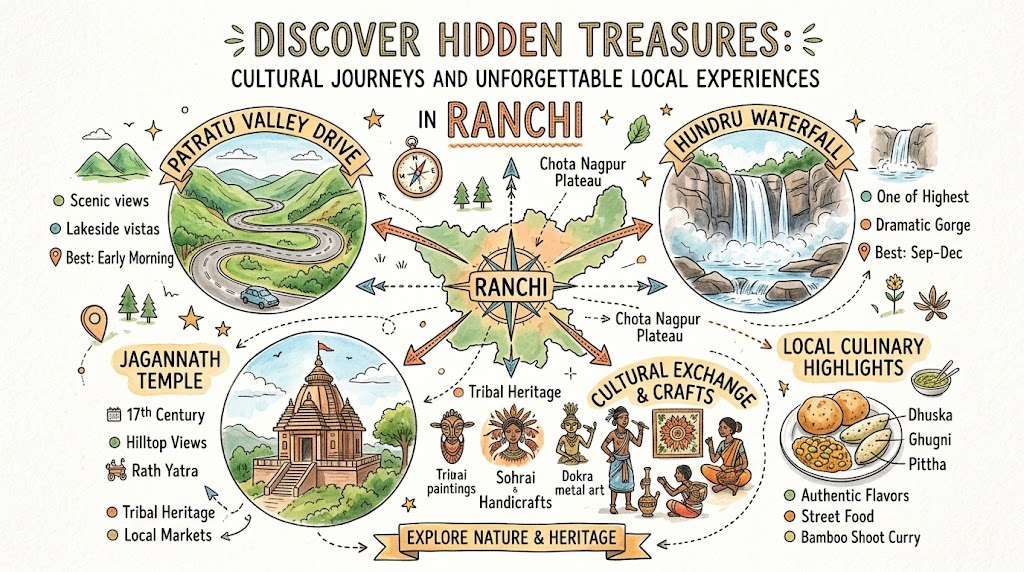
| Local Culinary Highlights | Dhuska with Ghugni, Pittha, Rugra, and Bamboo Shoot Curry |
Best Places or Experiences
1. Patratu Valley Drive
Stretching across a dramatic mountain pass, the Patratu Valley road features winding hairpin curves cut directly through dense forest ridges. Rising above the expansive Patratu Dam reservoir, this engineering marvel offers breathtaking panoramic vistas across shimmering waters and rolling hills.
As early morning light cuts through mist-covered hillsides, travelers encounter a serene mountain environment just outside the core urban limits. The drive itself serves as a therapeutic escape, showcasing the striking natural geography that defines the southern plateau.
- Location: Ramgarh district, approximately 35 km north of Ranchi city center.
- Why it is worth visiting: Unmatched scenic hairpin bends paired with sweeping lakeside vistas.
- Best things to do: Drive the serpentine curves at sunrise, take a motorboat ride on Patratu Lake, and capture photos from hilltop viewpoints.
- Best time to visit: October to February, ideally during early morning hours or golden hour before sunset.
- Ideal for whom: Road trip enthusiasts, photographers, couples, and nature lovers.
- Travel tip: Drive cautiously on the hairpin bends as morning fog can briefly reduce road visibility.
2. Hundru Waterfall
Created by the cascading waters of the Subarnarekha River, Hundru Falls plunges over 320 feet down jagged rock formations. The sheer force of the descent carves dramatic natural rock pools surrounded by lush green foliage.
Descending the stone steps toward the base of the waterfall reveals misty breezes and the echoing roar of rushing water. During post-monsoon months, the sheer volume of water creates an invigorating atmospheric spectacle that highlights Jharkhand’s moniker as the land of waterfalls.
- Location: Ranchi district, around 45 km east of the main city.
- Why it is worth visiting: One of the highest waterfalls in the region featuring dramatic gorge geology.
- Best things to do: Descend the scenic rock staircases, capture long-exposure waterfall photos, and explore the lower rocky pools.
- Best time to visit: September to December for maximum water volume and comfortable trekking temperatures.
- Ideal for whom: Adventure seekers, trekkers, and landscape photographers.
- Travel tip: Wear high-traction footwear because stone steps near the base spray remain continuously damp and slippery.
3. Dassam Falls
Tucked deep within pristine forest clearings near Taimara village, Dassam Falls cascades gracefully into a shimmering pool below. The Kanchi River breaks into several distinct streams across rocky terraces, creating a wide, stunning aquatic amphitheater.
The surrounding forest preserves a peaceful natural ambience, making it a scenic refuge away from highway traffic. Visitors can relax along surrounding rock platforms while taking in the pristine soundscape of cascading water and forest birds.
- Location: Near Taimara village, roughly 34 km along the Ranchi-Tata highway.
- Why it is worth visiting: Striking multi-stream waterfall framed by dense woodland wilderness.
- Best things to do: Enjoy scenic valley viewing points, picnic along designated upper zones, and observe natural rock formations.
- Best time to visit: October through January for clear skies and steady water flows.
- Ideal for whom: Eco-tourists, small groups, and photography enthusiasts.
- Travel tip: Swimming in the main plunge pool is strictly prohibited due to unpredictable undercurrents.
4. Jagannath Temple Ranchi
Perched majestically atop a gentle hill in Dhurwa, the 17th-century Jagannath Temple features traditional architectural styles resembling the famous shrine in Puri. Built in 1691 by King Aani Nath Shahdeo, the temple overlooks the surrounding valley plains.
Ascending the stone steps provides panoramic views over modern Ranchi while surrounding visitors in a calm, historic atmosphere. The site hosts an annual Rath Yatra festival that draws pilgrims from across the state in colorful celebration.
- Location: Dhurwa, approximately 10 km southwest of the Ranchi railway station.
- Why it is worth visiting: Rich 17th-century historical architecture combined with elevated city viewpoints.
- Best things to do: Admire the hilltop shrine architecture, attend evening prayer rituals, and enjoy sunset views over the valley.
- Best time to visit: Year-round, particularly during early mornings or late afternoons.
- Ideal for whom: History buffs, cultural travelers, and families.
- Travel tip: Wear slip-on shoes since footwear must be deposited at the lower entrance plaza before climbing.
5. Pahari Mandir
Rising prominently in the heart of Ranchi, Pahari Mandir sits atop Ranchi Hill, dedicated to Lord Shiva. Historically known as Phansihari Buru, the hill holds rich heritage dating back to India’s freedom movement.
Climbing over 400 stone steps rewards travelers with a complete 360-degree aerial view of the surrounding city skyline and Ranchi Lake. The spiritual environment at the top offers a peaceful break right within the bustling urban core.
- Location: Center of Ranchi city, near Ranchi Lake.
- Why it is worth visiting: Historic hilltop landmark offering unmatched 360-degree panoramic urban views.
- Best things to do: Climb the historic steps, pray at the summit shrine, and observe the entire urban panorama.
- Best time to visit: July to August during Shravan month, or early mornings year-round.
- Ideal for whom: Spiritual travelers, fitness walkers, and city photographers.
- Travel tip: Carry a water bottle for the staircase climb, especially during mid-day hours.
6. Rock Garden and Kanke Dam
Carved directly out of the rocky terrain surrounding Kanke Dam, Ranchi’s Rock Garden combines creative landscaping with calm waters. Creative stone sculptures, iron bridges, and terraced seating line the gentle shores of the reservoir.
Visiting late in the afternoon allows you to watch radiant sunsets reflect over Kanke Dam’s broad water expanse. It serves as an easy, relaxing urban escape where locals and travelers unwind in green surroundings.
- Location: Gonda Hill, Kanke Road, about 8 km from central Ranchi.
- Why it is worth visiting: Artfully landscaped rock structures built beside a expansive calm lake.
- Best things to do: Stroll through terraced rock formations, photograph sunset views over Kanke Dam, and relax in lakeside parks.
- Best time to visit: 4:00 PM to 6:30 PM for mild weather and beautiful golden sunsets.
- Ideal for whom: Families with children, casual walkers, and couples.
- Travel tip: Pair this visit with a light evening stop at local cafes along Kanke Road.
Offbeat Exploration: Hidden Gems Tourists Miss
Jonha Falls (Gautamdhara)
Also known as Gautamdhara due to its association with Lord Buddha, this offbeat waterfall cascades down sculpted granite steps framed by thick sal forests. Descending the neatly organized concrete stairs reveals quiet resting spots where mist fills the air. A modest ashram dedicated to Lord Buddha sits nearby, maintaining a serene ambiance away from larger tourist crowds.
McCluskieganj
Located roughly 60 km from Ranchi, McCluskieganj is a quiet, leafy enclave established in the 1930s as a haven for the Anglo-Indian community. Old colonial-style bungalows with red-tiled roofs, sprawling verandas, and overgrown fruit orchards line quiet mud tracks. Walking through this peaceful town offers a nostalgic glance into a unique, slow-paced chapter of regional history.
Tagore Hill
Named after the revered poet Rabindranath Tagore, whose family frequently visited this tranquil hillock, Tagore Hill offers an inspiring, elevated retreat in Morabadi. The historic Brahmo Samaj building at the base and the quiet hilltop pavilion provide peaceful spots for writing, reading, or quiet reflection above the city.
Detailed Practical Guidance for Travelers
| Destination | Standard Entry Fee | General Timings | Best Local Food Options Nearby | Recommended Nearby Attractions |
| Patratu Valley | Free access | Open 24 Hours (Best in daylight) | Local dhaba chai, roasted corn, fresh fish curry | Patratu Lake Resort & Dam |
| Hundru Falls | ~₹20 per head | 8:00 AM – 5:00 PM | Local tea stalls, Dhuska & Ghugni | Getalsud Dam |
| Dassam Falls | ~₹20 per head | 8:30 AM – 4:30 PM | Traditional snack vendors, packed lunches | Surya Temple Bundu |
| Jagannath Temple | Free entry | 5:00 AM – 12:00 PM, 4:00 PM – 8:30 PM | Fresh sweet stalls, local street snacks | Heavy Engineering Corp Complex |
| Pahari Mandir | Free entry | 4:30 AM – 1:00 PM, 2:00 PM – 8:30 PM | Central city eateries, chat stalls | Ranchi Lake (Bada Talaab) |
| Rock Garden | ~₹20 per head | 9:00 AM – 7:00 PM | Lakeside snack carts, Kanke Road cafes | Kanke Dam Park |
Logistics & On-Ground Navigation
Local Transport Options
Navigating Ranchi and its surrounding natural attractions is simple once you understand local transport options:
- Auto-Rickshaws & E-Rickshaws: Shared auto-rickshaws cover major arterial roads like Main Road, Lalpur, and Doranda economically.
- App-Based Cabs: Uber and Rapido operate extensively within city limits for quick, predictable urban transit.
- Private Vehicle Rentals: For out-of-town waterfalls like Hundru or Dassam, hiring a full-day private taxi is the most convenient option.
- Railways: Ranchi Junction (RNC) and Hatia (HTE) stations connect the city directly to major Indian metros.
Budget Planning
- Backpacker Tier (~₹1,200 – ₹1,800 per day): Stay in budget guesthouses, use shared auto-rickshaws, and enjoy regional street food stalls.
- Comfort / Mid-Range Tier (~₹3,500 – ₹6,000 per day): Stay in 3-star mid-range hotels, hire private daily cabs for waterfall circuits, and dine at casual restaurants.
Safety and Inclusivity Tips
- Family Travel: Most major parks, temples, and lakes feature family-friendly walking tracks and safe surroundings.
- Couples & Solo Travelers: Stick to daylight hours when exploring remote waterfall zones and woodland drives.
- General Safety: Keep basic cash handy as digital network connectivity can occasionally drop in deep forest valleys.
Strategic Travel Planning Guardrails
Travel Planning Tips for Ranchi
- Schedule Waterfall Visits Post-Monsoon: Visit between October and December when water levels are high and monsoon rains have receded.
- Carry Cash for Rural Spots: While digital UPI payments work across city shops, rural vendors near waterfalls often prefer cash.
- Dress in Layers: Plateau weather brings crisp, cool mornings and warm afternoons during winter months.
- Start Waterfall Trips Early: Leave the city by 8:00 AM to enjoy tranquil sites before midday visitor crowds arrive.
- Pack Sturdy Footwear: Navigating uneven rock paths around waterfalls requires shoes with strong rubber grip.
Common Mistakes to Avoid
- Over-packing Daily Routing: Avoid clumping distant waterfalls in opposite geographic zones into a single day.
- Ignoring Rural Transport Limits: Do not rely on app-based cabs for return journeys from remote waterfall sites; book round-trip rentals instead.
- Skipping Indigenous Cuisine: Do not stick solely to familiar North Indian menus; taste local specialties like Dhuska and Rugra.
- Overpaying Street Drivers: Always agree on auto-rickshaw fares in advance when meters are not active.
- Disregarding Pool Safety Signs: Never cross safety barriers near slippery waterfall drops or plunge pools.
Suggested Itinerary Blueprints
1. Day Quick Dash (The Express Nature Loop)
- Target Audience: Short-stay business travelers or quick weekend visitors.
- Routing: Start with an early morning drive through Patratu Valley, enjoy breakfast overlooking Patratu Lake, return to central Ranchi for an afternoon visit to Jagannath Temple, and finish with sunset views at Rock Garden and Kanke Dam.
2. Day Deep-Dive (Waterfalls & Urban Heritage)
- Day 1 (The Cascading Circuit): Depart early for Hundru Falls, proceed across country roads to Jonha Falls, and conclude your afternoon at Getalsud Dam.
- Day 2 (City Culture & Skyline): Morning climb up Pahari Mandir, mid-day cultural exploration at Tagore Hill, evening craft shopping at local tribal handloom markets, and dinner in Morabadi.
3. Complete Weekend Travel Plan (The Ultimate Chota Nagpur Loop)
- Friday: Arrive in Ranchi, check into your hotel, and enjoy evening street food at Morabadi Ground.
- Saturday: Full-day excursion covering Dassam Falls, Surya Temple Bundu, and scenic return drives through rural agricultural countryside.
- Sunday: Morning visit to McCluskieganj for colonial heritage walks, followed by an afternoon drive to Patratu Valley before evening departure.
Common Tourist Mistakes to Avoid
- Geographic Blunders: Combining Hundru Falls (east) and Patratu Valley (north) on the same morning leads to unnecessary travel hours.
- Commercial Traps: Spending too much time inside modern air-conditioned shopping malls instead of exploring vibrant open markets like Upper Bazaar.
- Neglecting Modern/Alternative Zones: Missing out on the wide avenues, open parks, and lively food culture of Morabadi and Kanke Road.
- Transport Overpayment: Paying inflated fares to auto-rickshaws by failing to cross-reference prices with digital ride apps.
- Luxury Dining Bias: Missing out on authentic roadside vendors serving piping-hot Dhuska with spicy chickpea curry.
Frequently Asked Questions
1. What is the absolute best time of year to explore Ranchi?
The best period to visit Ranchi is between October and March when the weather is cool, dry, and comfortable for outdoor sightseeing.
2. Is Ranchi safe for solo travelers?
Yes, Ranchi is generally safe for solo travelers, provided you follow standard travel precautions and avoid remote forest areas after dark.
3. How far is Patratu Valley from Ranchi city center?
Patratu Valley is located approximately 35 kilometers north of Ranchi and takes about an hour to reach by road.
4. What are the most famous local dishes to try in Ranchi?
Must-try local dishes include Dhuska served with Ghugni, Pittha, Chilka Roti, Rugra mushroom curry, and bamboo shoot delicacies.
5. Are the waterfalls around Ranchi easily accessible for senior citizens?
Certain waterfalls like Dassam require descending steep staircases, whereas spots like Rock Garden and Kanke Dam offer level walking access.
6. Do digital UPI payments work reliably at all tourist spots in Ranchi?
UPI payments work smoothly in the main city, but carrying cash is recommended for remote waterfall vendors where mobile connectivity varies.
7. How many days are ideal for a complete trip to Ranchi?
A 3-day itinerary is ideal to explore major waterfalls, historic temples, scenic valleys, and local cultural markets comfortably.
8. Is public transport readily available to reach distant waterfalls like Hundru?
Public buses are infrequent for direct waterfall routes, so hiring a private taxi or booking a daily cab is much more reliable.
9. Can tourists swim safely in Ranchi’s waterfalls?
Swimming in plunge pools beneath waterfalls like Hundru and Dassam is unsafe and generally prohibited due to strong underwater currents.
10. What local handicrafts or souvenirs should I buy in Ranchi?
Look for authentic tribal Sohrai paintings, wooden crafts, metal Dokra artifacts, and organic bamboo items in local state emporiums.
11. Is Birsa Munda Airport well-connected to major Indian cities?
Yes, Birsa Munda Airport offers direct and connecting daily flights to key metropolitan cities including Delhi, Mumbai, Bengaluru, and Kolkata.
12. Are there good accommodation options near Patratu Valley?
Yes, modern resorts and state tourism guest complexes are available directly near Patratu Dam for comfortable overnight stays.
Conclusion
Choosing Ranchi over typical, crowded tourist destinations grants you access to an authentic cultural landscape shaped by rolling hills and lush forests. Standing above misty river valleys, exploring historic hilltop temples, or tasting rich regional flavors yields genuine rewards for every curious traveler. This hidden gem of the Chota Nagpur Plateau invites you to slow down, embrace local rhythms, and craft unforgettable travel memories.
