Introduction
Tired of packed hill stations where long traffic queues ruin your mountain weekend? Ranchi, the capital of Jharkhand, offers a refreshing contrast with its untouched natural beauty, lush green plateaus, and genuine tribal culture. Sitting on the Chota Nagpur Plateau, this city replaces crowded tourist traps with roaring waterfalls, pine-scented breezes, and serene lakes.
Stepping into Ranchi means embracing a rhythm dictated by dense Sal forests, cascading river currents, and warm local hospitality. It is a sanctuary where nature lovers, culture seekers, and road trippers discover an authentic Indian landscape still mercifully free from commercialized clutter.
Why Ranchi is a Must-Visit City
Ranchi is a crucial centerpiece in East India’s travel landscape, carrying deep geological, historical, and indigenous significance. Formed over millions of years, the surrounding Chota Nagpur Plateau creates a dramatic landscape where multiple rivers drop precipitously over granite cliffs, creating spectacular natural waterfalls. As the historic heartland of tribal resistance led by freedom fighter Birsa Munda, Ranchi possesses an extraordinary socio-cultural legacy that enriches every neighborhood.
Reaching Ranchi is remarkably convenient for travelers across all budgets. Birsa Munda Airport (IXR) connects seamlessly to major Indian metropolises, while Ranchi Junction and Hatia railway stations serve as major rail hubs. Expansive state highways and national corridors make road journeys smooth and scenic, leading directly into comfortable stay options ranging from budget homestays to high-end business hotels.
Ranchi Macro Travel Overview
| Parameter | Details |
| Geographic Region | Chota Nagpur Plateau, Jharkhand |
| Ideal Trip Duration | 3 to 4 Days |
| Peak Season | October to March (Cool & pleasant) |
| Monsoon Highlight | July to September (Waterfalls at peak power) |
| Nearest Airport | Birsa Munda Airport (IXR), Ranchi |
| Key Circuit Theme | Waterfalls, Valleys, Sacred Temples & Indigenous Craft |
Best Places or Experiences
Hundru Falls
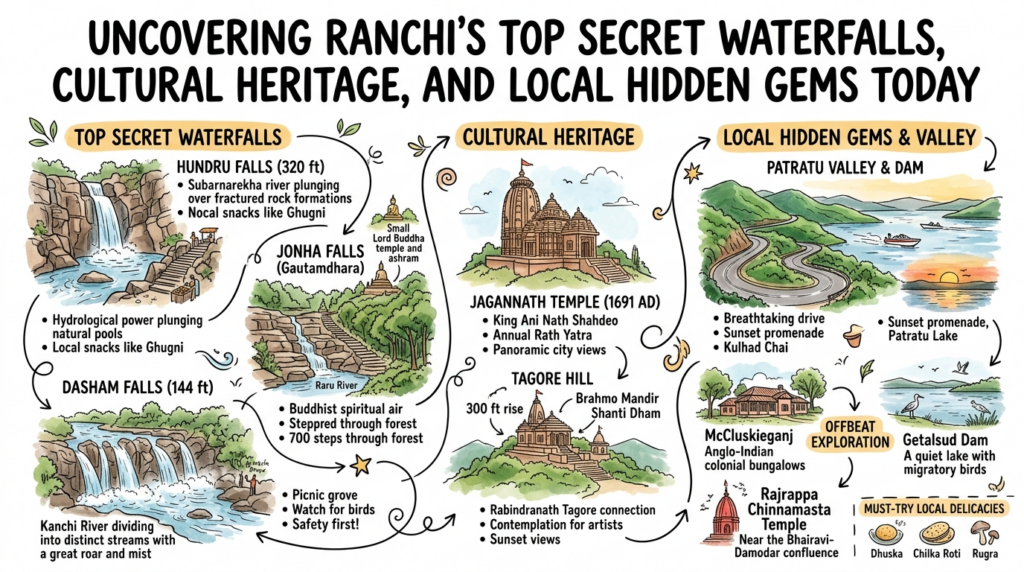
Cascading from a dizzying height of 320 feet, Hundru Falls is created by the majestic Subarnarekha River plunging over fractured rock formations. The thunderous roar of water reverberates through the surrounding forest canopy, creating a mist-filled amphitheater that mesmerizes every visitor. Over centuries, the continuous cascade has carved out intricate rock pools and unique geological strata that fascinate nature enthusiasts and photographers alike.
Surrounding the main drop is a lush stretch of Sal trees, offering peaceful walking paths and spectacular vantage points. Local vendors along the steps serve hot tribal snacks and fresh guava, making the descent down the rocky staircase a delightful sensory experience. The contrast between raw river forces and tranquil forest surroundings makes Hundru an irreplaceable jewel of Jharkhand.
- Location: Sikidiri district, approximately 45 km northeast of Ranchi city center.
- Why it is worth visiting: It is one of the highest waterfalls in Jharkhand, offering unmatched scenic drama and sheer hydrological power.
- Best things to do: Hike down the steps to the natural plunge pool, photograph the gorge from the upper cliff view, and sample local street snacks from tribal vendors.
- Best time to visit: October to February for clear weather and swimming safety; August to September for maximum monsoon water volume.
- Ideal for whom: Nature enthusiasts, adventure travelers, photographers, and family vacationers.
- Travel tip: Wear sturdy, high-grip shoes as the steps down to the base pool get slippery when wet.
Jonha Falls (Gautamdhara)
Nestled deep within dense woodland, Jonha Falls—also known as Gautamdhara—drops gently over stepped rock terraces fed by the Raru River. Legend holds that Lord Buddha spent time meditating near these tranquil waters, giving the location a serene spiritual atmosphere that endures today. A dedicated Buddhist ashram and temple sit atop the surrounding hill, attracting pilgrims seeking peace amidst pristine nature.
To reach the base of the waterfall, visitors descend a beautifully constructed staircase of over 700 steps cutting through shady forest cover. Along the way, panoramic views of the forest valley open up, offering glimpse after glimpse of the cascading white water. The gentle roar of the falls combined with chanting from the hilltop temple creates a deeply restorative retreat.
- Location: Anara village, roughly 40 km east of Ranchi along the Purulia highway.
- Why it is worth visiting: Offers a unique blend of spiritual heritage, gentle terrace cascades, and tranquil woodland scenery.
- Best things to do: Explore the hilltop Lord Buddha temple, descend the scenic forest steps, and relax near the shallow rock pools.
- Best time to visit: November to March during early morning hours for crisp mountain air and quiet reflections.
- Ideal for whom: Spiritual seekers, solitude lovers, eco-tourists, and photographers.
- Travel tip: Start your climb back up before mid-afternoon to avoid trekking under the harsh sun.
Dasham Falls
Plunging down a steep 144-foot granite face, Dasham Falls gets its name from the ten distinct streams into which the Kanchi River divides as it falls. The sheer width and force of the cascade create a roaring spray visible from far across the gorge. Dense tropical foliage frames the drop, providing a pristine backdrop that highlights the raw force of nature.
The dramatic terrain surrounding Dasham makes it one of the most picturesque locations near Ranchi. Viewing decks positioned at safe vantage points allow travelers to marvel at the force of the water without venturing into dangerous currents. The surrounding park area provides shady picnic spots under hardwood trees, where local guides share folklore regarding the ancient river spirits.
- Location: Taimara village, nearly 34 km south of Ranchi along the Ranchi-Jamshedpur Highway (NH-33).
- Why it is worth visiting: Unmatched visual breadth where ten natural streams converge in a roaring display of hydraulic energy.
- Best things to do: Take panoramic photographs from the top deck, enjoy a family picnic in the designated grove, and spot resident bird species in the surrounding trees.
- Best time to visit: September to February when water levels are high yet safely contained within the main channels.
- Ideal for whom: Road trippers, picnic groups, photography enthusiasts, and geography buffs.
- Travel tip: Strictly observe safety barricades and refrain from entering deep river zones due to strong undercurrents.
Patratu Valley and Dam
Offering one of the most breathtaking driving experiences in Eastern India, Patratu Valley features a winding hairpin highway that slithers through emerald hill slopes. As you descend through sweeping curves, dramatic views of Patratu Lake open up below, shimmering like a mirror amidst forested ridges. The cool mountain air and panoramic vistas make this stretch an absolute paradise for motoring enthusiasts.
At the base lies Patratu Dam, a massive water reservoir offering motorboating, speedboating, and serene lakeside walks. Sunset over the lake paints the sky in shades of gold and amber, casting dramatic silhouettes of the surrounding hills. A modern waterfront complex provides comfortable seating, neat eateries, and well-maintained promenades for evening strolls.
- Location: Ramgarh district, approximately 35 km north of Ranchi via the Patratu Ghat Road.
- Why it is worth visiting: Features serpentine ghat roads paired with a vast, pristine lake ideal for watersports and sunset views.
- Best things to do: Drive or ride down the winding hairpin curves, take a speedboat ride across Patratu Lake, and enjoy sunset views at the lake promenade.
- Best time to visit: Late afternoon (4:00 PM to 6:30 PM) to catch twilight views across the valley curves.
- Ideal for whom: Bikers, road trip fans, couples, and photography lovers.
- Travel tip: Exercise caution on the hairpin turns, especially during fog or monsoon drizzles.
Jagannath Temple Ranchi
Built in 1691 by King Ani Nath Shahdeo, Jagannath Temple sits proudly atop a small hill, bearing striking architectural resemblance to the famous Puri Jagannath Temple in Odisha. The shrine features classic Kalinga-style architecture with intricate stone carvings and imposing spires that dominate the skyline. Climbing the stone steps to the sanctum rewards visitors with spiritual calm and expansive views of Ranchi’s urban landscape.
The annual Rath Yatra festival transforms the temple complex into a bustling cultural venue, drawing thousands of devotees from neighboring districts. Even on quiet weekdays, the gentle temple breeze and historic ambiance offer a wonderful window into Jharkhand’s royal heritage.
- Location: Dhurwa locality, around 10 km hilltop southwest of central Ranchi.
- Why it is worth visiting: A 17th-century architectural marvel providing historic depth and panoramic views of the city.
- Best things to do: Admire the Kalinga-style stone spire, attend the evening prayer ritual, and take in sunset views of Dhurwa Dam.
- Best time to visit: Early morning or late afternoon; June/July during the grand Rath Yatra festival.
- Ideal for whom: History lovers, architecture enthusiasts, families, and spiritual travelers.
- Travel tip: Dress modestly as required for traditional temple entry and remove footwear at the base stairs.
Tagore Hill
Rising 300 feet above the surrounding terrain, Tagore Hill is closely associated with the Nobel Laureate Rabindranath Tagore’s family. Rabindranath’s elder brother, Jyotirindranath Tagore, chose this quiet hillock as his retreat, constructing the famous Brahmo Mandir and Shanti Dham residence near the summit. The serene environment inspired numerous literary works, paintings, and philosophical musings during the early 20th century.
Today, the summit remains a favorite retreat for artists, poets, and travelers seeking quiet contemplation. The stone steps leading to the top are lined with lush greenery, leading up to an open gazebo that commands sweeping 360-degree views across Ranchi city and surrounding hillocks.
- Location: Morabadi, approximately 4 km north of Ranchi Railway Station.
- Why it is worth visiting: Deep literary connection to the Tagore family combined with panoramic city views and quiet walking trails.
- Best things to do: Climb to the hilltop Brahmo Mandir, explore the memorial art display, and watch the sun set over Morabadi grounds.
- Best time to visit: 5:00 AM to 7:00 AM for sunrise or 4:30 PM to 6:00 PM for sunset.
- Ideal for whom: Literature buffs, history lovers, morning walkers, and peaceful travelers.
- Travel tip: Visit early in the morning to beat urban traffic and enjoy peaceful birdwatching at the top.
Offbeat Exploration: Hidden Gems Tourists Miss
McCluskieganj
Located roughly 60 km northwest of Ranchi, McCluskieganj is a unique Anglo-Indian hamlet founded in the 1930s by Ernest Timothy McCluskie. Once home to over 300 Anglo-Indian families, this quiet township features colonial-style bungalows with red-tiled roofs, manicured lawns, and old wooden verandas set among cashew and pine trees. Walking along its peaceful lanes feels like stepping directly into a European country village frozen in time.
Getalsud Dam and Reservoir
Situated on the Subarnarekha River about 35 km east of Ranchi, Getalsud Dam remains largely undiscovered by typical tourist groups. The expansive reservoir is an ideal spot for quiet morning picnics, birdwatching, and enjoying undisturbed lake views. During winter months, migratory birds flock to the waters, creating a haven for wildlife photographers.
Chinnamasta Temple at Rajrappa
Positioned roughly 68 km from Ranchi at the confluence of the Bhairavi and Damodar rivers, Rajrappa hosts the famous Chinnamasta Temple. Recognized as a powerful Shakti Peeth, this ancient shrine features striking Tantric architectural elements set against roaring river rapids. The natural rock formations carved out by the river confluence add dramatic beauty to this important pilgrimage site.
Detailed Practical Guidance for Travelers
| Destination | Standard Entry Fee | General Timings | Best Local Food Options Nearby | Recommended Nearby Attractions |
| Hundru Falls | ₹10 per person | 8:00 AM – 5:00 PM | Tribal Dhuska with Ghugni, Fresh Guava | Getalsud Dam, Jonha Falls |
| Jonha Falls | ₹10 per person | 8:00 AM – 4:30 PM | Hot Pakoras, Local Tea, Sattu Drinks | Sita Falls, Gautamdhara Ashram |
| Dasham Falls | ₹10 per person | 8:30 AM – 5:00 PM | Roasted Corn, Fried Fish, Bamboo Rice | Sun Temple, Bundu Craft Hub |
| Patratu Valley | Free access | Open 24/7 (Boating: 9 AM – 6 PM) | Lakefront Fried Fish, Kulhad Chai | Patratu Dam, Pithoria Fort |
| Jagannath Temple | Free access | 5:00 AM – 12:00 PM, 4:00 PM – 8:30 PM | Pure Veg Thali, Local Sweets (Balushahi) | Dhurwa Dam, JSCA Stadium |
| Tagore Hill | Free access | 6:00 AM – 6:00 PM | Morabadi Street Food, Litti Chokha | Rock Garden, Kanke Dam |
Logistics & On-Ground Navigation
Local Transport Options
- Auto-Rickshaws & E-Rickshaws: Shared auto-rickshaws dominate main corridors like Main Road, Ratu Road, and Kantatoli. For short neighborhood hops, green e-rickshaws offer an economical, eco-friendly option.
- App-Based Cabs & Taxis: Services like Ola and Uber operate smoothly within Ranchi city limits. For day-long waterfall circuits, hiring a private dedicated cab from Ranchi Junction or your hotel is the safest, most convenient choice.
- Car & Bike Rentals: Self-drive cars and two-wheelers can be rented near the airport and railway station, ideal for navigating the steep curves of Patratu Valley independently.
Budget Planning
- Backpacker Tier (₹1,000 – ₹1,800 per day): Stay in budget guesthouses or hostels near the railway station. Use shared autos and public buses for transit, and enjoy delicious street food meals under ₹150.
- Mid-Range Tier (₹3,000 – ₹5,500 per day): Stay in comfortable 3-star hotels in Lalpur or Hindpiri. Rent a private AC sedan for waterfall tours, and dine at popular local restaurants and cafes.
Safety and Inclusivity Tips
- For Families: Stick to well-maintained viewing decks at waterfalls and ensure children stay well clear of slippery rocks and fast river currents.
- For Couples: Patratu Valley and Tagore Hill offer lovely romantic backdrops; avoid staying at remote waterfall spots past 5:00 PM when crowds thin out.
- General Safety: Rural roads around waterfall circuits may lack street lighting, so plan to return to Ranchi city limits before dark.
Strategic Travel Planning Guardrails
Travel Planning Tips for Ranchi
- Book your private day-cab early in the morning to beat city exit traffic and secure the best photo spots before noon crowds arrive.
- Carry sufficient physical cash when traveling out to waterfall circuits, as mobile network signal can be patchy around deep gorges.
- Dress in comfortable, breathable cotton clothing and wear non-slip sports shoes for climbing staircase tracks at Jonha and Hundru.
- Sample authentic regional delicacies such as Dhuska, Chilka Roti, and Rugra (seasonal wild mushroom) at local dhabas.
- Respect indigenous customs and ask for permission before photographing tribal artisans or village homesteads.
- Pack a light jacket or sweater if visiting between November and February, as evening temperatures drop quickly on the plateau.
Common Mistakes to Avoid
- Don’t pack too many distant waterfalls into a single day; stick to one geographic direction per trip to avoid driving burnout.
- Avoid crossing safety barriers at Dasham and Hundru Falls, as granite rocks under water are notoriously slick and dangerous.
- Never rely solely on digital UPI payments in deep forest valleys where cellular service frequently drops.
- Refrain from skipping street food stalls near Morabadi Ground, where you’ll find Ranchi’s best local evening snacks.
- Avoid taking late-night auto rides into remote rural peripheries without a pre-arranged return driver.
- Don’t rush through Patratu Ghat—allocate at least two hours to stop at roadside viewpoints and take in the scenery.
Suggested Itinerary Blueprints
1-Day Quick Dash (Capital Circuit)
Perfect for business travelers or short layovers:
- Morning: Start at Tagore Hill for sunrise views, followed by breakfast featuring hot Dhuska and Sattu Drink in Morabadi.
- Afternoon: Drive out to Patratu Valley via Pithoria Ghat, enjoy motorboating at Patratu Lake, and lunch at the waterfront resort.
- Evening: Return to Ranchi, visit Jagannath Temple for sunset, and finish with shopping on Main Road.
2-Day Deep-Dive (Waterfalls & Heritage)
- Day 1 (Waterfall Circuit): Head east early morning to explore Hundru Falls, followed by Getalsud Dam and Jonha Falls. Enjoy a late lunch near Bundu and return by evening.
- Day 2 (City Culture & Nature): Visit Dasham Falls in the morning. Return for lunch in Lalpur, explore Tagore Hill, and unwind by Rock Garden & Kanke Dam at twilight.
Complete Weekend Travel Plan (Full Ranchi Experience)
- Friday: Arrive in Ranchi, check into your hotel, and spend a relaxing evening enjoying street food near Morabadi Ground.
- Saturday: Full day exploring the eastern waterfall loop (Jonha, Hundru, and Sita Falls). Enjoy traditional thali dining at an authentic Jharkhand restaurant in the evening.
- Sunday: Morning drive through Patratu Valley, visit the historic Jagannath Temple, shop for authentic Paitkar paintings and bamboo craft at urban emporiums, and head to the airport or station.
Common Tourist Mistakes to Avoid
Geographic Blunders
Attempting to combine Patratu Valley (north) with Dasham Falls (south) on the same morning wastes hours in heavy traffic. Group your daily sightseeing into distinct geographic clusters: East (Hundru, Jonha, Getalsud), South (Dasham, Sun Temple), and North (Patratu, Tagore Hill).
Commercial Traps
Spending entire evenings inside modern air-conditioned shopping malls deprives you of Ranchi’s vibrant local street life. Head instead to traditional markets like Firayalal Chowk or Morabadi Night Market to sample authentic local culture and snacks.
Neglecting Modern/Alternative Zones
Many tourists stick strictly to temples and waterfalls, missing out on Ranchi’s blooming modern cafe culture and peaceful green spaces like Oxygen Park and Biodiversity Park, which showcase the city’s modern, eco-friendly lifestyle.
Transport Overpayment
Accepting initial price quotes from private drivers at the railway station often leads to paying double the standard rate. Cross-reference rates on ride-sharing applications or check official prepaid auto counters before finalizing local transport.
Luxury Dining Bias
Eating exclusively inside high-end hotel restaurants means missing out on Jharkhand’s true culinary soul. Authentic regional dishes like Dhuska with Ghugni, Pittha, and seasonal Rugra Curry are best experienced at clean local eateries and roadside dhabas.
Frequently Asked Questions
1. What is the best season to experience waterfalls around Ranchi?
The best time to witness Ranchi’s waterfalls in all their thunderous glory is right after the monsoon season, from September to November. Water levels remain impressively high while weather conditions become pleasant for trekking down steps.
2. How far are the major waterfalls located from Ranchi city center?
Most major waterfalls lie within a 35 to 45 km radius from the city center. Hundru Falls is roughly 45 km, Jonha Falls is 40 km, and Dasham Falls sits approximately 34 km away along well-paved national and state highways.
3. Is it safe to swim in the natural plunge pools at Hundru and Dasham Falls?
Swimming in the plunge pools is strictly discouraged and often prohibited by local authorities due to unpredictable undercurrents and submerged, sharp granite rocks. Always adhere to local safety warning signs and stay within designated viewing zones.
4. What are the must-try traditional dishes when visiting Ranchi?
You must try Dhuska (a deep-fried savory rice and lentil snack served with spicy chickpea curry), Chilka Roti, Pittha, Sattu Paratha, and seasonal delicacies like Rugra (wild forest mushrooms) and Bamboo Shoot Curry.
5. How many days are sufficient for a comprehensive trip to Ranchi?
A 3-day, 2-night itinerary is ideal for experiencing Ranchi comfortably. This allows one dedicated day for the eastern waterfall circuit, one day for Patratu Valley and city sights, and a final day for culture, temples, and local shopping.
6. Is Patratu Valley safe for late-evening driving and motorcycle rides?
While Patratu Ghat roads are well-maintained, driving late at night is not recommended due to sharp hairpin turns, patchy street lighting, and heavy fog during winter months. Plan your visit to wrap up shortly after sunset.
7. Can I find good budget accommodation options near Ranchi Railway Station?
Yes, the area surrounding Ranchi Junction (Station Road and Overbridge Road) offers numerous clean, affordable budget hotels, guesthouses, and dormitories with quick access to public transport and local eateries.
8. Are public buses available to reach offbeat destinations like McCluskieganj?
State transport buses and private minibuses operate regularly from Ranchi’s ITI Bus Stand to McCluskieganj and surrounding rural hubs. However, hiring a private taxi offers vastly superior flexibility and comfort for day trips.
9. What local handicrafts should I buy as souvenirs from Ranchi?
Look for authentic Paitkar folk paintings, handcrafted bamboo and wooden decor, dokra brass artifacts, and traditional Tussar silk textiles available at state handloom emporiums like Jharcraft.
10. Is Birsa Munda Airport well-connected to major Indian cities?
Birsa Munda Airport (IXR) in Ranchi offers direct, daily flights to major Indian metropolises including Delhi, Mumbai, Bengaluru, Kolkata, Hyderabad, and Patna, making long-distance travel fast and convenient.
11. What clothes should I pack for a trip to Ranchi in winter?
Ranchi sits on an elevated plateau, causing winter temperatures (November to February) to drop down to 8°C–12°C at night. Pack warm woolen sweaters, light thermal innerwear, and windproof jackets for early morning waterfall visits.
12. Are digital UPI payments accepted at local shops and waterfall sites?
Digital UPI payments (Google Pay, PhonePe, Paytm) are widely accepted across Ranchi city, restaurants, and hotels. However, you should carry ₹1,000–₹2,000 in physical cash for rural entry fees, rural roadside dhabas, and parking charges where mobile network signals may drop.
Conclusion
Choosing Ranchi over conventional, overcrowded hill stations rewards you with a deeply soulful, restorative travel experience. From the thunderous cascades of Hundru and Dasham to the tranquil sunset views across Patratu Valley and Tagore Hill, this capital city blends raw natural majesty with timeless indigenous heritage. Leaving behind the familiar tourist track allows you to return home not just rested, but genuinely connected to the serene heart of East India.
