Introduction
Escaping the concrete routine of India’s crowded metropolitan hubs requires choosing destinations where nature still commands the horizon. While commercialized hill stations suffer under heavy vehicle traffic and standardized resort chains, Ranchi offers an authentic alternative rooted in the Chota Nagpur Plateau. Surrounded by dense Sal forests, terraced plateau landscapes, and mist-laden river valleys, Jharkhand’s capital balances urban convenience with serene wilderness.
Traveling through Ranchi means engaging directly with tribal heritage, cascading seasonal river systems, and tranquil hilltop viewpoints. Here, local food stalls serve fragrant rice preparations cooked over open wood fires, and winding hairpin curves across green hills rival iconic coastal routes. Choosing this region grants travelers a restorative journey defined by fresh mountain breeze, rich local folklore, and unhurried exploration.
Why Ranchi is a must-visit city
Ranchi serves as the ecological and administrative heart of the Chota Nagpur region, sitting at an elevation of roughly 650 meters above sea level. This altitude gifts the plateau city a pleasant climate throughout the year, distinct from the scorching plains of eastern India. Historically a summer retreat during colonial times, the region retains its green cover, ancient tribal traditions, and geological formations millions of years in the making. Excellent highway connectivity through National Highways 33 and 23, alongside direct rail links and daily flights into Birsa Munda Airport, makes logistics straightforward for solo adventurers, road-trippers, and family groups alike.
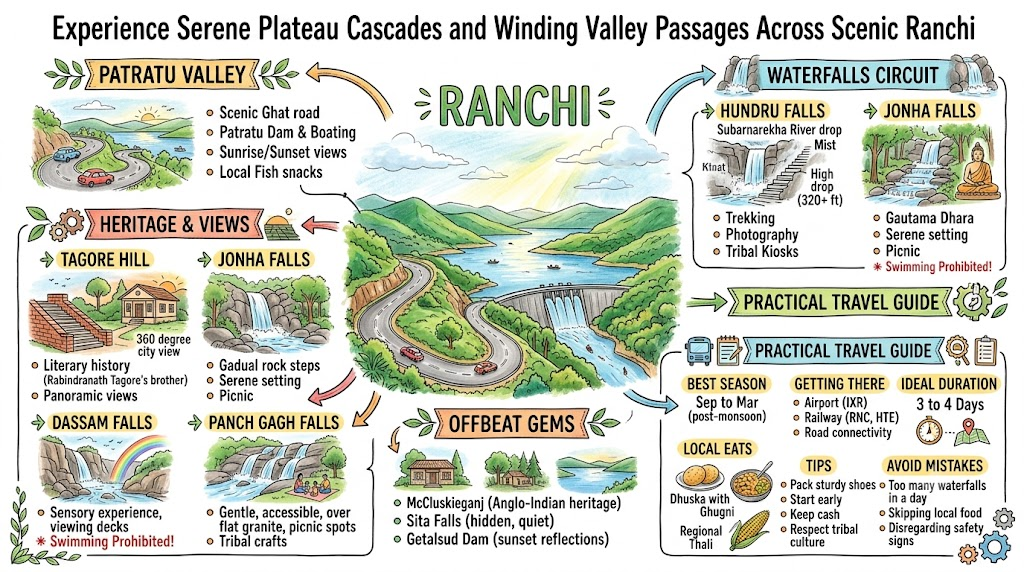
The primary travel circuit around Ranchi fans out in strategic loops: the eastern waterfall loop toward Purulia, the southern river gorges along Khunti, and the northwestern high-altitude ghat passes leading into Ramgarh district. Each corridor delivers distinct topography, ranging from sheer cliff-edge waterfalls to expansive reservoir lakes.
| Destination Metric | Regional Highlights |
| Primary Attractions | Cascading waterfalls, serpentine ghat drives, historic hilltops, tribal craft villages |
| Ideal Trip Duration | 3 to 4 days for full regional coverage |
| Nearest Airport | Birsa Munda Airport, Ranchi (IXR) |
| Major Railway Hub | Ranchi Junction (RNC) & Hatia (HTE) |
| Best Travel Season | September to March (post-monsoon, water volume is at its peak) |
Best Places or Experiences
Patratu Valley
Carved through the surrounding hills of the Ramgarh district, Patratu Valley features a famous winding ghat road with dozens of sweeping hairpin bends. As the road descends toward the expansive Patratu Dam reservoir, travelers are treated to views of emerald hillsides contrasting against deep blue water bodies. Built originally to supply water to the thermal power station, the dam area has evolved into a premier ecotourism destination with manicured parklands, speedboat facilities, and scenic waterfront promenades.
Driving down the valley during early morning or twilight reveals an atmospheric landscape where low-hanging mist drifts across the forest canopy. The route is paved with high-quality asphalt, making it a favorite for driving enthusiasts and motorcycling groups seeking scenic road journeys. Waterfront eateries along the dam shoreline serve freshly caught fried fish and hot regional chai, complementing the breezy outdoor atmosphere.
- Location: Ramgarh District, approximately 35 km northwest of Ranchi city center.
- Why it is worth visiting: Unmatched aerial panoramas of serpentine mountain roads and expansive lake views.
- Best things to do: Take a speedboat ride on Patratu Lake, capture golden-hour photographs from the top viewpoint, and enjoy local fried fish snacks.
- Best time to visit: October to February; early mornings offer mist-covered valley views.
- Ideal for: Road trip enthusiasts, photographers, couples, and road cyclists.
- Travel tip: Drive slowly along the S-curves, as local state transport buses frequently navigate tight bends.
Hundru Falls
Formed by the Subarnarekha River dropping from a height of over 320 feet, Hundru Falls represents one of Jharkhand’s most striking natural landmarks. The river tumbles over weathered metamorphic rock faces, creating a roaring white deluge during monsoon and post-monsoon months. At the base of the waterfall, the water collects into a massive pool surrounded by giant, rounded boulders sculpted over centuries of erosion.
Reaching the plunge pool requires descending a well-maintained staircase of over 700 concrete steps carved directly into the forested hill. Along the descent, small tribal kiosks sell fresh cucumber, starfruit, spiced lemonade, and handcrafted wooden souvenirs. The sheer vertical drop creates a dramatic mist cloud that cools the ambient air, making the base an invigorating spot after the downhill walk.
- Location: Ranchi District, 45 km east of the main city via Purulia Road.
- Why it is worth visiting: Highest water drop in the immediate Ranchi circuit with dramatic rock geology.
- Best things to do: Hike down the rock-carved steps, photograph the roaring water drop, and trek along the downstream river rocks.
- Best time to visit: September to December for maximum water volume and pleasant hiking temperatures.
- Ideal for: Trekking enthusiasts, nature lovers, and adventure seekers.
- Travel tip: Wear high-traction footwear for the damp stair steps and strictly obey pool boundary markers.
Jonha Falls
Also known as Gautam Dhara due to local legends citing Lord Buddha’s visits and meditation at the site, Jonha Falls cascades gracefully over a series of natural rock steps. Nestled deep inside a Sal forest valley, the falls are fed by the Kanchi River as it transitions across the plateau edge. A dedicated ashram dedicated to Lord Buddha sits atop the surrounding hill, adding a tranquil cultural dimension to the natural scenery.
Visitors walk down approximately 500 steps through shaded forest corridors to reach the sandy river bed below. The surrounding landscape features ancient forest tracks, quiet rock pools, and open picnic clearings shaded by dense trees. Unlike steeper canyon drops, Jonha’s terraced structure allows water to spread broadly across granite ledges, creating a gentle acoustic backdrop throughout the valley.
- Location: Anigara, Ranchi District, roughly 40 km east of the capital.
- Why it is worth visiting: Harmonious blend of serene Buddhist heritage and picturesque cascade formations.
- Best things to do: Explore the hillside Buddha Temple, relax near the shallow rock pools, and photograph the forest canopy.
- Best time to visit: October to March for calm weather and clear river water.
- Ideal for: Spiritual travelers, families, picnic groups, and culture seekers.
- Travel tip: Visit on a Thursday or Saturday to catch the vibrant local village market operating near the train station.
Dassam Falls
Located near Taimara village along the Ranchi-Jamshedpur Highway, Dassam Falls is generated by the Kanchi River falling from a height of 144 feet. The waterfall derives its name from the local Mundari word “Da:song,” which references the ten streams that converge over the jagged black granite ledge. The water’s sheer force creates a constant spray that glistens under sunlight, frequently forming vibrant rainbow arcs across the gorge.
The surrounding terrain consists of rugged metamorphic rock terraces surrounded by dense woodland. Viewing platforms constructed by local tourism authorities offer safe, elevated vantage points across the river gorge. The sound of water crashing onto the rocky basin echoes throughout the surrounding hills, making Dassam one of the most sensory-rich stops in the region.
- Location: Taimara village, 34 km southeast of Ranchi along NH-33.
- Why it is worth visiting: Incredible hydrologic force with multiple convergent water streams against dark granite cliffs.
- Best things to do: Observe rainbow formations in the morning spray, photograph from the upper observation towers, and sample rural Jharkhand street food.
- Best time to visit: October to January, when water flow is high and surrounding trails are dry.
- Ideal for whom: Landscape photographers, road trippers, and nature enthusiasts.
- Travel tip: Swimming here is strictly prohibited due to strong undercurrents; stay within protected railing zones.
Tagore Hill
Rising roughly 300 feet above the surrounding residential neighborhoods of Morabadi, Tagore Hill carries profound literary and historical significance. Jyotirindranath Tagore, the elder brother of Nobel laureate Rabindranath Tagore, made this quiet hilltop his home in the early 20th century, constructing the historic “Brahmo Layanam” house. Rabindranath Tagore himself spent considerable time on this hill, drawing inspiration from its quiet views for his literary works.
A flight of brick stairs winds up through shaded tree canopies to reach the summit, where colonial-era masonry structures sit alongside quiet sitting platforms. From the top, visitors gain sweeping 360-degree views across Ranchi city, Morabadi Ground, and distant forest ridges. The breeze at the summit remains cool throughout the day, providing a peaceful escape inside the city.
- Location: Morabadi, Ranchi City, approximately 7 km from Ranchi Railway Station.
- Why it is worth visiting: Rich literary history connected to the Tagore family combined with panoramic city views.
- Best things to do: Climb the hill for sunset views, read quietly at the summit pavilions, and explore the museum exhibit at the base.
- Best time to visit: Year-round; late afternoons are ideal for sunset photography.
- Ideal for whom: History buffs, writers, literature enthusiasts, and urban explorers.
- Travel tip: Combine this visit with a stop at the nearby Ramakrishna Mission museum complex in Morabadi.
Panch Gagh Falls
Located near Khunti, Panch Gagh Falls is formed by the split of a single river stream into five distinct, parallel waterfalls as it flows over a broad, flat granite ridge. Because the water spreads across a wide stone shelf rather than plunging into a deep canyon, the water flow is gentle and accessible. The surrounding area features manicured picnic grounds, shaded seating benches, and shallow water streams that wind through rock crevices.
The site is particularly popular among families and large groups looking for a relaxing day outdoors without strenuous climbing or stair steps. The sound of five distinct water streams cascading together creates a calm acoustic atmosphere across the parkland. Local vendors set up stalls selling hot forest honey, herbal teas, and regional snacks near the entrance gates.
- Location: Khunti District, approximately 55 km south of Ranchi city center.
- Why it is worth visiting: Unique five-stream waterfall formation over flat, accessible rock terrain.
- Best things to do: Wade in safe, shallow rock pools, enjoy a forest picnic, and explore regional tribal handicrafts nearby.
- Best time to visit: November to February for warm sunlight and ideal picnic weather.
- Ideal for whom: Multi-generational families, elderly travelers, and group picnickers.
- Travel tip: Carry your own picnic mats as stone benches fill up early on weekend afternoons.
Offbeat Exploration: Hidden Gems Tourists Miss
McCluskieganj
Tucked away in the hills roughly 60 km northwest of Ranchi, McCluskieganj is a quiet township established in the 1930s by Ernest Timothy McCluskie as a haven for the Anglo-Indian community. At its peak, over 300 Anglo-Indian families lived in sprawling brick bungalows featuring sloping red-tile roofs, wooden verandas, and expansive fruit orchards. Walking through the town’s quiet forest roads feels like stepping back in time, with vintage architecture surrounded by quiet Sal woods. While many original families have migrated, the heritage homestays, convent schools, and old stone churches preserve a unique cultural atmosphere found nowhere else in India.
Sita Falls
Located right next to Jonha Falls, Sita Falls remains far less crowded due to its hidden placement inside a deep green valley. Named after Goddess Sita, this pristine cascade drops into a clear natural basin surrounded by dense wild flora and untouched rock formations. Reaching the base requires descending a rougher set of stairs, keeping commercial crowds away. The area is exceptionally quiet, allowing visitors to hear native bird calls above the gentle rushing sound of the water stream.
Getalsud Dam
Spanning the Subarnarekha River near Rukka, Getalsud Dam is a massive reservoir that supplies drinking water to Ranchi. While tourists gather at commercial spots, locals head to the quiet western banks of Getalsud during late afternoon. The wide horizon offers spectacular reflections during sunset, with local fishermen paddling traditional wooden boats across calm waters. It is an ideal spot for quiet reflection, birdwatching, and outdoor photography away from standard commercial venues.
Detailed Practical Guidance for Travelers
| Destination | Standard Entry Fee | General Timings | Best Local Food Options Nearby | Recommended Nearby Attractions |
| Patratu Valley | Free (Boating: ₹150-₹400) | 6:00 AM – 6:30 PM | Fried lake fish, Dhuska with Ghugni | Patratu Thermal Power Station Lake |
| Hundru Falls | ₹10 per person | 8:00 AM – 5:00 PM | Bamboo shoots, fry, fresh cucumber, chai | Getalsud Dam & Rukka Boat Club |
| Jonha Falls | ₹10 per person | 8:30 AM – 5:00 PM | Local forest honey snacks, roasted corn | Sita Falls & Johna Buddha Temple |
| Dassam Falls | ₹10 per person | 8:30 AM – 5:00 PM | Spiced chana chaat, regional pakoras | Sun Temple Bundu & Kanchi Riverbed |
| Tagore Hill | Free | 6:00 AM – 7:00 PM | Street chaat at Morabadi, South Indian tiffin | Rock Garden & Kanke Dam |
| Panch Gagh Falls | ₹10 per person | 8:00 AM – 5:00 PM | Traditional pittha, herbal forest teas | Birsa Munda Park, Khunti |
Logistics & On-Ground Navigation
Local Transport Options
Navigating Ranchi requires matching your vehicle choice to your destination terrain. Within city limits, auto-rickshaws and battery-operated e-rickshaws dominate short distances, particularly between Ranchi Junction, Main Road, Lalpur, and Morabadi. For trips beyond city limits to waterfalls like Hundru or Dassam, hiring a private taxi or renting a self-drive car is the most reliable option. Public state transport buses run along major highways toward Ramgarh, Khunti, and Purulia, but they do not deliver you directly to waterfall entry gates, requiring additional private auto hires from highway junctions.
Local Insight: For high-altitude drives like Patratu Valley, hiring a private vehicle with an experienced local driver ensures safe navigation along mountain curves.
Budget Planning
Ranchi offers excellent value for travelers across all spending tiers:
- Backpacker / Solo Tier: ₹1,000 – ₹1,800 per day. Covers budget lodge rooms near station areas, shared auto transfers, and local eatery meals featuring Dhuska and Thalis.
- Mid-Range / Comfort Tier: ₹3,000 – ₹5,500 per day. Covers 3-star hotel stays, private AC cab rentals for waterfall circuits, and dining at modern multi-cuisine restaurants in Lalpur or Kanke Road.
Safety and Inclusivity Tips
Ranchi is a welcoming, peaceful city, but smart planning ensures a smooth trip:
- For Families: Stick to well-maintained sites like Patratu Lake, Tagore Hill, and Panch Gagh Falls, which feature gentle walking paths and family facilities.
- For Couples: Prefer daytime visits to isolated waterfall sites and exit forest corridors before sunset.
- General Safety: Do not venture past safety barriers at waterfalls. Granite rocks near water plunges are coated in algae and extremely slippery.
Strategic Travel Planning Guardrails
Travel Planning Tips for Ranchi
- Prioritize Post-Monsoon Season: Schedule your trip between September and January to experience waterfalls at peak volume under clear skies.
- Keep Digital & Cash Balance: Digital UPI payments are accepted widely in the city, but rural waterfall stalls require physical cash.
- Pack Sturdy Footwear: Waterfalls require walking down hundreds of concrete or rock steps; wear high-traction shoes.
- Start Early: Leave your hotel by 8:00 AM for rural waterfall loops to beat midday heat and tour buses.
- Respect Tribal Customary Sites: Ask for permission before taking photographs of tribal shrines or village households in rural zones.
Common Mistakes to Avoid
- Attempting All Waterfalls in One Day: Spreading across Hundru, Dassam, and Panch Gagh in a single day leads to exhaustion due to long road distances.
- Ignoring River Safety Signs: Entering restricted water pools at Dassam or Hundru poses severe safety risks due to strong undercurrents.
- Relying Solely on Public Transit for Outskirts: Buses do not take you to waterfall entry gates; negotiate cab fares beforehand.
- Skipping Regional Street Cuisine: Relying only on standard hotel buffets deprives you of tasting local specialties like Dhuska, Chilka Roti, and Arsa.
- Driving High-Ghat Roads After Dark: Avoid driving Patratu Valley or rural passes late at night due to limited lighting.
Suggested Itinerary Blueprints
1. Day Quick Dash (Urban Highlights & Valley Sunset)
Designed for travelers on a brief layover or weekend stopover:
- Morning: Visit Tagore Hill for panoramic early morning views of Ranchi, followed by breakfast in Morabadi.
- Afternoon: Drive out to Patratu Valley, enjoying the scenic hairpin bends and a waterfront lunch at Patratu Lake.
- Evening: Enjoy speedboating on the reservoir during sunset, returning to the city for dinner along Kanke Road.
2. Day Deep-Dive (Waterfalls & Heritage Loop)
Ideal for a comprehensive weekend exploration:
- Day 1 (The Waterfall Circuit): Depart early for Hundru Falls, hike down to the gorge, continue to Jonha Falls and Sita Falls, and return via Getalsud Dam for evening lake views.
- Day 2 (Valley & City Culture): Explore Tagore Hill and Rock Garden in the morning, followed by an afternoon trip to Patratu Valley for boating and sunset views.
3. Complete Weekend Travel Plan (Grand Chota Nagpur Explorer)
A complete three-day itinerary covering natural, historical, and cultural sights:
- Friday (Heritage & Skyline): Arrive in Ranchi, check into your hotel, visit Jagannath Temple and Tagore Hill, and enjoy local food along Main Road.
- Saturday (The Great Waterfalls): Head out along NH-33 to cover Dassam Falls in the morning and Panch Gagh Falls near Khunti in the afternoon. Stop by local artisan stalls in Khunti before returning.
- Sunday (Valleys & Colonial Heritage): Drive through Patratu Valley, explore Patratu Lake Resort, and take an afternoon excursion to the Anglo-Indian township of McCluskieganj before your evening departure.
Common Tourist Mistakes to Avoid
Geographic Blunders
A common mistake is trying to group Jonha Falls (East) with Panch Gagh Falls (South) on the same morning. Ranchi’s attractions are spread across different highway exits radiating from the city center. Always plan your day along a single highway corridor—NH-33 for Dassam and Hundru, or the southern route for Khunti and Panch Gagh.
Commercial Traps
Spending your entire trip inside air-conditioned shopping malls on Main Road deprives you of Ranchi’s true atmosphere. Head instead to Morabadi Ground during evening hours or visit local weekly tribal haats (markets) in rural blocks to buy authentic bamboo crafts and organic forest produce directly from local artisans.
Neglecting Modern/Alternative Zones
Many visitors skip Ranchi’s emerging cafe culture and green spaces along Kanke Road and Morabadi. These modern expansions offer quiet bakery cafes, art installations, and pleasant walking promenades around Kanke Dam, presenting a contemporary side of the city alongside its natural heritage.
Transport Overpayment
When hiring auto-rickshaws at Ranchi Railway Station or Birsa Munda Airport, avoid accepting initial unmetered quotes. Cross-reference estimated fares on app-based cab aggregators like Ola or Uber, or negotiate based on standard per-kilometer rates before loading your luggage.
Luxury Dining Bias
Eating exclusively at hotel restaurants means missing out on Jharkhand’s authentic food culture. Regional street vendors offer freshly fried Dhuska paired with spicy black chickpea curry, cooked-to-order rice flour pitha, and sasma preparations that provide an authentic taste of local culinary traditions.
Frequently Asked Questions
- Which months offer the best weather for exploring Ranchi waterfalls?
September through February provides ideal conditions, offering lush green surroundings, high waterfall volumes post-monsoon, and pleasant daytime temperatures for outdoor hiking.
- How far is Patratu Valley from Ranchi city center?
Patratu Valley is situated approximately 35 kilometers northwest of central Ranchi, taking roughly 1 to 1.5 hours to reach by private cab or bike along smooth highway roads.
- Are the staircases at Hundru and Jonha Falls suitable for senior citizens?
Hundru Falls has over 700 steep steps, which can be challenging for seniors with mobility issues. Jonha Falls also involves around 500 steps, though Panch Gagh Falls offers much easier ground-level access.
- Is swimming permitted in Dassam and Hundru Falls?
No, swimming in the plunge pools at Dassam and Hundru Falls is strictly prohibited due to dangerous hidden undercurrents, deep submerged rock trenches, and slippery granite formations.
- What is the signature local street food item to try in Ranchi?
Dhuska—a deep-fried savory snack made from ground rice and chana dal batter, served hot with spicy black chickpea curry (Ghugni) and chutney—is the defining local dish.
- Can I hire a private cab for a full day of waterfall sightseeing?
Yes, full-day private cabs can be easily hired through local travel agencies or hotels for roughly ₹2,500 to ₹4,000 depending on vehicle type and total distance covered.
- Is Ranchi a safe destination for solo travelers and families?
Ranchi is generally safe for all types of travelers. Maintaining standard travel precautions and finishing rural outdoor excursions before nightfall ensures a hassle-free trip.
- Are public restrooms and food stalls available at major waterfalls?
Major sites like Hundru, Jonha, and Dassam feature government tourism kiosks, parking zones, small eateries, and basic public washrooms near main entry gates.
- What is the significance of Tagore Hill in Ranchi?
Tagore Hill served as the retreat for Rabindranath Tagore’s elder brother, Jyotirindranath Tagore. Rabindranath Tagore spent time here writing poetry, inspired by the surrounding landscape.
- How many days are recommended for a full trip to Ranchi?
A 3-day to 4-day trip allows you to comfortably explore the major waterfalls, Patratu Valley, city cultural sights, and hidden gems like McCluskieganj without rushing.
- Do local vendors in rural areas accept digital UPI payments?
While UPI payments are widely used in Ranchi city, mobile network connectivity can be spotty near rural waterfall gorges, so carrying physical cash is essential.
- Which airport serves Ranchi, and how well is it connected?
Birsa Munda Airport (IXR) serves Ranchi, offering regular direct and connecting flights to major Indian cities, including Delhi, Mumbai, Bengaluru, Kolkata, and Hyderabad.
Conclusion
Choosing Ranchi over typical, overcrowded vacation spots delivers an authentic connection with nature and regional history. From the roaring waters of Hundru and Dassam to the serene hairpin curves of Patratu Valley and the quiet literary heritage atop Tagore Hill, this Chota Nagpur capital invites travelers to slow down and explore. Embracing the fresh plateau air, savoring local flavors, and discovering tribal heritage creates memories that far outlast any ordinary holiday.
