Introduction
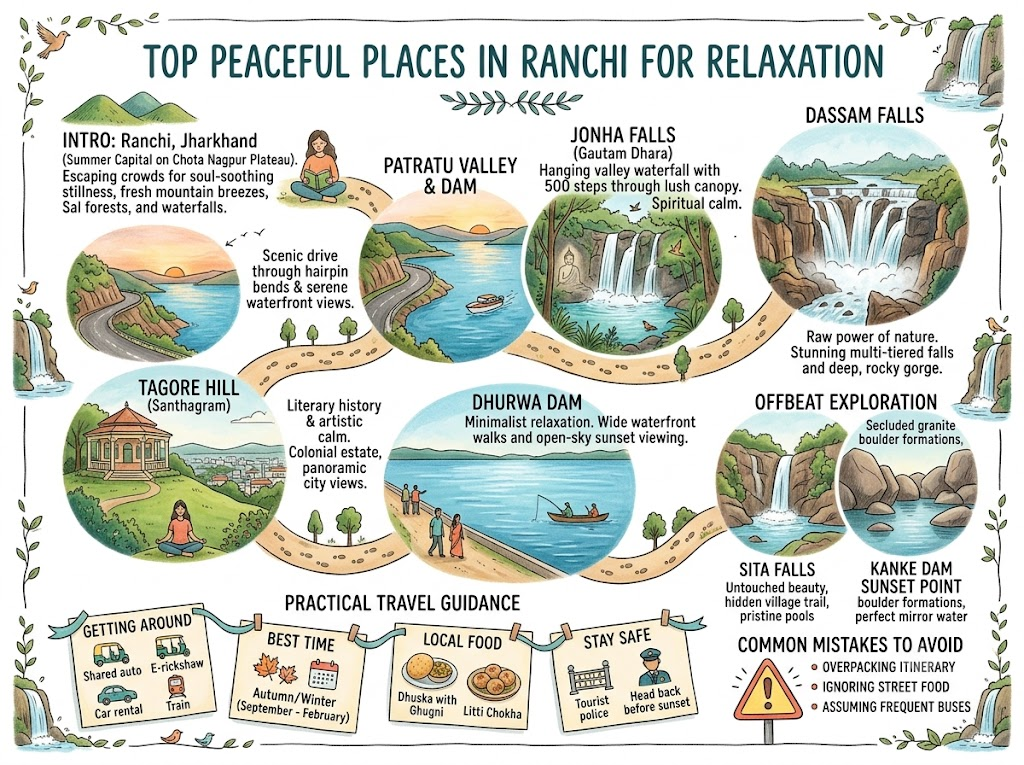
When planning a rejuvenating getaway, our minds instantly drift toward overcrowded commercial hill stations or mainstream coastal resorts packed to the brim with tourists. We endure long queues, loud commercial noise, and artificial attractions, entirely missing the core purpose of a vacation: genuine, soul-soothing stillness. If you are desperate to escape this relentless concrete fatigue, it is time to look toward the soulful heart of Eastern India. Ranchi, the unassuming capital of Jharkhand, stands out as a breathtaking alternative rich with ancient tribal heritage, untamed landscapes, and an incredibly calming pace of life.
Known historically as the summer capital of the Bihar region during colonial rule, this city rests atop the scenic Chota Nagpur Plateau. It gracefully balances modern development with massive expanses of ancient Sal forests, cascading waterfalls, and quiet hilltop shrines. Choosing Ranchi means trading artificial, touristy setups for crisp, unpolluted mountain breezes, sacred tribal groves, and vast, reflective water bodies. It is a destination where you can slow down completely, connect deeply with local traditions, and rediscover internal peace.
Why Ranchi is a must visit city
Ranchi holds an immense geographical and cultural weight that makes it a definitive chapter in Indian travel. Sitting comfortably at an average elevation of 2,140 feet above sea level, the region enjoys a remarkably pleasant, sub-tropical climate throughout most of the year. This elevated plateau topography has blessed the city with an astonishing network of perennial river channels that plunge sharply over massive rock shelves, creating an incredible ring of natural waterfalls around the city boundaries. Historically, this land has been fiercely protected and nurtured by indigenous tribes like the Santhals, Mundas, and Oraons, whose deep spiritual relationship with nature ensures that the green canopy remains remarkably pristine.
For different traveler archetypes, Ranchi offers highly practical on-ground accessibility and excellent infrastructure. It is exceptionally well-connected via the Birsa Munda Airport (IXR), which handles direct daily flights from major metro hubs like Delhi, Mumbai, Kolkata, and Bengaluru. The Ranchi Railway Station (RNC) is a major modern railhead smoothly linking the state to all corners of India through high-speed trains like the Vande Bharat and Shatabdi Express. Excellent, wide national highways (NH-33 and NH-23) make road trips from neighbouring states incredibly smooth. Furthermore, the city boasts a highly versatile hospitality layout, ranging from premium luxury retreats to highly budget-friendly, government-run tourist lodges.
The regional travel circuit is delightfully expansive yet deeply organized. The popular Waterfall Circuit curves beautifully toward the eastern and southern rims of the district, taking you through sweeping rural landscapes lined with traditional mud houses and bright yellow mustard fields. Moving northward, the topography transitions effortlessly into dramatic, hairpin valley passes and expansive reservoirs that mirror the shifting colors of the sky.
| Key Feature | Quick Travel Data |
|---|---|
| Average Elevation | 2,140 feet (651 meters) above sea level |
| Primary Airport Hub | Birsa Munda Airport (IXR), Ranchi |
| Major Rail Junction | Ranchi Junction (RNC) & Hatia (HTE) |
| Best Connectivity Route | National Highway 33 (Four-lane corridor) |
| Signature Local Cuisine | Dhuska with Ghugni, Chilka Roti, Madua Roti |
| Core Cultural Festivals | Sarhul (Spring Tribal Festival), Karma Puja |
Best Places or Experiences
Patratu Valley & Dam
Patratu Valley is a breathtaking masterclass in modern engineering winding through nature’s raw splendor. The dramatic Patratu Ghat road features a series of sweeping, perfectly paved hairpin loops that slice through deep, emerald-green hills, offering sweeping panoramic views that feel entirely detached from the chaos of city life. At the absolute base of this mesmerizing valley lies the expansive Patratu Dam reservoir, a massive body of crystal-clear water originally built to supply a nearby thermal power station but now serving as an oasis of profound peace.
As you glide down the valley roads, the crisp mountain air carries the subtle, earthy scent of surrounding mixed deciduous forests. The waterfront area is beautifully developed, featuring wide, clean promenades and a structured boating dock that allows you to venture far into the quiet center of the lake. Watching the evening sun dip behind the distant, undulating hills while sitting on the banks of Patratu is arguably one of the most therapeutic visual experiences Jharkhand has to offer.
The iconic hairpin loops of Patratu Valley.
- Location: Ramgarh District, located roughly 40 kilometers north of Ranchi city center.
- Why it is worth visiting: It offers an incredible combination of Alpine-style winding mountain roads and a massive, serene waterfront that provides unparalleled sunset views.
- Best things to do: Take a peaceful motorboat cruise at dusk across the massive reservoir, enjoy an early morning drive along the empty hairpin bends for photography, and sit quietly at the designated valley viewpoints with a hot cup of local chai.
- Best time to visit: October to February for crisp morning fog, or late July to September to witness the valley turn an intense, vibrant green during the monsoons.
- Ideal for whom: Biking enthusiasts, landscape photographers, couples looking for a romantic drive, and solo travelers seeking peaceful contemplation.
- Travel tip: Avoid driving back up the valley ghats very late at night, as dense patches of unannounced mountain fog can severely drop on-road visibility within minutes.
Jonha Falls
Deeply revered as a classic example of a “hanging valley” waterfall, Jonha Falls is a breathtaking natural wonder where the pristine waters of the Gunga River cascade gracefully down a massive, 141-foot tier of dark bedrock. Named lovingly after the closest rural settlement, this site is also affectionately referred to as the Gautam Dhara due to a deeply rooted local belief that Lord Buddha spent significant time meditating amidst these very rocks. To reach the true base of the waterfall, visitors descend a beautifully constructed flight of roughly 500 concrete steps that cut through a dense canopy of ancient Sal, Bamboo, and Mahua trees.
The long walk down serves as an incredible sensory transition, as the urban buzz is steadily replaced by the deep, rhythmic rumble of rushing water and the clear, melodic calls of forest birds. At the base, the river creates a wide, mist-shrouded pool surrounded by massive, smooth boulders that have been beautifully carved by centuries of water flow. The surrounding area features quiet, sheltered seating pavilions where you can sit comfortably for hours, completely enveloped by the refreshing, cool water mist that continuously drifts off the plunge pool.
Jonha Falls, also known as Gautam Dhara.
- Location: Purulia Road area, situated approximately 45 kilometers east of the capital city.
- Why it is worth visiting: The site combines immense natural beauty with spiritual calm, offering a deeply immersive trek under a thick forest canopy right to the edge of a pristine river pool.
- Best things to do: Explore the quaint, historic Buddhist shrine located at the top of the cliffside, sit on the lower rock ledges to feel the cool, rising river spray, and enjoy a peaceful picnic inside the beautifully maintained forest garden.
- Best time to visit: September to November when the river flow is wonderfully full right after the monsoons, and the steps are dry and safe to walk.
- Ideal for whom: Nature lovers, spiritually inclined travelers, trekkers, and families looking for an active yet peaceful day out.
- Travel tip: The climb back up the 500 steps can be physically demanding; pack a couple of bottles of water and feel free to take short rests at the intermediate landing benches built along the path.
Dassam Falls
If you are looking to witness the raw, majestic power of nature in a truly secluded setting, Dassam Falls is an absolute necessity for your itinerary. Here, the powerful Kanchi River makes a dramatic, thunderous leap from a height of 144 feet, fracturing beautifully into ten distinct, parallel streams as it roars over a jagged, horseshoe-shaped cliff. The sheer acoustic energy of this location is incredibly powerful; the deep roar of the water echoing off the steep rocky gorge effectively drowns out all internal noise, leaving you in complete awe of the landscape.
The state tourism department has recently upgraded this site with highly safe, secure viewing decks perched at various heights along the gorge rim, allowing travelers to safely look down into the swirling, emerald-green depths below. The surrounding landscape is wonderfully rugged, dominated by steep rock faces, wild river vegetation, and sparse tribal villages tucked into the distant hillsides. The raw, unfiltered energy of Dassam makes it an exceptional place to sit quietly, watch the incredible play of light through the rising water mist, and watch natural rainbows form in the gorge.
The majestic, multi-tiered Dassam Falls.
- Location: Taimara village area, located about 40 kilometers south of Ranchi via the smooth Tata-Ranchi Highway.
- Why it is worth visiting: It is one of the most powerful and visually spectacular multi-tiered waterfalls in Eastern India, surrounded by a completely rugged and untamed mountain gorge.
- Best things to do: Photograph the striking ten-stream water split from the primary viewing terrace, enjoy a quiet walk along the designated cliff pathways, and purchase fresh, locally harvested wild honey from village vendors near the entrance.
- Best time to visit: October to January for clean, clear water streams and highly comfortable weather for exploring the outdoor viewing platforms.
- Ideal for whom: Adventure enthusiasts, solo travelers seeking raw wilderness, geography buffs, and serious photographers.
- Travel tip: Under no circumstances should you attempt to climb past the safety barriers or step into the river water at the base; the undercurrents here are notoriously strong and highly unpredictable.
Tagore Hill
Perched gracefully at an isolated height of 300 feet right within the northern rim of the city, Tagore Hill is an oasis of deep literary history and absolute artistic calm. This serene hillock once served as the beloved country retreat of Jyotirindranath Tagore, the deeply intellectual elder brother of India’s Nobel Laureate Rabindranath Tagore. Drawn to the profound silence of the hill, Jyotirindranath built a gorgeous, colonial-style garden estate at the summit in the late 19th century, where he spent years translating classic Sanskrit literature, writing philosophy, and gazing at the stars.
A gently sloping, wide stone staircase winds smoothly up the hillside, shaded by flowering trees and old ornamental shrubs. At the absolute peak stands the Santhagram, a striking, open-walled historic pavilion featuring beautifully carved arched pillars that frame panoramic views of the entire Ranchi landscape below. The atmosphere at the summit is remarkably quiet and reflective; it is a space where the city feels incredibly small, and the gentle, uninterrupted breeze invites you to sit down with a notebook, read poetry, or simply close your eyes and meditate.
The historic Santhagram pavilion at Tagore Hill.
- Location: Morabadi area, located just 4 kilometers north of the central Ranchi railway station.
- Why it is worth visiting: A highly accessible historical site that blends colonial literary legacy with panoramic, bird’s-eye views of the city in an atmosphere of complete quiet.
- Best things to do: Sit under the shade of the historic Santhagram pavilion to read or sketch, watch the sunrise over the city, and explore the small museum at the base dedicated to the cultural history of the Tagore family.
- Best time to visit: 5:30 AM to 7:30 AM to catch a breathtaking sunrise, or late afternoons to enjoy a peaceful sunset experience.
- Ideal for whom: Writers, history buffs, meditation practitioners, solo travelers, and architecture students.
- Travel tip: Visit during the early morning hours on weekdays to have the entire hill summit completely to yourself, away from any evening walkers.
Dhurwa Dam
Dhurwa Dam is a spectacular expanse of quiet water infrastructure that has naturally evolved into one of the most popular minimalist relaxation spots for locals. Built primarily to manage the water needs of the heavy industrial zones nearby, this massive earth-and-masonry dam features a completely straight, unblocked earthen embankment road that stretches across the water for over a kilometer. With zero commercial shops, loud stalls, or chaotic boating docks to distract you, the entire focus of this location remains solely on the massive sky and the vast, gently rippling water.
Walking along the wide concrete top of the dam feels like stepping into a peaceful, open landscape painting. On one side, the deep blue water extends right to the horizon, where it meets low, rolling hills; on the other, vast patches of open grassland and clusters of leafy trees sway in the wind. The absolute lack of commercial clutter makes it an incredibly popular spot for those who simply want to sit on a concrete ledge, feel a strong, cool breeze against their face, and listen to the gentle sound of water lapping against the stone walls.
- Location: Hatia region, situated roughly 15 kilometers south of the central business district.
- Why it is worth visiting: It offers an incredibly clean, wide, and uncommercialized waterfront area that is absolutely perfect for long, quiet walks and open-sky sunset viewing.
- Best things to do: Take a slow evening walk along the massive dam embankment, capture minimalist reflections on your camera, and watch local fishermen smoothly cast their traditional nets from small wooden canoes.
- Best time to visit: Late afternoons from November to February, when the air is cool and the sunset paints the massive reservoir in shades of deep orange and violet.
- Ideal for whom: Minimalist travelers, solo wanderers looking to think, couples, and evening walk enthusiasts.
- Travel tip: There are no major restaurants or snack stalls along the main dam road, so it is smart to pack your own light refreshments and carry a water flask along.
Offbeat Exploration: Hidden Gems Tourists Miss
Sita Falls
Tucked away quietly just a few kilometers past the popular Jonha Falls trail, Sita Falls is a hidden gem that remains remarkably untouched by mainstream tourist crowds. Named after the goddess Sita, this pristine waterfall features a beautiful, stepped rock face where the clear water gently slips down multiple levels into a deep, crystal-clear pool at the bottom.
Because it requires walking down a rugged, unpaved village trail, very few casual tourists make the trip, leaving the entire canyon incredibly quiet. The surrounding forest is thick and ancient, with giant creepers and moss-covered rocks framing the water. It is a place where you can sit on an isolated boulder, dip your feet into the cool, running mountain water, and enjoy the absolute silence of the wilderness.
Kanke Dam Sunset Point (Rock Garden Side Behind CLI)
While the primary Kanke Dam park can get quite lively with families on weekends, the hidden rocky banks tucked quietly behind the Central Tasar Research and Training Institute (CTRTI) offer a completely different, peaceful experience. This secluded stretch features massive, prehistoric granite boulder formations that slope gently right into the calm water edge.
Local artists and solo travelers often slip away to these hidden rocks in the late afternoon to escape the city. The water here is remarkably still, functioning as a perfect mirror for the sky, and the absolute lack of foot traffic creates an incredibly meditative atmosphere to watch the day come to a quiet close.
Detailed Practical Guidance for Travelers
The following logistical summary helps you easily plan your routes, manage your timing, and discover great local food stops near Ranchi’s top relaxation spots:
| Destination | Standard Entry Fee | General Timings | Best Local Food Options Nearby | Recommended Nearby Attractions |
|---|---|---|---|---|
| Patratu Valley & Dam | Free Entry (Boating charges extra) | 6:00 AM – 6:30 PM | Hot Chana Masala, Fresh Fish Fry at lakefront stalls | Patratu Valley Floating Resort, Lake View Park |
| Jonha Falls | INR 10 per person | 7:00 AM – 5:00 PM | Local tribal snacks, Fried Madua Roti at entry gates | Sita Falls, Gautam Buddha Shrine |
| Dassam Falls | INR 10 per person | 7:00 AM – 4:30 PM | Roasted Corn, Traditional Sweet Pua from village stalls | Taimara Valley Viewpoint |
| Tagore Hill | INR 10 per person | 6:00 AM – 6:00 PM | Litti Chokha stalls near the Morabadi ground loop | Morabadi Ground, Ramakrishna Mission Ashram |
| Dhurwa Dam | Free Entry | 5:00 AM – 7:00 PM | Light snacks, Jhalmuri from occasional mobile cycle vendors | Jagannath Temple (Historic 17th-century shrine) |
Logistics & On-Ground Navigation
Local Transport Options
- Railways & High-Speed Trains: Ranchi Junction serves as your primary entry point. For moving to nearby rural hubs like Jonha or Muri, local passenger trains offer a very cheap, authentic travel experience.
- Auto-Rickshaws (Shared & Reserved): Shared autos are the absolute backbone of city transit, running along fixed lines like Ratu Road to Main Road. For peaceful day trips to spots like Tagore Hill, it is highly recommended to reserve a private auto for the entire round trip.
- E-Rickshaws: These quiet, eco-friendly battery vehicles operate extensively throughout inner neighborhoods like Morabadi and Kanke, making them perfect for short, peaceful rides to local spots.
- Car Rentals & App Cabs: For long-distance trips out to Patratu Valley or Dassam Falls, booking a private taxi through local agencies or app services like Ola is by far the most comfortable option, ensuring you have a reliable ride back to the city.
Budget Planning
- Budget / Backpacking Tier (INR 1,200 – INR 1,800 per day): This tier includes staying in clean, budget homestays or cozy local guesthouses, relying primarily on shared autos and e-rickshaws for transit, and enjoying authentic street food meals like Dhuska, Litti Chokha, and local tea.
- Mid-Range / Comfort Tier (INR 3,500 – INR 5,500 per day): This tier covers staying in comfortable 3-star business hotels or charming state tourism bungalows, hiring a dedicated private AC cab for seamless day trips to the waterfalls, and dining at established regional restaurants.
Safety and Inclusivity Tips
- Families: All major waterfalls now feature well-maintained safety railings and dedicated tourism police units. Stick to the main paved pathways and ensure you start head back toward the city before the sun sets.
- Couples: Spots like Patratu Valley and Tagore Hill are wonderfully scenic and welcoming. To enjoy maximum privacy and quiet, plan your visits for weekday mornings when the weekend family crowds are absent.
- General Safety: Ranchi is culturally deeply warm and respectful. However, because many of these beautiful natural spots are tucked into dense forest zones, it is smart to finish your rural explorations and head back toward major national highways by 5:00 PM.
Strategic Travel Planning Guardrails
Travel Planning Tips for Ranchi
- Book Your Accommodation Early: If you are planning a trip around major regional festivals like Sarhul or Karma Puja, make sure to book your accommodation weeks in advance, as the city fills up with cultural travelers.
- Carry Sufficient Physical Cash: While digital UPI payments are widely accepted across almost all shops within Ranchi city limits, remote village areas near Dassam and Jonha falls often have spotty mobile networks. Always keep enough cash on hand for parking and small stalls.
- Pack Light Cotton Layers and a Light Jacket: Due to the city’s unique plateau geography, evening temperatures can drop surprisingly fast even during the summer. A light jacket or a warm shawl is always handy.
- Respect Sacred Tribal Spaces: When exploring natural forest paths or remote waterfalls, you will often spot trees marked with sacred red cloth (Sarna Sthal). Always treat these indigenous prayer groves with deep respect and avoid littering around them.
- Prioritize Sturdy Footwear: Expect to do plenty of walking on uneven rock surfaces and damp concrete steps across the waterfall circuit. A durable pair of walking shoes with excellent grip is absolutely essential.
Common Mistakes to Avoid
- Over-Packing Your Daily Itinerary: Do not try to visit Jonha, Dassam, and Patratu all on the same day; they are located in completely different directions around the city, and you will spend your entire day stuck in a car.
- Ignoring the Hidden Street-Level Food Stalls: Skipping out on humble roadside vendors means missing the true culinary soul of Jharkhand. Give authentic local treats like Dhuska a try.
- Assuming Public Busses Run Frequently to Remote Waterfalls: Public transit options directly to the deep interiors of sites like Dassam Falls are quite limited. Do not assume you can easily catch a bus back late in the afternoon.
- Forgetting to Pack Effective Insect Repellent: Since the best relaxation spots are nestled deep within lush Sal forest ecosystems, carrying a bottle of insect repellent is crucial to keep mosquitoes at bay.
- Overpaying for Unmetered Auto Rides: Always take a moment to cross-reference prices with online ride-hailing apps or politely ask a local peer to check the standard seasonal fare before jumping into an unmetered auto-rickshaw.
Suggested Itinerary Blueprints
1. Day Quick Dash (The Classic Valley & Hill Loop)
Designed beautifully for business travelers or short-stay visitors who want a quick, seamless dose of absolute relaxation.
- Morning (06:00 AM – 08:30 AM): Start your day with an early morning walk up Tagore Hill to enjoy a peaceful sunrise and panoramic city views before the urban noise picks up.
- Mid-Day (11:00 AM – 02:00 PM): Take a relaxing drive north to Patratu Valley, stopping at the valley viewpoints for photographs, followed by an early lunch at the lakefront.
- Late Afternoon (03:30 PM – 05:30 PM): Enjoy a quiet motorboat ride across the calm waters of Patratu Dam before driving smoothly back into the city.
2. Day Deep-Dive (The Wilderness & Heritage Split)
A wonderful weekend plan that balances powerful natural landscapes with quiet historical exploration.
- Day 1 (The Waterfall Focus): Head out early eastward to explore Jonha Falls and the quiet Buddhist temple nearby. Spend your afternoon discovering the hidden paths of Sita Falls, and stop for a rustic lunch of hot Litti Chokha on your drive back.
- Day 2 (The Urban Peace Loop): Spend your morning exploring the beautiful, historic 17th-century architecture of the Jagannath Temple. Later in the afternoon, transition to the wide embankment of Dhurwa Dam for a long, quiet walk to watch the sunset.
3. Complete Weekend Travel Plan (The Ultimate Plateau Escape)
The definitive three-day travel loop to completely unwind, experience the regional culture, and clear your mind.
- Friday (Arrival & Lakeside Stillness): Arrive in the city, check into your hotel, and spend a relaxed late afternoon sitting on the quiet rocky banks behind Kanke Dam to watch a peaceful sunset.
- Saturday (The Eastern Waterfall Circuit): Dedicate your entire day to nature. Take a drive out to the powerful Dassam Falls to experience the raw energy of the gorge. In the afternoon, head over to Jonha Falls for a slow, mindful walk under the cool forest canopy.
- Sunday (Highways & Valleys): Spend your morning browsing local handicraft shops for beautiful Sohrai paintings as souvenirs. Conclude your weekend with a long, scenic drive through the winding roads of Patratu Valley, enjoying a relaxed late-afternoon boat cruise before your departure.
Common Tourist Mistakes to Avoid
- Geographic Blunders: Many travelers mistakenly group geographically opposed zones on the exact same day. For instance, attempting to combine Patratu Valley (North) with Dassam Falls (South) in a single afternoon will leave you exhausted and stuck in highway transit during prime sunset hours.
- Commercial Traps: Do not spend your limited relaxation hours in the crowded, modernized shopping hubs along Main Road or inside generic malls. These commercial spaces offer the exact same corporate noise you are trying to escape; instead, head out to the quiet, atmospheric open spaces like Morabadi Ground or the serene campus paths of Ranchi University.
- Neglecting Alternative Zones: Travelers frequently forget to explore the quieter, modern residential expansions of the region. Neighborhoods like Kanke and Morabadi have evolved beautifully, offering lovely, slow-paced cafe-centric spaces where you can comfortably read a book or enjoy a quiet evening coffee away from heavy city traffic.
- Transport Overpayment: Avoid price gouging by checking standard travel rates beforehand. Always check active ride-sharing apps to establish a fair price baseline before negotiating fixed daily rates with local reserved auto drivers at the central station gates.
- Luxury Dining Bias: Sticking exclusively to fine-dining indoor hotel restaurants deprives you of the destination’s authentic culinary flavors. The street-level culinary vendors utilize traditional, open-fire cooking techniques that give local dishes an incredible, deep flavor profile you simply cannot replicate indoors.
Frequently Asked Questions
1. Is Ranchi a safe destination for solo travelers looking for a quiet getaway?
Yes, Ranchi is an incredibly warm, safe, and welcoming city for solo travelers. The local communities are polite and helpful, and public spaces are generally very comfortable to explore. As a standard safety practice, it is smart to finish your remote forest and waterfall explorations by late afternoon and head back toward the main national highways before it gets dark.
2. How do I get to Patratu Valley from the main Ranchi city center if I don’t have a personal car?
If you don’t have your own car, the most comfortable and reliable option is to book a private cab for the day through app cab services or local travel agencies. Alternatively, you can hop on a local passenger bus from the Ratu Road Bus Stand heading toward Patratu or Ramgarh, or rent a private auto-rickshaw from the city center for a convenient round trip.
3. Are the steps at Jonha Falls safe and manageable for elderly travelers?
The steps at Jonha Falls are made of sturdy concrete and feature intermediate landing benches where you can take quick rests. However, because there are roughly 500 steps to climb back up, the walk can be physically tiring for elderly travelers with knee or heart concerns. For a more accessible view, they can comfortably enjoy the waterfall from the upper viewing platforms without walking down to the base.
4. What exactly is Dhuska, and where can I find the best version of it in the city?
Dhuska is Ranchi’s most popular, authentic breakfast street food. It is a savory, deep-fried fritter made from a blended batter of locally harvested rice and chana dal, typically served with a spicy potato and black chickpea curry (Ghugni). You can find the freshest, most delicious versions at the morning street stalls around the Morabadi Ground loop or near the Albert Ekka Chowk.
5. Can we step into the water or swim at the base of Dassam Falls?
No, swimming or stepping into the water at the base of Dassam Falls is strictly prohibited by local authorities. The plunge pool beneath the falls features incredibly strong undercurrents and hidden, jagged underwater rocks that make it extremely dangerous. Stick to the beautifully designed viewing decks to enjoy the view safely.
6. Are there any neat accommodation options available directly near Patratu Dam for an overnight stay?
Yes, the Jharkhand Tourism Development Corporation (JTDC) operates a beautiful lakefront resort right near the dam that offers comfortable rooms and scenic views. Additionally, there are private luxury eco-resorts tucked along the valley hillsides that are perfect if you want to wake up to a misty, peaceful view of the valley.
7. What unique local souvenirs should I look for when exploring Ranchi?
You should definitely look for beautiful, handmade Sohrai and Khovar paintings, which are traditional tribal art forms depicting local wildlife and forest heritage. Stunning terracotta pottery, elegant bamboo wood crafts, and authentic Tussar silk sarees are also wonderful, authentic souvenirs to pick up from state-run emporiums like Jharcraft.
8. Is the water flow at the waterfalls sufficient if I plan a visit during the summer months of April or May?
During the peak summer months of April and May, the water flow at Jonha and Dassam falls drops significantly, turning into thin, quiet streams. While the surrounding rock formations and forests still offer a peaceful getaway, the absolute best time to experience the roaring, full beauty of these waterfalls is from September to January, right after the monsoon rains.
9. Do I need to apply for any special inner-line permits to visit the tribal villages around Ranchi?
No, you do not need any special inner-line travel permits to visit the standard tourist spots, waterfalls, or rural villages around Ranchi. The entire region is completely open to both domestic and international travelers, though always remember to be respectful and ask for permission before photographing local tribal homes or private spaces.
10. What is the best way to travel around within the city limits for a budget-conscious traveler?
The most affordable way to get around the city is by using the extensive network of shared auto-rickshaws, which run along all major city roads for a very low fare. For short, quiet trips within inner neighborhoods like Morabadi or Kanke, eco-friendly battery-operated e-rickshaws are cheap, convenient, and easy to find.
11. Is reliable mobile network coverage available at remote locations like Sita Falls and Dassam Falls?
Major mobile networks offer decent connectivity along the primary highways and at the main entrance gates of major waterfalls. However, once you walk down into the deep rocky gorges or forest trails at sites like Sita Falls, the signal can become spotty or drop entirely. It is highly recommended to download your digital navigation maps offline before leaving the city.
12. Why is Tagore Hill historically linked to the famous poet Rabindranath Tagore?
While the Nobel Laureate Rabindranath Tagore did visit the region, the hill is more directly linked to his elder brother, Jyotirindranath Tagore. He was so deeply moved by the absolute silence and beauty of the hill that he set up his country retreat here in the late 19th century, using the peaceful space to write, translate classic literature, and meditate.
Conclusion
Choosing a quiet journey through Ranchi over a standard, highly commercialized vacation is a deeply rewarding experience for your mind and spirit. Instead of dealing with packed tourist crowds and artificial attractions, this beautiful plateau landscape invites you to slow down and rediscover a rare, authentic sense of peace. Whether you are watching the evening light play across the winding curves of Patratu Valley, listening to the deep, calming roar of Dassam Falls, or sitting quietly on the historic steps of Tagore Hill, Ranchi offers a genuine escape from concrete fatigue. It is a travel experience that leaves you feeling deeply rested, clear-headed, and profoundly connected to the timeless rhythms of nature and local heritage.
