Introduction
When modern urbanites visualize a quick weekend escape, their minds typically drift toward commercialized hill stations with crowded mall roads, repetitive souvenir stalls, and bumper-to-bumper tourist traffic. Yet, hidden within the rugged soul of the Chota Nagpur Plateau lies an entirely different travel paradigm. Ranchi, the capital city of Jharkhand, serves as the ultimate gateway to an untamed wonderland of dense sal forests, dramatic rock scarps, and thunderous multi-tiered waterfalls that remain blissfully unburdened by commercial exploitation.
Choosing a nature trip around this region means trading neon signs for the vibrant red hues of blooming palash trees and swapping city noise for the ancient, rhythmic thrum of the Mandar drum echoing from nearby tribal villages. This is a landscape deeply rooted in geological history and indigenous heritage, offering weary travelers a profoundly authentic connection to the earth. If you are looking to escape the concrete grind, these short nature getaways provide the perfect sanctuary to reset your senses.
Why Ranchi is a must visit city
Ranchi is not just an administrative hub; it is a sprawling geographical marvel perched at an average elevation of 650 meters above sea level. This specific elevation rewards the city and its surrounding regions with a subtropical climate that stays surprisingly pleasant when neighboring plains are scorching. Historically known as the “City of Waterfalls,” the region acts as a primary hydrological catchment area where majestic rivers like the Subarnarekha, South Koel, and Kanchi slice through ancient crystalline rocks to form an astonishing collection of natural amphitheaters and scarps.
For different traveler archetypes, the practical accessibility of Ranchi is exceptionally seamless. The city is exceptionally connected via the Birsa Munda Airport (IXR), which features daily direct flights to major Indian metros, while the Ranchi Railway Station sits comfortably on a well-serviced national rail network. Road trippers can enjoy excellent multi-lane national highways like NH-33 and NH-23, which link the city to vast forested valleys and scenic water bodies within minutes. Whether you are a solo backpacker looking for raw trekking trails, a couple seeking mist-covered panoramic views, or a family planning a peaceful weekend picnic, the travel circuits radiating from Ranchi offer immediate transitions into pristine wilderness.
| Key Fact Metric | Regional Detail & Traveler Logistics |
| Topographic Profile | Chota Nagpur Plateau, undulating rocky scarps, dense dry-deciduous forests. |
| Primary River Systems | Subarnarekha River, Kanchi River, Raru River, Damodar River. |
| Best Travel Season | October to March for pleasant weather; July to September for roaring waterfalls. |
| Ideal Trip Duration | 2 to 3 days for a comprehensive regional circuit. |
| Local Specialization | Tribal handloom, bamboo crafts, organic forest honey, Dhokra metal art. |
Best Nature Places or Experiences
Hundru Falls
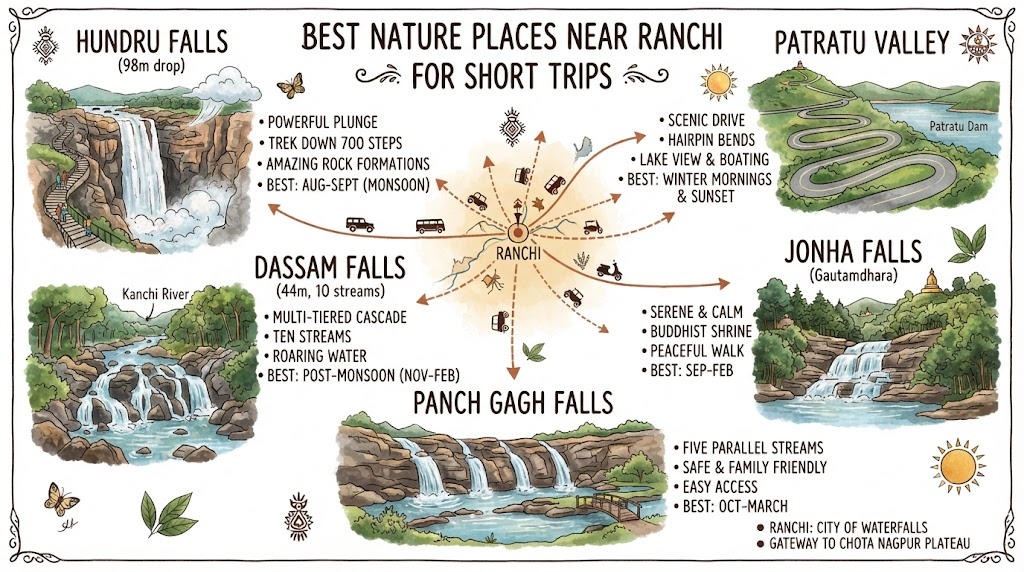
The mighty Hundru Falls stands as a towering testament to the sheer power of the Subarnarekha River, which plunges dramatically from a vertical height of 98 meters (322 feet). As one of the highest waterfalls in the state of Jharkhand, it marks a classic geological knickpoint where the river rejuvenates and drops from the edge of the Ranchi plateau. The relentless force of the falling water over millennia has sculpted the surrounding basaltic rocks into bizarre, polished formations that look like giant abstract art pieces. During the monsoon, the spray creates a continuous, ethereal mist that covers the entire valley in a cool jacket, while the winter months reveal a calmer, crystal-clear pool at the base.
Visitors can descend more than 700 concrete steps to reach the very bottom of the gorge, where the sheer scale of the cliffside becomes beautifully overwhelming. The air here is clean and rich with the scent of wild forest moss and wet earth. A nearby hydro-electric power project highlights the river’s immense kinetic energy, but the true draw remains the raw, unedited theater of nature.
- Location: Ormanjhi-Sikidiri Circuit, roughly 45 kilometers northeast of Ranchi city center.
- Why it is worth visiting: It is one of the highest and most photogenic waterfalls in eastern India, showcasing magnificent rock erosions.
- Best things to do: Trek down the 700 steps to the plunge pool, photograph the unique rock formations, and enjoy local snacks at the cliffside viewpoints.
- Best time to visit: October to February for stable water levels and picnics; August to September to witness its peak monsoon fury.
- Ideal for whom: Adventure enthusiasts, landscape photographers, and groups of friends looking for a rugged day trip.
- Travel tip: The climb back up the steps can be physically demanding; carry sufficient drinking water and avoid stepping deep into the pool due to sudden undercurrents.
Patratu Valley
If you believe that the journey matters just as much as the destination, Patratu Valley will absolutely take your breath away. This legendary mountain pass features a beautifully engineered, multi-lane hairpin road that snakes down a sharp green ridge, offering sweeping views of the sparkling Patratu Dam below. Driving down these perfectly paved curves feels like gliding through a green sea, with the deep blue waters of the reservoir acting as a gorgeous backdrop on the horizon. The entire valley is blanketed by dense forests that change color with the seasons, shifting from deep emerald green during the monsoon to rich copper-gold in the late winter.
At the base of the ghats lies the massive Patratu Dam reservoir, a serene body of water built primarily to supply a nearby thermal power station but now operating as a top-tier watersports hub. You can rent speedboats or classic pontoon boats to explore the quiet corners of the lake. The sunset here is an absolute ritual; as the sun slips behind the distant hills, it paints the winding mountain roads and the glassy water surface in fiery shades of crimson and orange.
- Location: Ramgarh District, approximately 40 kilometers north of Ranchi via the Kanke-Patratu Road.
- Why it is worth visiting: The iconic S-curves of the mountain road offer a thrilling drive paired with gorgeous panoramic lake views.
- Best things to do: Take a scenic drive or ride along the hairpin bends, go motorboating at the Patratu Lake Resort, and watch the spectacular sunset from the valley viewpoints.
- Best time to visit: Late afternoon (3:30 PM to 6:00 PM) throughout the year, especially during winter mornings when heavy fog rolls through the valley.
- Ideal for whom: Road trippers, motorcycling enthusiasts, young couples, and photography lovers.
- Travel tip: Park your vehicle only at designated viewpoint bays along the ghats; local police strictly discourage stopping on sharp blind curves for safety reasons.
Dassam Falls
Formed by the pristine waters of the Kanchi River, Dassam Falls (also known as Dasham) is a striking natural wonder that drops from a height of 44 meters (144 feet). What makes Dassam incredibly unique is its multi-tiered structure; the river breaks into ten distinct channels as it leaps over the rugged cliff face, creating a beautiful symphony of sound that echoes across the valley. The surrounding landscape is a peaceful mix of dense sal trees and towering rock walls, completely cutting you off from any sign of industrial life. The sheer volume of water during the post-monsoon months creates a thunderous roar that can be heard long before you even see the falls.
The Jharkhand Tourism department has built clean viewing platforms at various levels, allowing travelers to admire the waterfall safely from different angles. The misty air carries a refreshing chill, making it a fantastic spot to beat the afternoon heat. The striking contrast between the white frothy water and the black basalt rocks makes it a favorite playground for nature photographers.
- Location: Taimara Township on the Ranchi-Jamshedpur Highway (NH-33), around 40 kilometers southeast of Ranchi.
- Why it is worth visiting: The unique ten-stream cascade structure creates a dramatic and roaring natural display.
- Best things to do: View the falls from multiple designated viewing decks, capture long-exposure shots of the streams, and explore the nearby rural forest trails.
- Best time to visit: November to February when the water clears up and flows beautifully over the rock tiers.
- Ideal for whom: Nature lovers, family picnic groups, and serenity seekers looking for an authentic forest atmosphere.
- Travel tip: Entering the water or attempting to swim at the base of Dassam Falls is strictly prohibited due to dangerous hidden deep vortexes and slippery underwater rocks.
Jonha Falls
Also affectionately known as the Gautamdhara Falls, Jonha Falls offers a deeply tranquil nature experience where spirituality and wilderness come together. The waterfall is formed by the confluence of the River Ganga and the River Raru, dropping down a gradual, rocky slope from a height of 45 meters. The environment here feels uniquely calm and sheltered, largely because the falls are nestled deep within a thick canopy of old-growth trees and wild shrubbery. The name Gautamdhara comes from a charming Buddhist monastery and shrine built on the hilltop overlooking the valley, celebrating the local belief that Lord Buddha once bathed in these sacred waters.
A wide flight of roughly 500 steps takes you down through the green forest canopy straight to the edge of the rocky riverbed. Unlike the wilder drops of Hundru and Dassam, Jonha has a more peaceful, gentle character, with water flowing gracefully over wide rock steps. It is a fantastic place to sit quietly on the smooth stones, dip your feet into the cool running streams, and listen to the birds chirping in the trees.
- Location: Ranchi-Purulia Highway, roughly 40 kilometers east of the capital city.
- Why it is worth visiting: A beautiful combination of a serene waterfall and a historic Buddhist shrine tucked away in a dense forest.
- Best things to do: Walk down the scenic steps to the riverbed, explore the Gautam Buddha temple on the hill, and enjoy a quiet walk along the rocky banks.
- Best time to visit: September to February, particularly early mornings when the sunlight filters beautifully through the forest canopy.
- Ideal for whom: Families, elderly travelers looking for a slower pace, and anyone seeking spiritual peace in nature.
- Travel tip: A tourist rest house is available at the top; consider combining this visit with the nearby Sita Falls, which is just a short drive away.
Panch Gagh Falls
For families and travelers who want to experience the beauty of wild rivers without the safety risks of steep cliffs, Panch Gagh Falls is an absolute paradise. Located near the historic town of Khunti, this destination features five distinct, parallel streams (Panch means five) that originate from a single river source and drop gracefully over a low, wide rocky ridge. Because the water does not plunge into a deep gorge but instead flows over a gentle slope, the foot of the falls forms a safe, shallow, and peaceful pool. The area is surrounded by beautiful green orchards and manicured forest lawns maintained by the local tourism board.
The gentle, soothing sound of five parallel streams running together creates a wonderfully relaxing atmosphere. The local authorities have built rustic footbridges, small gazebos, and concrete pathways across the streams, allowing visitors to walk right over the running water. It is widely considered the safest and most family-friendly nature spot in the entire Ranchi travel circuit.
- Location: Near Khunti township, roughly 50 kilometers south of Ranchi via the Khunti-Chaibasa Road.
- Why it is worth visiting: The five parallel, gentle streams offer a uniquely safe, accessible, and highly serene riverside experience.
- Best things to do: Walk safely along the shallow rocky stream beds, enjoy a family picnic on the lawns, and buy fresh, locally grown guavas from tribal vendors.
- Best time to visit: October to March, when the weather is cool and the streams flow with clear, gentle water.
- Ideal for whom: Multi-generational families, small children, senior citizens, and large picnic groups.
- Travel tip: The local tribal cooperative runs small food stalls here; make sure to try the fresh, hot dhuska served with spicy aloo chana sabzi.
Offbeat Exploration: Hidden Gems Tourists Miss
Sita Falls
Tucked away just a few kilometers past the popular Jonha Falls, Sita Falls is a stunning hidden gem that most mainstream tourists completely miss. Named after the goddess Sita, this pristine waterfall drops down a multi-tiered rocky slope surrounded by deep, untouched forests. Because it receives very little foot traffic, the water here stays incredibly clear, and the surrounding rocks are covered in beautiful green moss. Getting to the base requires a bit of an adventurous scramble down a steep dirt trail, but the reward is having an entire, beautiful waterfall completely to yourself.
Getalsud Dam (Rukka Reservoir)
While Patratu Dam gets all the social media fame, Getalsud Dam offers a massive, quiet ocean-like escape just a short drive from the city. This huge artificial reservoir built across the Subarnarekha River features vast, open shorelines where you can watch the sunset with nothing but the sound of gentle waves and the cool lakeside breeze. The area around the dam is completely free of commercial shops, making it an incredible spot for pitching a tent, stargazing, or enjoying a quiet evening away from the city lights.
Detailed Practical Guidance for Travelers
The following logistical summary will help you plan your itinerary effectively across the primary nature landmarks discussed above:
| Destination | Standard Entry Fee | General Timings | Best Local Food Options Nearby | Recommended Nearby Attractions |
| Hundru Falls | ₹20 per person | 8:00 AM – 5:00 PM | Local Dhabas (Dhuska, Aloo Dum, Fried Fish) | Getalsud Dam, Sikidiri Hydel Project |
| Patratu Valley | Free (Resort entry ₹50) | Open 24/7 (Dam: 9 AM – 6 PM) | Lakeside cafés (Chhena Poda, Grilled Corn) | Patratu Lake Resort, Pithoria Ghats |
| Dassam Falls | ₹20 per person | 8:30 AM – 4:30 PM | Tribal stalls (Madua Roti, Roasted Corn) | Surya Mandir (Bundu) |
| Jonha Falls | ₹20 per person | 8:00 AM – 5:00 PM | Tourism Rest House (Standard Indian Thali) | Sita Falls, Remta Lake |
| Panch Gagh Falls | ₹20 per person | 8:30 AM – 5:00 PM | Khunti local market stalls (Arsa Roti, Khoya) | Deer Park, Angrabadi Temple Complex |
Logistics & On-Ground Navigation
Local Transport Options
- Private Car Rentals: Hiring a private taxi (like a Swift Dzire or Innova) from Ranchi city for a full day costs between ₹2,500 and ₹4,000, including fuel. This is highly recommended for waterfall circuits because public transport to the remote interiors is irregular.
- Railways: For Jonha and hitchhikers, the local passenger trains running from Ranchi to Purulia stop directly at the Jonha Station, located just 1.5 kilometers from the waterfall.
- Auto-Rickshaws & E-Rickshaws: These are excellent and highly affordable for travel within Ranchi city limits or between hubs like Ormanjhi or Khunti town. However, they are not structurally suitable for the steep mountain ghats of Patratu or the long highway stretches leading to Dassam Falls.
- Two-Wheeler Rentals: Local bike rental agencies in Ranchi offer scooters and motorcycles starting at ₹500 to ₹900 per day, which is an incredibly popular and budget-friendly choice for backpackers heading down the Patratu Valley roads.
Budget Planning
- Backpacker / Budget Tier (₹1,200 – ₹1,800 per day): This budget covers staying in local homestays or budget rooms near the railway station, using local passenger trains or rented scooters for transport, and eating delicious regional street food like dhuska, chilka roti, and standard vegetable thalis.
- Mid-Range / Comfort Tier (₹3,500 – ₹6,000 per day): This budget includes staying in comfortable 3-star hotels in Ranchi (such as Jharkhand Tourism’s Birsa Vihar or private business hotels), hiring a dedicated private AC cab for comfortable day trips, and dining at established highway dhabas or city restaurants.
Safety and Inclusivity Tips
- Families: Always stick to well-maintained and highly secure areas like Panch Gagh Falls or the Patratu Lake Resort. Keep a very close eye on children near the barriers, and try to finish your outdoor nature trips so you can head back to the city before the sun goes down.
- Couples: Stick to mainstream, high-footfall viewpoints during daylight hours. While the remote corners of the valleys are incredibly beautiful, it is best to avoid isolated forest trails late in the evening where mobile network coverage becomes weak.
- General Safety:Critical Safety Note: The rocks near all the waterfalls in the Ranchi plateau are incredibly slippery due to continuous moss growth and mist. Never cross the safety iron railings installed by the tourism department, and never consume alcohol near the water edges.
Strategic Travel Planning Guardrails
Travel Planning Tips for Ranchi
- Carry Physical Cash: While digital UPI payments work perfectly inside Ranchi city and at major fuel stations, mobile networks can be highly unreliable deep inside the gorges of Hundru or Dassam Falls. Always keep at least ₹1,500 to ₹2,000 in cash for entry fees, parking, and local food stalls.
- Pre-Book Winter Accommodations: The pleasant winter months between November and January bring in a large volume of regional travelers. Make sure to book your rooms and rental cars at least two weeks in advance.
- Pack Proper Footwear: Wear sturdy, comfortable sports shoes or trekking shoes with excellent rubber grip. You will be walking down hundreds of damp concrete and stone steps to reach the waterfall bases.
- Respect Tribal Etiquette: When visiting rural spots near Khunti or Jonha, always ask for permission before photographing local tribal residents or their beautiful mud houses.
- Carry Insect Repellent: The dense sal forests and water reservoirs are natural breeding grounds for mosquitoes. Pack a reliable insect repellent, especially if you plan to catch the sunset by the dams.
Common Mistakes to Avoid
- Over-packing the Itinerary: Trying to visit Hundru, Jonha, and Dassam Falls all on the exact same day will leave you exhausted and spending your entire trip inside a car.
- Assuming All Waterfalls are Swim-Friendly: Many tourists mistakenly treat these massive plunge pools like amusement park wave pools, which can lead to tragic accidents due to hidden underwater currents.
- Skipping the Local Cuisine: Sticking strictly to standard continental hotel food means missing out on incredible regional delicacies like dhuska, handia, and seasonal rugra mushrooms.
- Relying Solely on Ride-Sharing Apps for Return Trips: You can easily book an Ola or Uber from Ranchi city to Patratu Valley, but finding a return ride back using an app from the valley can be incredibly difficult. Always book a round-trip cab.
- Arriving Late at Nature Sites: Arriving at the waterfalls past 4:00 PM means you will have to rush through your visit in dim lighting, missing the best views and photography windows.
Suggested Itinerary Blueprints
1. Day Quick Dash (The Waterfall Double-Header)
- Target Audience: Business travelers or weekend visitors with only 10 to 12 hours to spare.
- Routing Layout: Leave Ranchi early at 8:00 AM and take the Ormanjhi highway straight to Hundru Falls. Spend the morning exploring the massive drop and enjoying a quick lunch of dhuska at the top. By 1:30 PM, drive through the beautiful internal village roads to reach Jonha Falls by 3:00 PM. Take a relaxing walk down to the riverbed and visit the peaceful Buddhist temple before heading back to Ranchi by 6:30 PM.
2. Day Deep-Dive (The High-Value Circuit)
- Day 1: Start your morning by driving southeast to the powerful Dassam Falls. Spend the afternoon visiting the ancient stone-carved Surya Mandir at Bundu. Head back to Ranchi in the evening to explore the local markets for authentic bamboo crafts.
- Day 2: Dedicate your morning to the spectacular winding roads of Patratu Valley. Spend the afternoon enjoying the boating facilities and beautiful lawns at the Patratu Lake Resort. Watch the golden hour sunset over the reservoir before heading back to the city.
3. Complete Weekend Travel Plan (The Ultimate Plateau Loop)
- Friday Afternoon: Arrive in Ranchi, check into your hotel, and head up to Tagore Hill to catch a peaceful evening sunset view over the city skyline.
- Saturday: Head out early for the grand waterfall loop. Visit Hundru Falls in the morning, stop by the quiet shores of Getalsud Dam for a relaxing midday break, and spend your afternoon exploring the beautiful Jonha Falls and hidden Sita Falls.
- Sunday: Drive south toward the Khunti district to experience the unique five streams of Panch Gagh Falls. Spend the afternoon exploring the ancient Angrabadi Temple Complex before heading back to Ranchi for your evening flight or train departure.
Common Tourist Mistakes to Avoid
- Geographic Blunders: The biggest mistake travelers make is trying to combine Patratu Valley (which lies directly north of Ranchi) with Dassam Falls (which sits far to the southeast) on the exact same day. This results in spending your entire day navigating city traffic instead of enjoying nature.
- Commercial Traps: Do not waste your limited weekend hours sitting inside the modernized shopping malls or food courts of Ranchi city. The true magic of the region lies entirely in its raw, outdoor forest trails and quiet lakeside shorelines.
- Neglecting Alternative Zones: Many visitors completely forget to explore the quieter, modern expansions of the city, such as the lovely walking paths and sunset spots around the Kanke Dam or the Ranchi Rock Garden.
- Transport Overpayment: Avoid hiring unmetered auto-rickshaws directly outside the railway station for long-distance highway trips. Always cross-reference prices with local app-based cab rides or book a fixed-rate vehicle through a reputable local travel agency.
- Luxury Dining Bias: If you only dine at high-end luxury hotel buffets, you completely miss out on the authentic flavors of the region. The smoky, wood-fired dhabas along the highways serve some of the best local country chicken curries and seasonal dishes you will ever taste.
Frequently Asked Questions
1. Is it completely safe to visit the waterfalls near Ranchi for solo travelers?
Yes, the primary nature tourist circuits around Ranchi are highly secure and continuously monitored by the Jharkhand Tourism security guards. However, as a standard travel practice, ensure you finish your outdoor explorations and head back toward the main national highways before it gets dark.
2. Can we easily hire automatic scooty rentals inside Ranchi city?
Yes, several independent bike rental agencies operate near the Ranchi Railway Station and Lalpur area, offering well-maintained scooters and motorcycles. You will just need to provide a valid driving license and a refundable security deposit.
3. Which waterfall near Ranchi involves the least amount of walking or climbing steps?
Panch Gagh Falls involves the least amount of climbing, as the streams flow over a flat, level area with comfortable paved pathways. This makes it the absolute best choice for elderly travelers or anyone with knee issues.
4. Are there any hidden entry permit charges for entering Patratu Valley?
There are no entry permits or charges required to drive or ride through the public highways of Patratu Valley. You will only pay a nominal parking fee and a small entry fee if you choose to enter the formal Patratu Lake Resort at the bottom of the ghats.
5. What are the specific names of the absolute must-try local tribal dishes?
You should absolutely try Dhuska (a deep-fried pancake made from fermented rice and chana dal batter), Chilka Roti (a delicate rice flour crepe), and Maduwa Roti (a highly nutritious flatbread made from local finger millet).
6. Is mobile network coverage available at the bottom of Hundru and Dassam Falls?
Mobile network connectivity becomes highly spotty and frequently drops entirely once you descend deep into the rock gorges of Hundru and Dassam Falls. It is highly recommended to download your offline Google Maps and complete important calls before heading down the steps.
7. Can we plan a camping trip along the banks of Getalsud Dam?
While the open banks of Getalsud Dam are incredibly beautiful for daytime picnics, pitching a tent for overnight camping requires formal permission from the local village panchayat or irrigation department for safety reasons.
8. What is the main structural difference between Jonha Falls and Dassam Falls?
Jonha Falls is a gentle, scarp-gradient waterfall where the river flows smoothly over wide rock steps, making it very calm. In contrast, Dassam Falls is a powerful, multi-tiered vertical plunge where the river splits into ten roaring streams over a sharp cliff.
9. Are there clean and hygienic restroom facilities available at these nature spots?
Yes, the Jharkhand Tourism Development Corporation (JTDC) has built dedicated tourist complexes with basic restroom facilities and small cafeterias at the main entrances of Hundru, Jonha, and Dassam Falls.
10. How far in advance should we book a private taxi for the weekend waterfall tour?
It is highly recommended to book your private cab at least 24 to 48 hours in advance, especially if you are traveling during the peak winter picnic season (December and January) when local vehicle demand spikes.
11. What authentic souvenirs can we buy to support the local tribal communities?
Look for gorgeous Dhokra metal figurines (an ancient lost-wax casting art), beautiful handmade bamboo baskets, organic wild forest honey, and traditional Paitkar paintings from local government emporiums like Jharcraft.
12. Does Ranchi experience extreme heat during the summer months?
While the peak summer months of May and June can get hot during the afternoon, Ranchi’s high elevation ensures that its evenings stay reasonably pleasant compared to the scorching plains of North India.
Conclusion
Choosing to explore the nature places around Ranchi is far more than a simple weekend getaway; it is a refreshing journey into a landscape shaped by ancient rivers and rich indigenous traditions. Standing at the misty base of a powerful waterfall or driving down the green sweeps of Patratu Valley reminds us of the raw beauty of the natural world. This beautiful corner of Jharkhand offers a wonderfully authentic alternative to overcrowded tourist hubs. By stepping off the beaten path here, you don’t just clear your mind—you support local communities and return home with a piece of the plateau’s timeless soul.
