Introduction
When people think of a quick vacation in India, their minds often drift toward crowded beaches or famous northern hill stations. But if you are a true nature lover seeking crisp mountain air, lush green forests, and the soothing sound of rushing water, there is a hidden gem waiting for you in eastern India: Ranchi.
Affectionately known as the “City of Waterfalls,” the capital of Jharkhand is a paradise for travelers who want to escape concrete jungles without sacrificing accessibility. Far from the typical commercialized tourist tracks, Ranchi offers a refreshing mixture of deep cultural heritage, rich local experiences, peaceful forest retreats, and some of the most dramatic landscapes in the region. Whether you are traveling as a couple, planning a memorable family trip, roughing it out as a solo backpacker, or just escaping for a short weekend travel plan, Ranchi’s dramatic cascades will steal your heart.
Why Ranchi is a Must-Visit City
Ranchi rests comfortably on the Chota Nagpur Plateau, a geographic formation that gives the city its unique terrain, rolling hills, and cool afternoon breezes. It is a destination where adventure, peace, and local tribal culture blend naturally.
- Diverse Landscapes: From the sweeping, curved roads of Patratu Valley to dense sal forests, Ranchi is a playground for outdoor enthusiasts.
- Accessible Nature: You don’t need to trek for days to witness raw nature. Most of Ranchi’s iconic destinations are within a short 30 to 50 km drive from the heart of the city, making it incredibly easy to plan day trips.
- Rich Local Flavors & Heritage: Beyond the scenery, you can immerse yourself in local Jharkhandi cuisine (like Dhooska and Chilka Roti), visit centuries-old temples like the Jagannath Temple, or buy handcrafted bamboo items from local tribal artisans.
Practical Guide for Exploring Ranchi’s Waterfalls
Before you rent your keys or hail a cab, it is important to understand the practicalities of a waterfall hopping trip around the plateau.
Best Places to Visit & Things to Do
Ranchi’s core waterfall circuit comprises Hundru, Dassam, Jonha, and Panchghagh. The best activities here include photography, short forest treks, indulging in local snacks from village stalls, and enjoying quiet riverside picnics.
Entry Fees & Timing
Most waterfalls have a nominal entry fee managed by local tourism committees, usually ranging between ₹10 to ₹20 per person. Parking fees for cars and bikes are separate but very minimal. The universal timing across these sites is 8:00 AM to 5:00 PM. It is highly recommended to leave early and wrap up by late afternoon as darkness falls quickly in the forested valleys.
Food & Budget Planning
While luxury dining isn’t available right at the falls, you will find small, rustic shacks serving freshly fried Dhooska, maggi, boiled eggs, and hot tea. For a wholesome lunch, local dhabas along the highways offer budget-friendly traditional Indian thalis. A daily budget of ₹1,500 to ₹2,500 easily covers a private rental cab, entry fees, and local food for a small group.
Transport, Safety & Social Vibe
- Local Transport Options: Public buses to the interior falls are scarce. Your best bet is hiring a local private taxi or renting a scooter/bike from Ranchi city.
- Family & Couple-Friendly Suggestions: Places like Jonha and Panchghagh feature well-paved stairs, beautiful parks, and seating spaces, making them incredibly comfortable for children and elderly family members. Couples will find the quiet morning hours at these spots deeply serene.
- Hidden or Less-Crowded Options: If you want to avoid weekend crowds entirely, head over to Sita Falls (located close to Jonha) or Hirni Falls (tucked deep inside a forest reserve further away).
Best Places or Experiences Related to the Topic
Here is a curated breakdown of the finest cascades to add to your ultimate Ranchi travel guide.
1. Hundru Falls (The Giant Cascade)
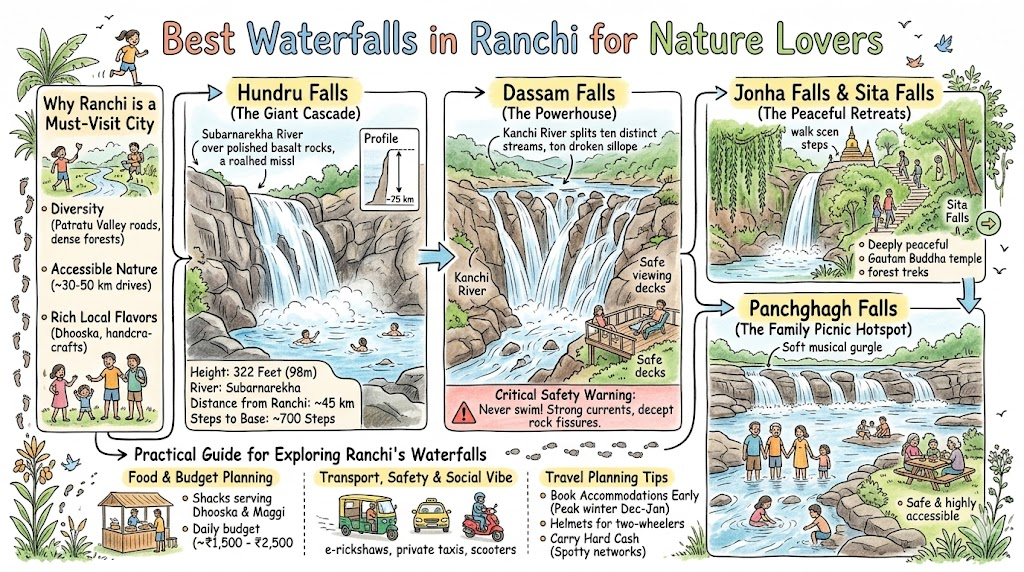
Developed on the course of the legendary Subarnarekha River, Hundru Falls is arguably the most famous waterfall in Jharkhand. The river drops from a staggering height of 322 feet over polished basalt rocks, creating a roaring misty pool below.
+--------------------------------------------------------------+
|                     HUNDRU FALLS QUICK PROFILE               |
+------------------------------+-------------------------------+
| Height: 322 Feet (98m)       | River: Subarnarekha           |
+------------------------------+-------------------------------+
| Distance from Ranchi: ~45 km | Steps to Base: ~700 Steps     |
+------------------------------+-------------------------------+
- Location: Malghonghsa, off the Ranchi-Purulia Highway (~45 km from Ranchi city center).
- Why it is worth visiting: It is one of the highest waterfalls in the state. The contrast between the frothy white water plunging down against the blackish-grey rock structures is a spectacular sight to behold.
- Best things to do: Hike down the stairs to view the base of the pool, capture panoramic landscape shots from the upper viewpoint, and browse the village stalls selling unique wooden crafts at the entrance.
- Best time to visit: October to February offers optimal water flow and beautiful, clear weather. During peak monsoon (July to September), the force is immensely powerful and dramatic, though stepping near the lower wet rocks is strictly prohibited.
- Ideal for whom: Adventure enthusiasts, backpackers, groups of friends, and young families who do not mind a good leg workout walking up and down the stairs.
- Travel tip: Wear sturdy shoes with excellent rubber grip. The spray from the waterfall makes the stone steps and rocky banks near the basin quite slick.
2. Dassam Falls (The Powerhouse)
If you want to see the sheer, untamed power of nature, Dassam Falls (also written as Dasham Falls) is an absolute must-visit. Fed by the Kanchi River, a major tributary of the Subarnarekha, this waterfall plunges 144 feet down a sharp, broken rocky slope.
- Location: Near Taimara village, along the Ranchi-Jamshedpur Highway/NH-33 (~40 km from Ranchi).
- Why it is worth visiting: Dassam is a classic “nick point” where the rugged plateau drops suddenly. The water splits into ten distinct streams as it falls, producing a thundering sound that echoes through the surrounding valley.
- Best things to do: Relax at the viewing decks, listen to the natural symphony of the crashing water, and enjoy a picnic in the green garden clearings managed by local authorities.
- Best time to visit: September to January. The water retains its fierce volume post-monsoon, making it highly photogenic.
- Ideal for whom: Couples looking for dramatic landscapes, solo travelers, and photography buffs who want to capture raw water movement.
- Travel tip:Critical Safety Warning: Never try to step into the water or swim at Dassam Falls. The underwater currents are incredibly strong, and the riverbed is filled with sharp, uneven rock fissures that can be highly deceptive. Enjoy its beauty safely from behind the designated railings.
3. Jonha Falls & Sita Falls (The Peaceful Retreats)
Also known as Gautamdhara, Jonha Falls offers a much calmer, gentle environment. The water drops around 144 feet down a natural rock gradient, flanked by lush hanging vegetation. Just a few kilometers ahead lies its sister cascade, Sita Falls, which is a pristine, less-crowded alternative surrounded by untouched woods.
- Location: Situated along the Ranchi-Purulia Highway (~40 km from Ranchi).
- Why it is worth visiting: It is a deeply peaceful site with rich spiritual energy. There is a beautiful Buddhist temple and an ashram located at the top of the hill, honoring the local belief that Lord Buddha once rested here.
- Best things to do: Climb down the 450+ wide, scenic steps to the edge of the river, visit the Gautam Buddha temple, and take a peaceful nature walk through the surrounding forest paths.
- Best time to visit: October to February, when the surrounding woods turn a vibrant, post-rain green and the climate is pleasantly cool.
- Ideal for whom: Families traveling with children, older adults who can handle regular stairs, couples looking for a quiet afternoon, and peace-seekers.
- Travel tip: Jonha has its own small railway station just 1.5 km away. If you want a classic local experience, you can take a passenger train ride from Ranchi station to Jonha, then hire a local auto-rickshaw to the falls.
4. Panchghagh Falls (The Family Picnic Hotspot)
Unlike the towering vertical drops of Hundru or Dassam, Panchghagh Falls is a beautiful, horizontal spread of water. The river splits naturally into five distinct, breaking streams (Panch Ghagh) over a wide, flat bed of ancient rocks.
- Location: Near Khunti district (~55 km south of Ranchi).
- Why it is worth visiting: Because the water flows down wide, shallow rocky tiers rather than a sheer vertical cliff, it creates a highly accessible and safe environment. The roaring sound is replaced by a soft, musical gurgle.
- Best things to do: Safely wade your feet in the shallow stone streams, explore the beautifully maintained rock gardens, and enjoy a relaxed lunch at the concrete picnic tables.
- Best time to visit: October to May. It holds its beauty well into the early summer months, making it a popular winter picnic destination.
- Ideal for whom: Multi-generational families, couples with toddler children, and anyone looking for a relaxed day out without steep climbing.
- Travel tip: Since Panchghagh is located towards the south, combine this trip with a stop at the nearby Deer Park (Birsa Mrig Vihar) to make it an exciting, full-day excursion for kids.
Travel Planning Tips for Ranchi
To ensure your Ranchi trip planning goes off without a single hitch, keep these practical, traveler-vetted tips in your mind:
- Book Accommodations Early: If you are visiting during the peak winter months (December to January) or major festivals like Sarhul and Durga Puja, hotels near the city center and luxury resorts around Patratu fill up rapidly.
- Two-Wheeler Rental Protocols: Renting a scooter or a motorcycle is a fantastic way to explore the winding plateau roads. Always ensure you carry a valid driver’s license and proper vehicle documents. Both the driver and pillion passenger must wear helmets—local traffic police are very strict.
- Carry Hard Cash: While digital UPI payments are widely used inside Ranchi city, network connectivity can be spotty down in the deep forested valleys near the waterfalls. Always carry enough paper cash for entry tickets, parking fees, and small roadside food stalls.
- Check the Weather Before Going: If there are heavy monsoonal downpours, water levels can rise drastically within minutes. Check local weather reports and avoid descending to the base of the falls if a heavy storm warning is active.
- Respect the Environment: Avoid carrying single-use plastic bottles or snack wrappers near the water. If you bring plastic along, make sure to bring it back up to the trash bins at the main gates. Let’s keep these pristine natural ecosystems clean!
Common Mistakes to Avoid
- Trying to Cram Too Much into One Day: Trying to visit Hundru, Dassam, and Panchghagh all in a single afternoon will leave you exhausted and spending your entire vacation inside a car. Pick a maximum of two waterfalls per day so you can enjoy them at a relaxed pace.
- Ignoring South Ranchi and Khunti: Many traditional itineraries focus purely on the east (Hundru/Jonha). By skipping the southern route towards Khunti, you miss out on gorgeous sights like Panchghagh and Hirni Falls.
- Overpaying for Last-Minute Rentals: Avoid hiring random cabs waiting right outside the railway station without a fixed rate. Use verified local travel agencies or pre-booked taxi apps to avoid high tourist markups.
- Skipping the Local Cuisine: Don’t just stick to standard hotel room service. Missing out on hot Dhooska with spicy potato chickpea curry or traditional sweet Malpua from street side vendors means missing the true soul of Jharkhand.
Suggested Ranchi Itinerary Angles
Depending on how many days you have on your hands, here is how you can seamlessly plug these spectacular waterfalls into your Ranchi itinerary.
Option A: The 1-Day Iconic Waterfall Dash
- Morning (8:30 AM): Start early from Ranchi and drive straight to Hundru Falls. Enjoy the morning mist and climb down to the riverbed.
- Afternoon (1:00 PM): Head towards Jonha Falls. Have a simple lunch at a local dhaba along the Purulia Highway, then visit the peaceful Buddha Temple.
- Late Afternoon (3:30 PM): Wrap up your day trip with a quick stop at the nearby, hidden Sita Falls before heading back to the city for a traditional dinner.
Option B: The 2-Day Adventure & Valley Escape
- Day 1: Explore Dassam Falls in the morning to witness its raw power. In the afternoon, drive up to the breathtaking Patratu Valley to catch a magnificent sunset over the looping hairpin curves and the blue waters of Patratu Dam.
- Day 2: Dedicate your second day to the southern loop. Drive down to Panchghagh Falls for a long, relaxed family picnic, and stop by the Deer Park on your return journey.
Option C: The Ultimate Weekend Travel Plan
Combine the 2-day loop above with a relaxing third morning exploring Ranchi’s urban green spaces—such as Tagore Hill (offering panoramic views of the city) and buying authentic tribal art from local emporiums before catching your evening flight or train back home.
FAQs
1. Is Ranchi safe for solo travelers and female backpackers?
Yes, Ranchi is generally safe and hospitable for solo travelers. The locals are polite and helpful. However, as a standard travel safety rule, avoid traveling to isolated waterfall sites or interior village roads late at night. Plan your journey so you are back in Ranchi city by 6:00 PM.
2. Can we swim in the pools at the bottom of Ranchi’s waterfalls?
Swimming is highly discouraged at most major waterfalls like Dassam and Hundru due to powerful, unpredictable undercurrents, deep rock crevices, and slippery basalt rock formations. You can safely wade your feet in the shallow, designated streams at Panchghagh.
3. Which is the highest waterfall in Ranchi?
Lodh Falls is the highest waterfall in Jharkhand (~195 km from Ranchi), but within the immediate Ranchi tourist circuit, Hundru Falls is the tallest, cascading down from a spectacular height of 322 feet.
4. Are there any good stay options right next to the waterfalls?
Most tourists prefer staying in hotels within Ranchi city, which offers everything from budget stays to luxury properties. However, state tourism resorts (Jharkhand Tourism Development Corporation – JTDC) offer basic tourist complexes near Jonha and Hundru for travelers who want to stay close to nature.
5. What are the must-try local dishes during a Ranchi trip?
You must try Dhooska (a deep-fried savory snack made of rice and lentils), served with spicy potato curry. Other local favorites include Chilka Roti, Mada Pitha, and sweets like Lai and Gaja.
6. Do I need to climb a lot of stairs to see these waterfalls?
Hundru and Jonha Falls require descending around 700 and 450 steps respectively to reach the lower river level. If you are traveling with elderly companions or individuals with mobility issues, Panchghagh Falls is the best choice as it features flat terrain and requires zero strenuous climbing.
7. Can I visit Ranchi’s waterfalls during the summer season?
Yes, you can visit between March and June, but the water volume drops significantly compared to the winter months. The weather can also get quite hot during the afternoon, though the forest canopy keeps the waterfall sites relatively cooler.
8. What is the closest airport and railway station to these tourist places?
The closest airport is Birsa Munda Airport (IXR) in Ranchi, which is well-connected to major Indian cities. The main railhead is Ranchi Junction Railway Station, located right in the center of the city.
9. Are drones allowed for photography at the waterfalls?
While casual photography with smartphones and DSLR cameras is completely free, flying a commercial drone may require prior permission from local district authorities or forest departments, especially near protected eco-tourism zones.
10. Can we hire local guides at the waterfall sites?
Yes, local youth and members of the village tourism committees are often available at the entrance of Hundru and Dassam Falls. Hiring them for a nominal fee is a wonderful way to support the local economy and discover safe viewpoints.
Conclusion
Ranchi proves that you don’t always need to head to remote coastal tracks or expensive mountain resorts to find genuine peace. With its thunderous cascades, deep green valleys, and heartwarming tribal hospitality, this city offers a refreshing palette of natural beauty that rewards smart, mindful travelers.
When you plan your journey, remember to slow down, respect the local heritage, and immerse yourself in the natural rhythms of the plateau. For more practical itineraries, honest local reviews, hidden destination guides, and clever travel tips, consider Ranchi orbit.com your ultimate local companion for making your next holiday smooth, meaningful, and unforgettable. Pack your bags, lace up your travel shoes, and get ready to experience the wild, majestic waters of Ranchi!
