Introduction
When most people map out a weekend escape, their minds instantly race toward the commercialized hill stations of the Himalayas or the packed beaches of the western coast. But if you are tired of jostling through overcrowded tourist traps and want an authentic connection with raw, untouched wilderness, it is time to look at the Chotanagpur Plateau. Ranchi, the capital of Jharkhand, sits right at the heart of this ancient geological formation, serving as a launchpad to some of the most underrated natural landscapes in India.
The region offers a profound sense of travel authenticity that has been lost in mainstream hotspots. Here, your road trips take you through deep, dense canopy forests of Sal and Mahua, winding valleys that rival international landscapes, and tribal heartlands where life moves to the ancient rhythms of nature. This guide is built to help you break away from the ordinary and hit the open tarmac to discover the true green soul of Jharkhand.
Why Jharkhand is a Must Visit Region
Jharkhand, historically carved out as the “Land of Forests,” holds immense geographical and cultural weight. The terrain is an intricate patchwork of rolling hills, ancient metamorphic rocks, hidden river streams, and sudden, dramatic waterfalls. For the road tripper, this translates to beautifully paved highways flanked by dense green walls, making the journey just as rewarding as the destination itself.
From a practical perspective, Ranchi has evolved into a highly accessible travel hub. The city is smoothly connected via the Birsa Munda Airport and a robust rail network, while excellent national highways like NH-33 and NH-43 provide buttery-smooth asphalt for cars and motorbikes alike. Whether you are a solo backpacker looking for rustic camping spots, a couple seeking quiet sunsets, or a family wanting a comfortable weekend resort stay, the travel circuits branching out of Ranchi cater beautifully to every traveler archetype.
Here is a macro-level look at the core travel indicators for the region:
| Travel Factor | Regional Indicator Details |
|---|---|
| Primary Terrain Type | Chotanagpur Plateau, deciduous Sal forests, river valleys, and waterfalls |
| Major Highway Corridors | NH-33 (Ranchi-Hazaribagh), NH-43 (Ranchi-Patratu), NH-39 (Ranchi-Daltonganj) |
| Peak Road Trip Season | October to March (Post-monsoon freshness and pleasant winters) |
| Cultural Heritage Focus | Sohrai and Khovar art forms, ancient Santhal and Munda tribal traditions |
| Average Road Quality | Exceptional state highways and well-maintained national multi-lane roads |
Best Places or Experiences
Patratu Valley
Patratu Valley is a masterclass in modern civil engineering woven seamlessly into natural grandeur. The road leading down the valley features a mesmerizing series of classic hairpin turns and sweeping loops that slice right through the rugged hills of the Ramgarh district. As you navigate the smooth tarmac, the vast expanse of the Patratu Dam reservoir slowly reveals itself at the base, shimmering like a massive sapphire mirror amidst the surrounding emerald forest covers.
The valley serves as the ultimate quick escape for those who love the physical joy of driving or riding. Early mornings here are particularly ethereal, with dense blankets of mist rolling over the hills, temporarily blanketing the winding roads in a surreal, cloud-like embrace. It is the perfect blend of thrills and tranquil natural beauty located right on the city’s doorstep.
The iconic hairpin loops of Patratu Valley.
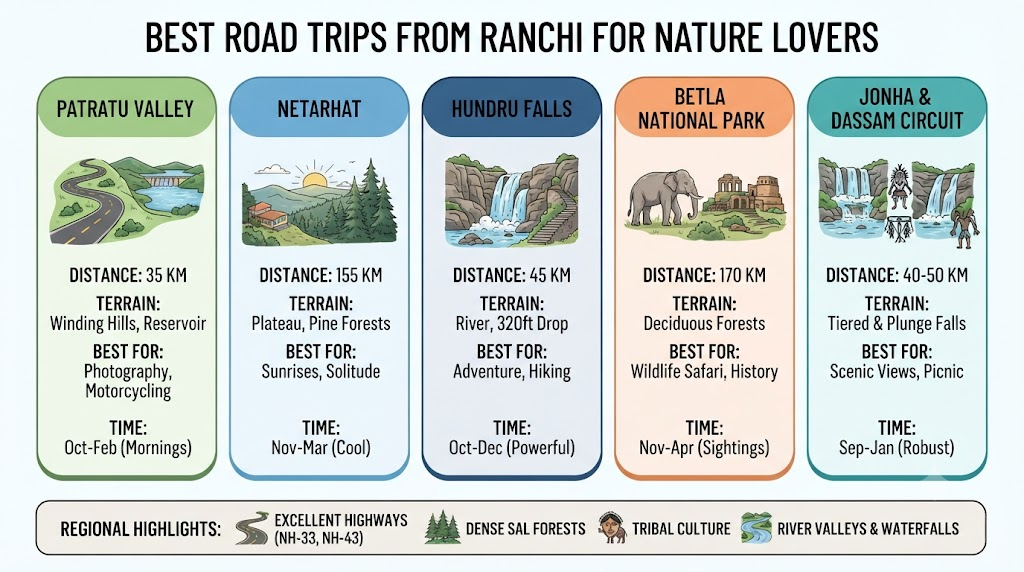
- Location: Ramgarh District, approximately 35 kilometers north-west of Ranchi.
- Why it is worth visiting: The breathtaking aerial view of the serpentine roads and the seamless combination of a massive water body framed by lush green hills.
- Best things to do: Stop at the designated valley viewpoints for photography, enjoy a high-speed motorboat ride at the Patratu Lake Resort, and catch the sunset over the reservoir waters.
- Best time to visit: October to February; ideally during early morning hours (5:30 AM to 7:30 AM) to experience the low-hanging fog and sunrise.
- Ideal for whom: Couples looking for romantic drives, photography enthusiasts, and weekend motorbiking groups.
- Travel tip: The valley roads are completely unlit at night, so wrap up your return drive before absolute darkness sets in to ensure optimal safety on the sharp curves.
Netarhat
Affectionately crowned as the “Queen of Chotanagpur,” Netarhat is the highest point of the entire plateau region, sitting at an elevation of nearly 3,622 feet above sea level. The long road trip from Ranchi to Netarhat transitions through deep tribal country, where the air turns progressively crisper and cooler. The final ascent rewards you with dense pine forests, vast pear orchards, and dramatic cliff edges that open up to endless views of the misty valleys below.
Netarhat is deeply tied to regional history and colonial escape stories, retaining an old-school, slow-paced charm. The architecture of the famous Netarhat Residential School and old British-era bungalows dotting the landscape add a nostalgic touch to the pristine natural environment. It remains an absolute sanctuary for those looking to disconnect entirely from digital noise.
A serene evening view from the hills of Netarhat.
- Location: Latehar District, roughly 155 kilometers west of Ranchi capital.
- Why it is worth visiting: Unmatched panoramic sunrise and sunset views over the Chotanagpur hills, alongside unique high-altitude pine forests.
- Best things to do: Watch the sun rise from the famous Sunrise Point, stroll quietly through the towering Pine Forest canopy, and visit the historic Netarhat School campus.
- Best time to visit: November to March for chilly winter weather, or July to September to see the hills erupt in vibrant, rain-washed shades of neon green.
- Ideal for whom: Nature lovers seeking solace, long-distance driving enthusiasts, and writers or artists looking for quiet inspiration.
- Travel tip: Because Netarhat is a remote hill station, digital cellular networks can be highly erratic; download your navigation maps offline before leaving the main highway.
Hundru Falls
Hundru Falls is one of the grandest spectacles along the Subarnarekha River circuit, where the river takes a dramatic, vertical plunge of 320 feet over jagged metamorphic rock faces. The road trip to Hundru winds through peaceful rural settlements and vast open fields, offering a beautiful glimpse into rural Jharkhand. Upon arrival, the sheer acoustic roar of the cascading water creates an immediate sense of awe.
Over centuries, the continuous force of the falling water has carved out unique rock formations and deep pools at the base. While the view from the top cliff is spectacular, descending the steps to the splash pool puts the immense scale of this natural wonder into true perspective, making it a cornerstone of Ranchi’s famous waterfall circuit
.
The majestic drop of Hundru Falls.
- Location: Ranchi District, approximately 45 kilometers north-east of the main city center.
- Why it is worth visiting: It stands as one of the highest waterfalls in the state, offering spectacular rock patterns shaped by thousands of years of heavy water erosion.
- Best things to do: Climb down the 700-plus steps to the base pool, capture long-exposure landscape photographs, and shop for authentic local bamboo handicrafts from village vendors near the entrance.
- Best time to visit: October to December when the water volume is immensely powerful yet safe enough for close exploration.
- Ideal for whom: Adventure seekers, large family picnics, and hardcore landscape photographers.
- Travel tip: The steps leading down to the base can become incredibly slippery from mist and spray; ensure you wear sturdy footwear with excellent rubber grip.
Betla National Park
Betla National Park is an expansive sanctuary of wilderness that holds the historic distinction of being one of the earliest wildlife sanctuaries in India to come under Project Tiger. The road trip here takes you deep into the Palamu division, where the dry deciduous forests shelter a diverse array of wildlife, including wild elephants, leopards, sloth bears, barking deer, and gaurs. Driving along the periphery of the park gives you a thrilling sense of entering untamed territory.
Beyond the rich biodiversity, Betla hides incredible historical treasures within its deep forest folds. The ancient, crumbling stone fortifications of the Palamu Forts, built by the Chero kings in the 16th century, stand deep inside the jungle, slowly being reclaimed by forest vines and roots. It is a hauntingly beautiful intersection of human history and natural dominance.
The wild gateway to Betla National Park.
- Location: Palamu and Latehar border, roughly 170 kilometers away from Ranchi.
- Why it is worth visiting: A rare chance to spot wild Asian elephants in their natural habitat and explore centuries-old jungle forts hidden within the deep forest canopy.
- Best things to do: Take an early morning open-top jeep safari, explore the ruins of the old and new Palamu Forts, and watch wildlife from the hidden forest observation towers.
- Best time to visit: November to April; wildlife sightings peak in March and April when animals gather around the remaining waterholes.
- Ideal for whom: Wildlife enthusiasts, history buffs, and families seeking an educational jungle adventure.
- Travel tip: Safaris operate strictly during specific morning and afternoon windows, so aim to arrive at the forest gates at least an hour early to secure your permits and guide.
Jonha & Dassam Falls Circuit
This double-waterfall circuit combines two of the most distinct water dynamics in the region into a single, highly rewarding day trip. Jonha Falls, also known as the Gautamdhara Falls due to its sacred connection to Lord Buddha, features a gentle, elegant multi-tiered drop surrounded by dense foliage. In stark contrast, Dassam Falls is a powerful, aggressive cascade where the Kanchi River tumbles violently down 144 feet, creating a perpetual mist zone that cools the entire canyon.
The drive between these two landmarks runs along well-paved rural highways lined with towering Sal trees. The dramatic shift in energy—from the meditative tranquility of Jonha to the roaring, raw power of Dassam—makes this specific road trip highly memorable. It perfectly encapsulates the diverse, water-rich topography of the Chotanagpur Plateau.
- Location: Khunti and Ranchi districts, located within a 40 to 50-kilometer radius south-east of Ranchi.
- Why it is worth visiting: The stark geographical contrast between a tranquil, sacred tier-fall and a raging, high-volume river plunge within the same day’s drive.
- Best things to do: Visit the hilltop Buddhist shrine overlooking Jonha, enjoy local tribal snacks like dhuska from local stalls, and safely observe the fierce undertow of Dassam from the reinforced viewing platforms.
- Best time to visit: September to January when the post-monsoon river currents are still incredibly robust and visually striking.
- Ideal for whom: Group travelers, road-trip foodies, and spiritually inclined nature lovers.
- Travel tip: The undercurrents at the base of Dassam Falls are incredibly dangerous and deceptive; absolutely resist any temptation to cross the safety barriers or step into the water.
Offbeat Exploration: Hidden Gems Tourists Miss
McCluskieganj
Tucked away in the quiet corners of the Ranchi district lies McCluskieganj, a nostalgic, dream-like town that was founded in the 1930s as a dedicated homeland for the Anglo-Indian community. At its peak, this quirky settlement was filled with elegant Western-style colonial bungalows, sprawling rose gardens, and traditional British bakeries. Today, it stands as a fascinating, slow-melting time capsule where old brick villas are slowly being embraced by the surrounding wild forests. The drive here is incredibly peaceful, taking you through quiet railway crossings and pristine, lesser-known country lanes.
Lodh Falls
While most tourists crowd around Hundru or Dassam, very few make the deep trek to Lodh Falls, which stands proud as the highest waterfall in all of Jharkhand. Tucked away deep inside the rugged terrain of the Latehar district, the Burha River takes a massive, thunderous leap of 469 feet down a colossal cliffside. Because of its distant location from the main urban hubs, you will often find yourself completely alone with the deafening roar of the water and the pristine forest air. It is the ultimate reward for travelers who value true isolation and raw natural scale.
Sita Falls
Located just a short distance from the popular Jonha Falls, Sita Falls remains beautifully untouched due to the steep, challenging canyon descent required to catch a glimpse of it. Named after the goddess Sita, this stunning waterfall cascades down multiple rocky ledges in a hidden gorge. The lack of commercial shops and paved pathways means the surrounding flora remains entirely pristine. It offers a raw, adventurous trekking experience right through the rocky riverbed that casual tourists completely miss.
Detailed Practical Guidance for Travelers
The logistics for maximizing your journey across these nature road trips require careful planning. The table below outlines everything you need to know regarding fees, operating hours, food availability, and nearby routing combinations:
| Destination | Standard Entry Fee | General Timings | Best Local Food Options Nearby | Recommended Nearby Attractions |
|---|---|---|---|---|
| Patratu Valley | Free access; Lake Resort entry is ₹50 | 6:00 AM – 6:30 PM | Fresh lake fish curry, local rice hotel thalis | Patratu Dam, Lake Resort Islands |
| Netarhat | Free entry | Open 24 Hours | Traditional Chilka Roti, seasonal pear fruits | Koel Viewpoint, Sadni Falls, Pine Forest |
| Hundru Falls | ₹20 per person | 8:00 AM – 5:00 PM | Hot Dhuska with chana masala, bamboo shoot pickles | Getalsud Dam, Angrabari Temple complex |
| Betla National Park | ₹100 entry; Safari vehicle fees extra | 6:00 AM – 5:00 PM | Rustic country chicken curry, marua roti | Old and New Palamu Fort ruins, Mirchaiya Falls |
| Jonha & Dassam Circuit | ₹10 to ₹20 per vehicle | 8:30 AM – 4:30 PM | Roasted local corn on the cob, pitha sweets | Sita Falls, Sun Temple architecture |
Logistics & On-Ground Navigation
Local Transport Options
- Car Rentals: For the ultimate freedom on long circuits like Netarhat and Betla, self-drive or chauffeur-driven car rentals from Ranchi are highly recommended. A sturdy SUV or high-clearance hatchback works best for the occasional rugged rural patch.
- Motorbikes: Ranchi has a burgeoning two-wheeler rental market. A classic cruiser or a rugged adventure tourer is perfect for navigating the winding twists of Patratu Valley or the waterfall trails.
- Railways: While not ideal for the final mile, passenger trains connect Ranchi smoothly to hubs like Latehar (near Betla) and Tori, from where local taxis can be easily hired.
- Auto-Rickshaws & E-Rickshaws: These are excellent, highly cost-effective options for short-distance transits within Ranchi city limits or out to the closest city bypass zones, but should not be used for steep valley runs or long highway journeys.
Budget Planning
- Backpacker / Budget Tier (₹1,500 – ₹2,500 per day): This tier relies on renting a fuel-efficient motorbike, staying in local budget homestays or state-run tourist lodges (like Jharbihar properties), and dining entirely at authentic roadside dhabas and local tribal food stalls.
- Mid-Range / Comfort Tier (₹4,500 – ₹8,000 per day): This involves hiring a private air-conditioned cab, booking comfortable mid-range nature resorts or forest rest houses, enjoying boat rides, taking private jeep safaris, and dining at established highway family restaurants.
Safety and Inclusivity Tips
- Families: When traveling with children or elderly members, ensure you stick to highly developed spots like Patratu Lake Resort or Jonha Falls, which offer clean public restrooms, well-maintained paved pathways, and secure parking areas.
- Couples: The valley viewpoints and quiet spots like Netarhat offer incredible privacy, but it is best to avoid isolated forest trails after dusk. Sticking to well-populated tourist zones keeps your romantic getaway entirely stress-free.
- General Safety:Important Notice: Jharkhand’s rural highways are remarkably smooth but can quickly become desolate at night. Always plan your drives so that you reach your destination or return to the city lights before 7:00 PM. Keep your fuel tank above the half-way mark, as gas stations can be few and far between deep in the forest zones.
Strategic Travel Planning Guardrails
Travel Planning Tips for Ranchi Road Trips
- Carry Ample Cash: While digital UPI payments are widely accepted in Ranchi and major towns, internet connectivity drops sharply inside deep forests and valley bottoms, making physical cash absolutely essential for park entries and local food stalls.
- Respect Tribal Etiquette: Always ask for permission before photographing local tribal residents or entering sacred grove areas known locally as Sarna Sthals.
- Pack Warm Layers: Even during late spring, high-altitude spots like Netarhat can experience sudden temperature drops after sunset; always pack a light windbreaker or fleece sweater.
- Prioritize Vehicle Checks: Ensure your vehicle’s brakes and cooling systems are in top condition before tackling the continuous uphill gradients of the Netarhat climbs or the intense braking demands of Patratu Valley.
- Pre-book State Accommodation: The forest rest houses in Betla and the iconic nature tourism properties in Netarhat have very limited rooms; make your bookings online well in advance of your trip dates.
Common Mistakes to Avoid
- Overpacking the Day’s Route: Trying to combine geographically distant spots like Netarhat (West) and Hundru Falls (East) into a single day will leave you exhausted and stranded on dark highways.
- Ignoring Wildlife Boundaries: Do not play loud music or use vehicle high-beams while driving through the buffer zones of Betla National Park or the connecting forest stretches.
- Underestimating the Waterfall Steps: Visiting places like Hundru involves walking up and down hundreds of steep stone stairs; do not attempt this if you are wearing slippery flip-flops or formal footwear.
- Skipping the Local Roadside Dhabas: Relying purely on packed processed snacks means you completely miss out on the incredible taste of freshly prepared, smoky dhuska and local country chicken curries.
- Assuming Continuous Fuel Station Availability: Waiting until your fuel light turns on before looking for a gas station can leave you stranded in remote forest tracts; refuel early and often.
Suggested Itinerary Blueprints
1. Day Quick Dash (The Valley & Water Circuit)
- Target Audience: Time-crunched travelers, weekend warriors, and photography enthusiasts.
- Route Layout: Start from Ranchi at 6:00 AM to catch the morning mist rolling through Patratu Valley. Spend the morning enjoying the reservoir view and early breakfast at the lake resort. By 11:00 AM, cut across the outer ring road to hit the highway leading to Hundru Falls. Spend your afternoon exploring the massive waterfall, enjoy a late lunch at a nearby highway dhaba, and head back to Ranchi by late afternoon, arriving well before nightfall.
2. Day Deep-Dive (The Wilderness & Heritage Trail)
- Day 1: Leave Ranchi early and drive straight toward Betla National Park via the scenic NH-39 route. Arrive by lunchtime, check into your jungle lodge, and head out for the 3:00 PM afternoon jeep safari to spot wild elephants. Spend the evening relaxing by the campfire listening to forest sounds.
- Day 2: Wake up early to explore the ancient stone ruins of the hidden Palamu Forts inside the forest buffer zone. After an early lunch, take a leisurely drive back toward Ranchi, making a refreshing stop at the nostalgic Anglo-Indian settlement of McCluskieganj along the way to explore its classic colonial bungalows.
3. Complete Weekend Travel Plan (The Ultimate High-Altitude Escape)
- Friday: Depart Ranchi after lunch and embark on the winding, scenic drive toward the high-altitude plateau of Netarhat. Check into your resort just in time to catch a beautiful sunset from the famous Magnolia Point, followed by a cozy dinner under the star-filled sky.
- Saturday: Watch the spectacular sunrise over the hills at Sunrise Point, followed by a peaceful morning trek through the towering Pine Forest. After lunch, take a day excursion down to the massive, thunderous drop of Lodh Falls, returning to the comfort of your Netarhat base by evening.
- Sunday: Enjoy a slow morning exploring the vast pear orchards and the historic Netarhat School grounds. Pack your bags and begin the return drive down the hills, making a deliberate detour to visit the serene, multi-tiered drops of Jonha Falls before smoothly re-entering Ranchi by evening.
Common Tourist Mistakes to Avoid
- Geographic Blunders: Many travelers mistakenly try to map out a single itinerary that combines Netarhat and Hundru Falls on the exact same day. These two locations lie on completely opposite sides of the capital, and attempting to stitch them together will result in a frustrating day spent entirely in traffic rather than in nature.
- Commercial Traps: Do not spend your limited weekend vacation time wandering through the modernized shopping malls or busy commercial food courts in central Ranchi. The true magic of this region lies entirely outside the urban concrete, hidden deep within the rustic village markets and serene valley roads.
- Neglecting Modern/Alternative Zones: Travelers often completely forget to explore the quieter, artistic modern expansions of the region, such as the lovely little handicraft clusters and quiet lakeside cafes tucked away near the outskirts of the Ranchi-Khunti road.
- Transport Overpayment: Avoid walking up to unmetered tourist cabs right outside major transport hubs without checking local ride-sharing apps first. Cross-referencing current digital rates gives you the necessary leverage to negotiate fair prices and avoid local price gouging.
- Luxury Dining Bias: Sticking exclusively to high-end, air-conditioned resort restaurants means you miss out on the true culinary heart of the region. The authentic street-level vendors near the waterfall entrances serve up the best, most traditional local delicacies that are rich in heritage and flavor.
Frequently Asked Questions
1. What is the best time of year to plan a nature road trip around Ranchi?
The absolute peak window is from October to March. During these months, the intense monsoon rains have passed, leaving the entire Chotanagpur Plateau lush, vibrant, and incredibly green. The winter air is crisp and cool, which makes long-distance driving and trekking down to the waterfall bases highly enjoyable.
2. Are the road trip routes safely accessible for small hatchback cars?
Yes, the vast majority of the core tourist routes, such as the drives to Patratu Valley, Hundru Falls, and Jonha Falls, feature excellently paved, multi-lane national and state highways. A standard hatchback can navigate them with absolute ease. Only the deep interior tracks near Lodh Falls or certain jungle patches inside Betla require an SUV or a car with decent ground clearance.
3. Is it safe to drive along the forest highways during the night hours?
It is strongly advised to avoid driving on rural Jharkhand highways after 7:30 PM. While the roads are structurally excellent, many remote forest stretches lack proper street lighting and cellular connectivity. Forest corridors near Betla also see active night crossings by wild elephant herds, making daytime travel infinitely safer and more enjoyable.
4. Can we easily find fuel stations along the long route to Netarhat?
Major towns along the highway, such as Lohardaga, have highly reliable fuel stations with digital payment options. However, as you begin the final, steep hill climb up to Netarhat, gas stations become incredibly sparse. Make it a strict habit to completely top off your vehicle’s fuel tank before leaving the major highway junctions.
5. Do I need to secure special permits in advance to visit Betla National Park?
You do not need to secure any advanced state government permits to enter the general tourist zones of Betla. Entry tickets, vehicle permits, and certified forest guide allocations are distributed directly at the main park reception gate on a first-come, first-served basis. It is best to arrive an hour before the morning or afternoon safari slots open to ensure a smooth registration process.
6. What are the unique local tribal dishes that we must try along these routes?
You absolutely must try dhuska, a deep-fried, savory snack made from fermented rice and lentil batter, typically served hot with a spicy chickpea curry. Other authentic regional delicacies include chilka roti (a delicate rice flour crepe), pitha (steamed rice dumplings), and various seasonal preparations featuring tender bamboo shoots and local wild mushrooms.
7. Are there clean accommodation options available at remote locations like Netarhat?
Yes, the Jharkhand Tourism Development Corporation (JTDC) operates well-maintained nature resorts and tourist bungalows in both Netarhat and Betla under the Jharbihar brand. These properties offer clean, spacious rooms, hot running water, secure parking, and full-service restaurants, providing a very comfortable base for families.
8. How many steps do we need to climb down to experience Hundru Falls properly?
Reaching the very edge of the spectacular plunge pool at the base of Hundru Falls requires walking down approximately 700 to 750 stone steps. The descent is highly scenic but requires decent physical fitness. The return climb back up can be physically demanding, so take regular breaks and carry a fresh bottle of water with you.
9. Is digital cellular connectivity reliable across all these nature destinations?
Within Ranchi city limits and along the primary national highways, you will experience excellent high-speed internet networks. However, as you drop deep into the steep valleys of Patratu, the deep canyons of Dassam Falls, or the high forested plateaus of Netarhat, cellular signals can drop out entirely. Always download your navigation routes offline.
10. Can we safely swim in the pools at the base of Dassam and Jonha falls?
Swimming is strictly prohibited at the base of Dassam Falls due to treacherous undercurrents, deep underwater rock fissures, and sudden drops that have proven fatal to careless tourists in the past. Jonha Falls features a much gentler flow with clearly designated safe zones, but it is always best to consult the local security lifeguards before stepping into the water.
11. What unique, authentic souvenirs can we buy on our road trips?
The rural markets surrounding the waterfall circuits are filled with talented local artisans selling beautiful, hand-woven bamboo baskets, intricate woodwork items, and traditional terracotta pottery. You can also purchase authentic, locally sourced organic products like wild honey, natural lac bangles, and unique seasonal pickles made from fresh bamboo shoots.
12. Is it safe for solo female travelers to go on these road trips from Ranchi?
Yes, the region is highly welcoming, and local tribal communities are incredibly respectful and helpful toward travelers. By following standard travel precautions—such as completing all your highway driving during daylight hours, staying at verified state-run tourist resorts, and avoiding isolated, unmarked forest trails alone—solo female travelers can enjoy a fantastic and entirely safe adventure.
Conclusion
Choosing a road trip through the wild landscapes surrounding Ranchi over a predictable, highly commercialized vacation spot is more than just a travel choice; it is an invitation to experience nature in its purest, most authentic form. Winding through the misty loops of Patratu Valley, standing before the thunderous roar of Hundru, or listening to the quiet rustle of the pine trees in Netarhat offers a profound sense of peace that modern tourist hubs simply cannot replicate. These journeys challenge your perceptions, open your eyes to the ancient heritage of the Chotanagpur Plateau, and leave you with a deeply rooted spiritual connection to the earth. Fill up your fuel tank, leave the crowded itineraries behind, and let the open roads of Jharkhand trace a beautiful, unforgettable path across your travel soul.
