Introduction
While commercial hill stations struggle under heavy footfalls and commercial noise, the beating heart of the Chhota Nagpur Plateau offers something refreshingly untamed. Ranchi greets travelers with crisp plateau breezes, thick Sal forests, and waterfalls carving through ancient granite ledges.
This region does not perform for tourists; it simply lives its authentic, evergreen rhythms. Stepping onto its soil brings an immediate connection to indigenous heritage, serene lakes, and sacred topographies.
Why Ranchi is a must-visit city
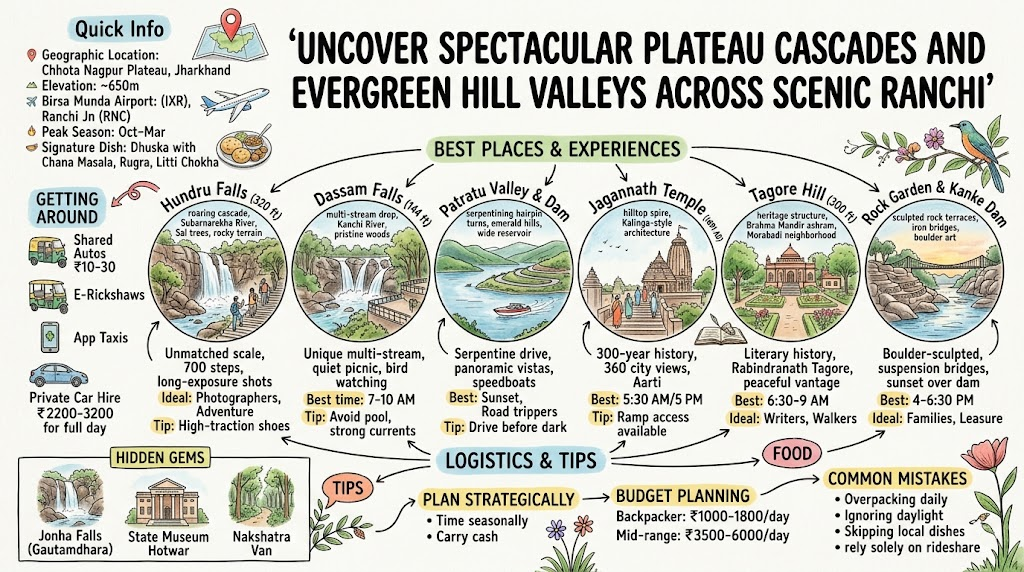
Ranchi anchors the cultural and geographical landscape of Jharkhand, sitting elevated at over 600 meters above sea level. Its unique topography bestows a temperate climate year-round, making it a pivotal gateway to eastern India’s tribal heartland and eco-tourism belts. Excellent connectivity via Birsa Munda Airport, major national rail arteries, and smooth state highways allows seamless travel for road trippers, solo wanderers, and multi-generational families alike.
The local circuit naturally balances nature excursions, architectural landmarks, and culinary discoveries. Whether chasing cascades along the Subarnarekha River or catching golden hour over quiet dam reservoirs, the city caters to diverse travel tastes effortlessly.
| Metric / Aspect | Key Highlight Details |
| Geographic Location | Chhota Nagpur Plateau, Jharkhand |
| Elevation | ~650 meters above sea level |
| Primary Airport | Birsa Munda Airport (IXR) |
| Major Rail Terminus | Ranchi Junction (RNC) & Hatia (HTE) |
| Peak Season | October to March (Monsoon for roaring falls) |
| Signature Local Dish | Dhuska with Chana Masala, Rugra, Litti Chokha |
Best Places or Experiences
Hundru Falls
Plunging dramatically from a height of nearly 320 feet, Hundru Falls represents one of the highest cascades across the Chhota Nagpur Plateau. Formed by the Subarnarekha River slicing through rugged rock faces, the waterfall creates a roaring spray that fills the surrounding canyon with mist and natural vigor.
The surrounding landscape features weathered rock formations sculpted over millennia, interspersed with dense Sal woodland tracks. Visitors descend a series of well-maintained concrete steps to reach the base pool, where the sheer volume of water leaves a lasting impression.
- Location: Purulia Road zone, approximately 45 km east of central Ranchi.
- Why it is worth visiting: Unmatched natural scale as one of Jharkhand’s iconic high cascades.
- Best things to do: Descend the 700-step rock staircase, capture long-exposure waterfall shots from the observation deck, and explore the rocky riverbed downstream.
- Best time to visit: October to February for clear paths, or August for peak monsoon fury.
- Ideal for whom: Photography enthusiasts, adventure seekers, and nature lovers.
- Travel tip: Wear high-traction footwear; concrete steps can get slick near the spray zone.
Dassam Falls
Dassam Falls, also known as Dassam Garh, is a mesmerizing natural site formed by the Kanchi River as it tumbles over a 144-foot vertical drop. The name originates from indigenous Mundari dialect roots (“Da-sang”), referencing the ten distinct streams that merge and pour over the cliff edge during high flow periods.
Enclosed by pristine woods and dark rock cliffs, the site feels secluded and deeply peaceful. Modern viewing terraces offer safe vantage points to admire the thunderous drop without stepping onto slippery rocks.
- Location: Near Taimara village on Ranchi-Tata highway, roughly 34 km south of the city.
- Why it is worth visiting: Unique multi-stream cascading structure creating dramatic photo opportunities.
- Best things to do: Watch the multi-tiered water drop, enjoy a quiet picnic on upper viewing benches, and spot rare bird species along the forest rim.
- Best time to visit: Early morning between 7:00 AM and 10:00 AM for soft daylight and minimal crowds.
- Ideal for whom: Couples, quiet explorers, and landscape photographers.
- Travel tip: > Strictly avoid venturing beyond safety railings into the main pool; underwater currents here are deceptively swift.
Patratu Valley & Dam
A engineering marvel built through emerald hills, Patratu Valley features serpentine hairpin turns offering panoramic vistas over the surrounding forests and reservoir basin. The drive down into the valley offers breathtaking perspectives at every curve.
At the base lies Patratu Dam, an expansive water reservoir offering serene lake breezes and modern promenade walkways. As twilight falls, amber lights trace the curving mountain pass above, creating an unforgettable evening landscape.
- Location: Ramgarh district border highway, around 35 km north of Ranchi.
- Why it is worth visiting: Jharkhand’s finest scenic drive with dramatic valley viewpoints.
- Best things to do: Take a sunrise or sunset drive, book a speedboat trip on Patratu Lake, and relax at the lakeside park complexes.
- Best time to visit: Late afternoon till sunset to catch light reflections across the reservoir surface.
- Ideal for whom: Road trippers, weekenders, and couples.
- Travel tip: Schedule your return climb before pitch darkness sets in to enjoy maximum visibility along tight turns.
Jagannath Temple
Perched atop a isolated hillock in Jagannathpur, this historic temple was constructed in 1691 AD by King Aani Nath Shahdeo. Architectural inspiration was drawn directly from the famous Jagannath Shrine in Puri, featuring classic Kalinga-style stone spire craft scaled to suit the plateau backdrop.
A climb up the stone steps rewards devotees and heritage enthusiasts with calm spiritual ambiance and sweeping views of modern Ranchi’s urban skyline. The temple grounds also play host to a vibrant annual Rath Yatra festival that draws pilgrims from across eastern India.
- Location: Jagannathpur area, approximately 10 km southwest of the main city center.
- Why it is worth visiting: 300-year-old architectural heritage paired with commanding 360-degree city views.
- Best things to do: Observe intricate 17th-century stone carvings, climb the hilltop steps at dusk, and attend evening Aarti rituals.
- Best time to visit: 5:30 AM for morning prayers or 5:00 PM to catch cool twilight breezes.
- Ideal for whom: History buffs, spiritual seekers, and multi-generational families.
- Travel tip: Ramp paths exist along the side for visitors who prefer avoiding steep stairs.
Tagore Hill
Rising nearly 300 feet above the surrounding residential quarters of Morabadi, Tagore Hill carries profound literary and artistic history. Jyotirindranath Tagore, elder brother of Nobel laureate Rabindranath Tagore, chose this serene hilltop as his retreat, constructing the Brahma Mandir ashram structure near its peak.
Rabindranath Tagore himself spent extended periods here, drawing creative inspiration from the calm hilltop atmosphere. Today, the heritage complex houses cultural displays and offers one of the most peaceful vantage points within city limits.
- Location: Morabadi neighborhood, roughly 4 km north of Albert Ekka Chowk.
- Why it is worth visiting: Historical connection to Bengal’s literary renaissance surrounded by breezy hilltop views.
- Best things to do: Explore the heritage Brahma Mandir, read quietly in the shaded gardens, and photograph sunset silhouettes over Morabadi.
- Best time to visit: 6:30 AM to 9:00 AM for quiet walking conditions.
- Ideal for whom: Writers, culture enthusiasts, and morning walkers.
- Travel tip: Pair this visit with a light morning walk around the adjacent open grounds of Morabadi.
Rock Garden & Kanke Dam
Carved directly out of Gonda Hill’s natural granite boulders, Ranchi’s Rock Garden stands as a creative integration of art and landscape architecture. Winding pathways, iron suspension bridges, and sculpted rock terraces offer relaxing spots for afternoon leisure.
The garden overlooks the vast waters of Kanke Dam, where gentle breezes cool the air even on warm days. It remains a favorite spot for families and students watching dusk settle over the water.
- Location: Gonda Hill, near Kanke Road, around 5 km from city core.
- Why it is worth visiting: Creative boulder-sculpted recreational spaces fronting a calm reservoir.
- Best things to do: Walk across the iron rod bridges, enjoy sunset views over Kanke Dam, and take family portraits among rock installations.
- Best time to visit: 4:00 PM to 6:30 PM for golden hour light.
- Ideal for whom: Families with kids, leisure strollers, and photography beginners.
- Travel tip: Small snack stalls outside serve excellent hot tea and fried snacks during cool evenings.
Offbeat Exploration: Hidden Gems Tourists Miss
Jonha Falls (Gautamdhara)
Tucked away in dense Sal groves, Jonha Falls is reached by stepping down over 700 rock stairs into a quiet river basin. Local tradition holds that Lord Buddha spent time meditating near these falling waters, leading to the construction of a Buddhist shrine nearby. The calm atmosphere here feels distinctly removed from busier urban tourist spots.
State Museum Hotwar
Located within the mega sports complex area, this modern museum houses an incredible repository of tribal artifacts, terracotta sculptures, and ancient megalithic site records. It offers deep context into the socio-cultural fabric of Jharkhand’s indigenous tribes that standard travel itineraries often overlook.
Nakshatra Van
Designed around astrological concepts, this specialized botanical space near Raj Bhavan maps plant species to specific zodiac constellations and planetary alignments. Beyond its astro-botanical themes, it features peaceful tree-lined pathways, medicinal plant gardens, and gentle musical fountains during evening hours.
Detailed Practical Guidance for Travelers
| Destination | Standard Entry Fee | General Timings | Best Local Food Options Nearby | Recommended Nearby Attractions |
| Hundru Falls | ₹10–₹20 per person | 8:00 AM – 5:00 PM | Tribal tea stalls, fried snacks | Getalsud Dam, Johna Falls |
| Dassam Falls | ₹10–₹20 per person | 8:30 AM – 5:00 PM | Highway Dhabas (Litti Chokha) | Surya Mandir Bundu |
| Patratu Valley | Free (Dam park ₹20) | Open 24 Hours (Drive) | Lakefront fish fry, local tea stalls | Patratu Dam Promenade |
| Jagannath Temple | Free entry | 5:00 AM – 12:00 PM, 4:00 PM – 8:30 PM | Sweets stalls, Pitha vendors | JSCA International Stadium |
| Tagore Hill | Free entry | 6:00 AM – 6:00 PM | Morabadi street food hubs | Ramakrishna Mission Ashram |
| Rock Garden | ₹20 per person | 9:00 AM – 7:00 PM | Kanke Road cafes, Dhuska stalls | Kanke Dam reservoir |
Logistics & On-Ground Navigation
Local Transport Options
Navigating Ranchi and its surrounding waterfall circuits is straightforward once you understand the transport dynamics:
- Auto-Rickshaws & E-Rickshaws: Shared auto-rickshaws dominate city routes (such as Main Road to Morabadi or Ratu Road) at very low fares (₹10–₹30). E-rickshaws work best for short inner-neighborhood rides.
- App-Based Taxis: Services like Ola and Uber operate reliably within city limits, ideal for airport drops, hotel transfers, or trips out to Jagannath Temple.
- Private Car Hire / Rentals: For out-of-town circuits (Hundru, Dassam, or Patratu), hiring a private cab for the full day (₹2,200–₹3,200) is the most comfortable and reliable choice.
- Railways: Ranchi Junction (RNC) and Hatia (HTE) stations link the city to all major Indian hubs with frequent express trains.
Budget Planning
- Backpacker Tier (₹1,000 – ₹1,800 per day): Stay in clean budget guesthouses near the railway station. Use shared auto-rickshaws for city transit, dine at popular local food joints (Dhuska, Litti Chokha), and visit low-cost or free nature sights.
- Mid-Range Tier (₹3,500 – ₹6,000 per day): Stay in 3-star or 4-star hotels near Main Road or Lalpur. Hire private cabs for day trips to out-of-town waterfalls, and enjoy meals at comfortable local restaurants and cafes.
Safety and Inclusivity Tips
- For Families: Stick to well-traveled daytime hours for waterfall outings. Keep young children close at observation decks, as railings can have wide gaps.
- For Couples: Patratu Valley and Rock Garden offer romantic sunset spots, but plan to head back toward city limits by early evening.
- General Safety: Waterfalls can feature hidden currents and slippery rocks. Always honor posted safety boundaries and avoid swimming in deep pools.
Strategic Travel Planning Guardrails
Travel Planning Tips for Ranchi
- Time Your Visit Seasonally: Post-monsoon months (September to November) display waterfalls at their peak volume surrounded by lush green cover.
- Carry Cash for Outings: Digital UPI payments work well in town, but cash is essential for parking fees and rural tea stalls near distant falls.
- Dress in Layers: Plateau mornings and evenings bring a quick temperature drop, especially between November and February.
- Start Early on Day Trips: Out-of-town waterfall roads get busy by mid-day; leaving by 8:00 AM ensures peaceful views and easy parking.
- Pack Sturdy Footwear: Waterfall sites involve climbing concrete stairs and walking over rough granite surfaces.
Common Mistakes to Avoid
- Overpacking Daily Itineraries: Trying to visit Hundru, Dassam, and Patratu on a single day leads to hours of driving rather than enjoying the sights.
- Ignoring Daylight Limits: Rural routes leading back from forest waterfalls lack heavy street lighting; start your return journey before dark.
- Skipping Local Dishes: Passing up street food stalls means missing out on signature flavors like fresh Dhuska and seasonal Rugra curry.
- Assuming Flat Terrain: Many sights require stair climbs; plan pacing accordingly if traveling with elderly relatives.
- Relying Solely on Rideshare Apps for Return Trips: App cabs will drop you at distant falls but won’t be available for the pick-up back; book your taxi for the full day.
Suggested Itinerary Blueprints
1-Day Quick Dash (City Essence Loop)
- Morning: Start early with morning air and panoramic city views at Tagore Hill, followed by a quick breakfast of hot Dhuska in Morabadi.
- Afternoon: Visit the historic 17th-century Jagannath Temple, then enjoy lunch along Kanke Road.
- Evening: Unwind at the Rock Garden while watching sunset colors reflect off Kanke Dam water.
2-Day Deep-Dive (Waterfalls & Valleys Circuit)
- Day 1 (Cascades & Heritage): Head east to explore Hundru Falls in the morning. Enjoy lunch near the highway, visit Jonha Falls on your return route, and finish with evening tea near Morabadi Ground.
- Day 2 (Valleys & Lakes): Drive south to Dassam Falls for morning views. Afternoon drive north through the winding turns of Patratu Valley, taking in sunset views over Patratu Dam before heading back to the city.
Complete Weekend Travel Plan (Plateau Nature & Culture Immersion)
- Friday: Arrive in Ranchi, check into your hotel, and spend a relaxed evening around Ranchi Lake and local handicraft markets.
- Saturday: Full-day nature trip covering Dassam Falls and Hundru Falls. Stop for an authentic tribal-style meal along the way.
- Sunday: Morning visits to Tagore Hill and Jagannath Temple. Afternoon road trip out to Patratu Valley for lake boating and sunset photos before your evening departure.
Common Tourist Mistakes to Avoid
- Geographic Blunders: Combining Dassam Falls (south) and Patratu Valley (north) on the same morning wastes hours in city transit. Group sights by directional corridors instead.
- Commercial Traps: Spending entire afternoons in modern shopping malls deprives you of experiencing Ranchi’s quiet lake promenades and natural hill views.
- Neglecting Modern/Alternative Zones: Skipping newer residential and cafe-rich neighborhoods like Morabadi and Lalpur means missing out on Ranchi’s thriving modern coffee culture and peaceful walking spaces.
- Transport Overpayment: Agreeing to auto-rickshaw rides without agreeing on a price upfront leads to overpaying. Use app-based fare estimates as a quick reference point.
- Luxury Dining Bias: Eating only inside hotel dining rooms misses out on iconic local street delicacies like Dhuska, Kurthi Dal, and freshly roasted Litti Chokha.
Frequently Asked Questions
1. What is the best time of year to visit Ranchi for waterfalls?
The best period is from September to February. Post-monsoon months (September to November) present roaring waterfall volumes surrounded by vibrant green landscapes. Winter months offer cool, pleasant daytime weather ideal for outdoor sight exploring.
2. How far are the major waterfalls from Ranchi city center?
Hundru Falls sits about 45 km away, Dassam Falls is roughly 34 km south, and Jonha Falls lies around 40 km east. Each waterfall takes approximately 1 to 1.5 hours to reach by road depending on city traffic conditions.
3. Is Ranchi a safe destination for solo travelers and families?
Yes, Ranchi is generally welcoming and safe for both solo travelers and family groups. Standard safety habits apply: avoid isolated forest spots after dark, stay within designated viewing decks at waterfalls, and stick to trusted transit options.
4. What unique local foods should I try while visiting Ranchi?
Do not miss Dhuska (a deep-fried rice and lentil snack served with spicy chickpea curry), Litti Chokha, seasonal Rugra (wild forest mushrooms), and sweet Pitha.
5. Can I visit Patratu Valley and Patratu Dam on a half-day trip?
Yes, located just 35 km from central Ranchi, Patratu Valley makes an easy 4- to 5-hour excursion. Leave around 2:30 PM to enjoy the scenic drive down, explore the dam promenade, and catch sunset views along the valley turns.
6. Are there entry fees for major natural spots in Ranchi?
Most natural sights and temples charge nominal fees ranging from ₹10 to ₹20 per person for maintenance. Places like Tagore Hill and Jagannath Temple are free to enter, though small parking fees may apply.
7. Is public transport readily available to reach distant waterfalls?
Direct public buses to waterfalls like Hundru or Dassam are infrequent and inconvenient for tourists. Renting a private taxi for the day or driving your own vehicle is highly recommended for flexibility and comfort.
8. What should I pack for a trip to Ranchi?
Pack comfortable walking shoes with good grip for climbing waterfall stairs. Include light cottons for daytime sightseeing, a light jacket for cool winter evenings, and modest attire for visiting historic temple sites.
9. How many days are ideal for exploring Ranchi completely?
A 2 to 3-day trip is ideal. This timeline allows you to visit major waterfalls without rushing, experience scenic drives like Patratu Valley, and explore city heritage sites like Tagore Hill and Jagannath Temple.
10. What is the historical connection behind Tagore Hill?
Tagore Hill served as the quiet retreat for Rabindranath Tagore’s elder brother, Jyotirindranath Tagore, who built a hilltop ashram here. Rabindranath Tagore stayed here multiple times, drawing creative inspiration for his writings.
11. Is photography allowed at natural sites and temples?
Photography is permitted at all waterfall sites, valley viewpoints, and lake promenades. At temple complexes like Jagannath Temple, photography is allowed on outer grounds, though restricted inside main sanctums.
12. How accessible is Ranchi by air, rail, and road transport?
Birsa Munda Airport connects directly to major metros like Delhi, Mumbai, Bengaluru, and Kolkata. Ranchi Junction offers strong rail links across India, while smooth national highways connect the city to neighboring state circuits.
Conclusion
Choosing Ranchi over conventional, crowded vacation spots reveals a destination where nature retains its authentic charm. Standing before roaring waterfalls, driving through mist-covered plateau valleys, or soaking in quiet dusk views from historic hilltops offers an experience that rejuvenates the spirit. Ranchi isn’t just a place you pass through—it’s a journey that invites you to slow down, breathe deeply, and reconnect with nature’s quiet beauty.
