Introduction
Modern enterprises demand absolute control over their cash flow to sustain growth and outpace competition. PayManagerPro redefines how accounts receivable teams handle billing, customer collections, and bank settlements by unifying fragmented financial tasks into one intelligent command center.
Disconnects between invoicing software, merchant gateways, and accounting ledgers create unnecessary friction, administrative fatigue, and delayed revenue realization. By bridging these operational silos, companies construct an agile, end-to-end payment workflow. This comprehensive manual details how adopting dedicated invoice and payment management software converts chaotic accounting processes into an accurate, fully automated cash generation engine.
Why Businesses Need Better Invoice and Payment Management
Disconnected financial systems cripple operational velocity for expanding organizations. Accounting professionals waste hundreds of billable hours manually cross-checking bank records against spreadsheet entries, creating persistent reconciliation backlogs and hiding overdue balances. Lacking a unified data hub, management makes critical funding decisions using incomplete or outdated revenue metrics.
Deploying comprehensive invoice to cash automation software completely rewrites this operational narrative. Automated workflows take immediate ownership of repetitive administrative duties, matching incoming payments directly with open ledger accounts in real time. This unified approach eliminates human entry errors, drastically shortens collection cycles, and gives financial executives total control over organizational liquidity.
Understanding Invoice and Payment Management Software
Modern financial software merges customer invoicing, payment processing, and general ledger synchronization into one intuitive operational platform. Finance teams no longer need to log into multiple banking interfaces or manually maintain detached spreadsheets to monitor revenue collections. They oversee the complete billing lifecycle from a unified operational hub.
Implementing an enterprise payment management platform equips organizations with top-down control over their financial operations. The software streamlines daily tasks through automated workflows, granular access permissions, and continuous activity tracking. Consequently, enterprises lower administrative overhead, eliminate manual entry mistakes, and scale transaction capacities seamlessly without increasing administrative headcount.
The Importance of GST-Compliant Invoicing
Strict tax compliance forms the bedrock of sustainable business operations in modern regional markets. Calculating complex tax rules manually across varied product tiers introduces immense operational risk, frequently leading to tax penalties and client friction. Utilizing dedicated GST invoice software India businesses rely on ensures exact tax line calculations for CGST, SGST, and IGST on every generated document.
Automated GST billing engines produce properly formatted digital documents featuring unique sequential numbering and compliant tax breakdowns. Built-in verification controls validate client tax credentials before sending invoices, ensuring friction-free input tax credit claims for customers. This systematic precision prevents tax disputes, enhances commercial reputation, and keeps your organization audit-ready around the clock.
Simplifying Customer Payments with Payment Links
Accelerating revenue collection requires providing buyers with immediate, zero-friction payment methods. Traditional bank wire transfers slow down cash inflows and place an unnecessary operational burden on customers. Integrating a flexible payment link management platform empowers your staff to issue secure, direct payment requests through email, SMS, or instant messaging the moment an invoice hits the system.
These interactive links support flexible partial payments, customized expiration limits, and automated follow-up notices that gently prompt rapid action. Buyers complete settlements instantly through their preferred payment methods without re-entering long account details. This streamlined payment journey dramatically lowers collection delays, enhances customer satisfaction, and moves capital into your account faster.
Why Payment Collection Visibility Matters
Incomplete oversight of incoming capital streams creates dangerous operational blind spots for business leaders. When finance leaders lack immediate access to live transaction records, they risk making capital allocation decisions based on stale data. Employing robust payment collection management software delivers continuous oversight of all incoming cash flows across every active payment route.
Real-time visibility empowers financial controllers to monitor daily collection trends, identify delinquent accounts early, and project cash positions accurately. Live dashboards supply instantaneous updates regarding collected capital, outstanding invoices, and gateway payout statuses. This continuous operational clarity enables leadership to optimize working capital reserves and uphold firm financial discipline.
Managing Multiple Payment Gateways Efficiently
Relying on a single payment processor limits choices for buyers and elevates systemic operational risk. However, managing separate merchant accounts across multiple vendors introduces immense administrative drag. Operating a multi gateway payment dashboard resolves this challenge by aggregating processing data from distinct gateways into a unified interface.
| Payment Processor | Supported Channels | Primary Advantage | Dashboard Integration |
| Razorpay | UPI, Cards, Netbanking | High Success Rates | Full Real-Time Sync |
| Paytm | Wallets, UPI, Postpaid | Wide Retail Adoption | Centralized Reconciliation |
| Cashfree | Instant Settlements, Cards | Low Transaction Costs | Automated Ledger Matching |
This unified setup allows organizations to offer versatile payment methods without cluttering backend accounting ledgers. Finance teams track processing costs and authorization rates across vendors while maintaining one clear, authoritative source of financial truth.
Tracking Every Invoice Throughout Its Lifecycle
An invoice transitions through several distinct operational states from its initial creation through final bank settlement. Lacking precise tracking across these stages causes forgotten follow-ups, duplicate billing attempts, and uncollectible receivables. Advanced invoice payment tracking software maintains an immutable, timestamped record for every bill across its complete operational path.
Automated status notifications notify your collections team the instant a client receives, views, attempts, or completes an invoice payment request. This complete lifecycle visibility directs collection efforts toward high-priority delinquent accounts rather than wasting time manually verifying payment statuses. The business reduces outstanding debt balances and enjoys predictable, reliable cash inflows.
The Growing Need for Financial Automation
Manual financial management cannot support high-velocity business expansion. Hand-entering transaction details, manually matching deposit receipts, and typing custom collection emails consumes valuable time that belongs to strategic financial planning. Financial automation replaces these repetitive administrative duties with intelligent, automated rules.
Automated enterprise platforms process high-volume payment streams flawlessly, enforcing operational policies continuously without human error or fatigue. This strategic shift lowers operational costs, eliminates manual entry typos, and speeds up the entire journey from invoice generation to final cash deposit. Embracing comprehensive automation liberates your accounting specialists to focus on high-impact strategic initiatives.
Automated Payment Reconciliation: Eliminating Manual Matching
Reconciling heavy transaction volumes against bank settlement sheets and internal sales ledgers ranks among accounting’s most tedious, time-consuming tasks. Manual matching regularly causes unassigned deposits, missing records, and painful month-end close delays. Deploying automated payment reconciliation software removes this persistent operational bottleneck completely.
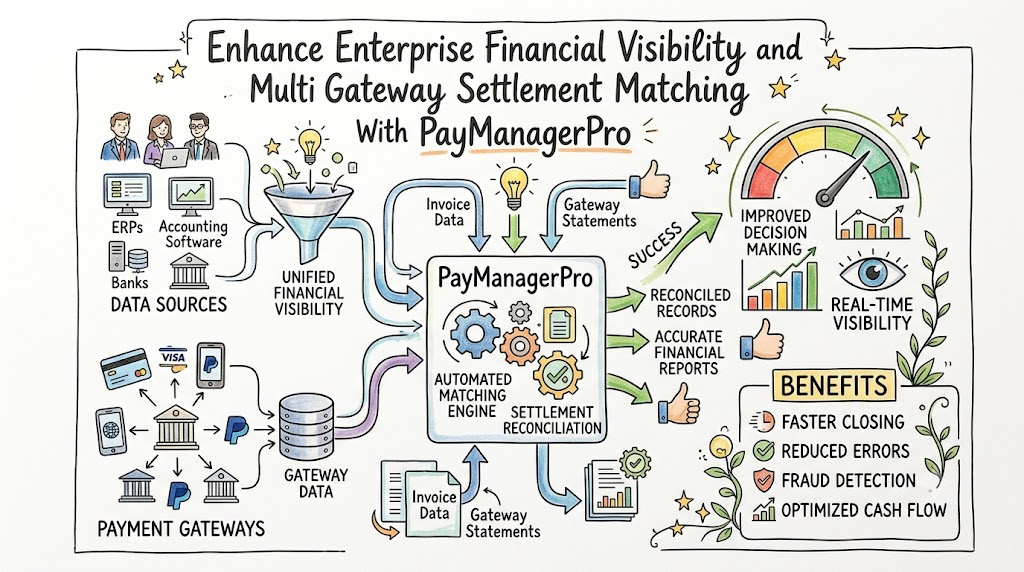
The platform automatically imports settlement statements from payment processors, matches incoming capital against open invoices, and flags discrepancies instantly for swift review. This intelligent matching engine eliminates endless hours of spreadsheet work while maintaining a clean, fully auditable trail.
[ Invoice Issued ] ──► [ Customer Payment ] ──► [ Gateway Settlement ]
                                                         │
                                                         ▼
[ Ledger Updated ] ◄─── [ Auto-Matched ] ◄─── [ Matching Engine ]
Improving Cash Flow with Accounts Receivable Automation
Sustaining healthy liquidity depends on converting open accounts receivable into spendable cash as quickly as possible. Slow billing workflows inflate your Days Sales Outstanding (DSO) and unnecessarily lock up crucial operating capital. Utilizing accounts receivable automation software accelerates collections through automated messaging schedules and structured escalation pathways.
By systematically sending proactive payment notices and structured overdue alerts, smart platforms keep outstanding bills top-of-mind for buyers. Eliminating manual touchpoints means zero missed follow-up dates and noticeably shorter payment turnarounds. Lowering DSO protects working capital and gives your business the liquidity required for strategic market expansion.
Understanding Invoice-to-Cash Automation
Invoice-to-cash automation represents the complete digital modernization of your organization’s entire collection system. It connects every operational touchpoint between generating a bill, collecting funds, reconciling settlement files, and updating central accounting ledgers. Installing invoice to cash automation software constructs a frictionless data pipeline across your complete technical ecosystem.
This end-to-end integration eliminates manual data transfers between customer management platforms, payment gateways, and core enterprise accounting software. Every incoming payment triggers real-time status updates, updates open customer ledgers, and logs fully verified settlement records. This cohesive environment builds an efficient, highly scalable financial management operation.
Building a Centralized Enterprise Payment Environment
Large businesses operating across diverse divisions, retail branches, or geographic offices demand rigorous centralized control over payment activities. Fragmented payment tools invite security vulnerabilities, compliance breakdowns, and inconsistent reporting. An enterprise payment management platform supplies firm centralized governance alongside flexible operational tools for regional staff.
Centralized payment hubs offer customizable user permissions, multi-tier maker-checker controls, and exhaustive activity logging. This security setup prevents unauthorized ledger alterations while giving local teams the tools they need to collect daily payments efficiently. Executive leadership maintains top-down operational visibility while enforcing strict compliance standards across all locations.
The Importance of Real-Time Payment Visibility
Delayed financial metrics lead to reactive management decisions and poor liquidity oversight. Waiting for monthly accounting closes to evaluate collection health hides emerging cash shortages until they disrupt business operations. Real-time payment visibility converts continuous cash flow data into immediate, actionable operational intelligence.
Interactive dashboards allow finance leaders to track daily collection metrics, evaluate cash flow patterns, and resolve payment exceptions immediately. This instant feedback loop helps management adapt collection strategies rapidly, optimize working capital distribution, and maintain absolute cash control in any operating environment.
Security and Compliance in Payment Management
Safeguarding sensitive financial records and customer transaction details requires uncompromising defense mechanisms. Security incidents, data leaks, or regulatory compliance failures destroy client trust and trigger heavy financial penalties. Modern financial management systems build bank-grade security protocols directly into their underlying software architecture.
Enterprise platforms deploy end-to-end data encryption, mandatory two-factor authentication, and strict compliance rules to guard transaction records. Comprehensive system logs record document creation, ledger edits, user approvals, and bank payouts automatically. This transparent security structure satisfies legal compliance standards while protecting your organization against payment fraud.
Reporting and Analytics for Better Financial Decisions
Sound financial management depends on continuous access to clear, accurate operational analytics. Relying on static spreadsheets makes it nearly impossible to spot payment bottlenecks, evaluate customer default risks, or assess collection performance accurately. Built-in analytics engines turn everyday billing data into actionable strategic insights automatically.
Customizable analytics panels highlight vital performance metrics including collection efficiency rates, receivable aging profiles, gateway authorization rates, and client payment trends. These automated reports deliver deep financial clarity directly to executive teams, supporting precise cash forecasting, risk mitigation, and optimal capital allocation.
Real-World Applications Across Industries
Diverse commercial sectors need specialized invoicing and payment collection strategies to handle their unique operational challenges:
- B2B Enterprises: Streamline enterprise billing with multi-tiered approval chains, partial settlement features, and automated corporate reconciliation rules.
- E-Commerce Platforms: Manage heavy transaction volumes with centralized multi-gateway dashboards, instant payment links, and immediate ledger updates.
- Service Providers: Simplify recurring billing with dynamic payment links, scheduled balance notices, and accurate GST-compliant invoices.
- Wholesale Distributors: Oversee multi-branch collections, track buyer credit limits, and balance accounts automatically across extensive distributor networks.
Best Practices for Successful Payment Management
Upgrading your billing and collection performance requires combining intelligent software tools with disciplined operational habits:
- Standardize Invoicing Procedures: Issue precise, GST-compliant invoices immediately following product or service delivery to stop payment disputes before they begin.
- Diversify Payment Options: Offer buyers multiple payment channels through secure, shareable payment links to accelerate settlement times.
- Automate Follow-Ups: Deploy automated, multi-channel payment notices before and after due dates to sustain predictable cash inflows.
- Reconcile Daily: Use intelligent auto-matching tools to settle accounts daily, identifying discrepancies before they compound.
How PayManagerPro Simplifies Modern Invoice and Payment Management
PayManagerPro eliminates the operational headaches that plague modern accounting teams every day. By merging billing, multi-gateway collection management, real-time tracking, and settlement reconciliation inside one unified software solution, the platform removes administrative drag across your complete receivables lifecycle.
Finance teams generate fully compliant GST invoices, share multi-channel payment links, and monitor real-time deposits across multiple processing networks simultaneously. Its automated reconciliation engine matches settlement records instantly while enterprise-grade governance controls ensure complete operational compliance. PayManagerPro turns fragmented billing tasks into a lean, powerful operational advantage.
Choosing the Right Payment Management Platform
Selecting a payment management platform is a pivotal strategic investment that shapes your company’s operational trajectory. The ideal software solution must integrate smoothly with your existing technical environment while delivering the scalability needed to handle aggressive enterprise expansion.
Evaluate prospective platforms using these essential criteria:
- Integration Support: Confirm fast, seamless connectivity with existing banking partners, accounting software, and core management CRMs.
- Security Standards: Require strong data encryption, granular access controls, and exhaustive operational audit logs.
- Reconciliation Automation: Demand intelligent settlement matching engines that completely remove manual spreadsheet matching.
- Scalable Architecture: Ensure the system handles rising transaction loads and complex multi-entity organizational structures effortlessly.
Frequently Asked Questions About PayManagerPro
What primary business functions does PayManagerPro fulfill?
PayManagerPro functions as an end-to-end financial system that brings billing, payment link generation, multi-gateway transaction tracking, and auto-reconciliation into one central operational dashboard.
Can PayManagerPro automate GST compliance for Indian enterprises?
The software handles CGST, SGST, and IGST calculations automatically, applying accurate itemized tax rules and generating compliant tax invoice numbers.
How does the auto-reconciliation process eliminate manual accounting tasks?
The system automatically imports payout files from payment gateways, matches incoming funds against outstanding customer invoices, and flags exceptions for quick review.
Is replacing existing payment gateway relationships required to use PayManagerPro?
No, PayManagerPro integrates directly with current gateway accounts like Razorpay, Paytm, and Cashfree, keeping existing banking infrastructure completely intact.
Can staff send payment links over messaging platforms like WhatsApp?
Teams distribute payment links instantly via email, SMS, WhatsApp, or embed them directly within client portal applications.
What payment options do clients see when clicking a payment link?
Clients can pay using UPI, credit cards, debit cards, net banking, or digital wallets depending on your enabled gateway configurations.
Does PayManagerPro supply role-based access management for accounting teams?
The architecture features granular user access controls, maker-checker authorization workflows, and full activity tracking logs to safeguard operations.
In what ways does PayManagerPro help organizations lower their DSO?
Automated payment notices, flexible payment links, and diverse collection channels eliminate buyer friction and significantly speed up cash inflows.
Can multi-branch organizations manage PayManagerPro centrally?
The system supports multi-tenant administration, allowing parent companies to manage several regional branches with total central control.
What financial metrics does the analytics dashboard track?
Users track live analytics on collection aging profiles, gateway authorization rates, open receivable balances, and projected daily settlement totals.
Conclusion
Achieving sustainable commercial expansion requires lean, accurate, and completely secure financial operations. Continuing to rely on disconnected manual steps, slow reconciliation routines, and segregated payment portals drains valuable internal resources and ties up vital cash reserves. Upgrading your financial technology infrastructure with a centralized billing, payment, and auto-reconciliation platform removes administrative friction and establishes predictable cash flow.
Unifying multi-gateway collections, automating ledger matching, and enforcing complete tax compliance transforms standard accounting duties into a clear competitive engine. Adopting intelligent financial automation positions your enterprise to eliminate manual errors, collect revenue faster, and scale operations with total financial confidence.
