Introduction
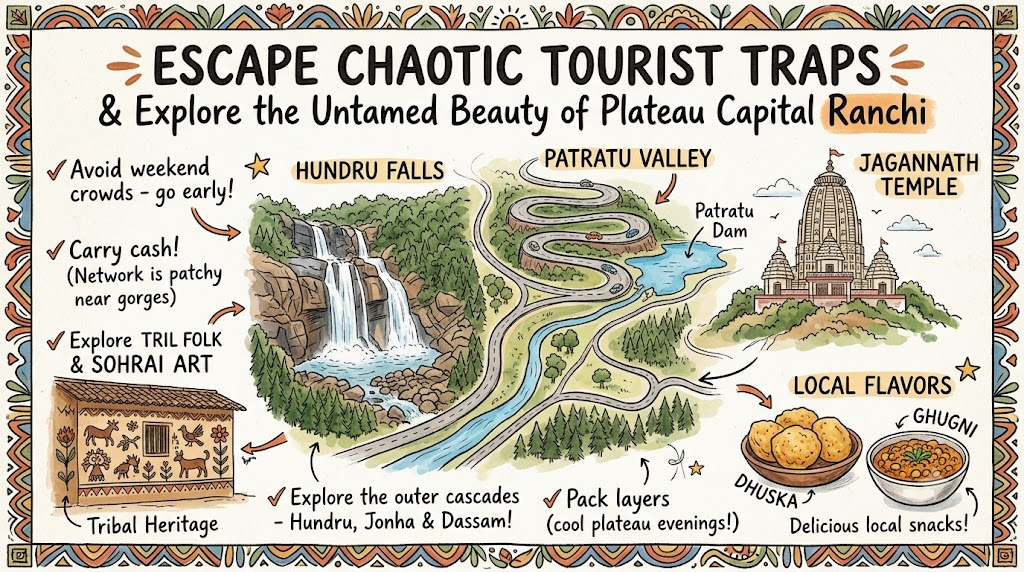
Most family vacations get swallowed by chaotic tourist traps, commercial amusement strips, and endless crowds. Parents end up standing in exhausting theme park queues while children stare at souvenir stalls instead of experiencing genuine nature.
Ranchi flips that tired script completely upside down. Perched atop the scenic Chota Nagpur Plateau, this refreshing capital city welcomes traveling families with raw red-soil horizons, deep sal canopies, and thunderous waterfalls.
Here, multi-generational travelers discover a grounded escape steeped in rich tribal folklore and untouched outdoor wonder. You leave behind manicured concrete resorts to let your family reconnect under crisp open skies and soothing forest breezes.
Why Ranchi is a must-visit city
Ranchi carries immense geographical and historical weight as the beating heart of Jharkhand. Blessed with an average elevation of roughly 2,140 feet above sea level, it enjoys a pleasant sub-tropical climate that once earned it status as the summer capital of the colonial Bihar-and-Orissa province.
Culturally, the land pulses with ancestral reverence, shaped profoundly by revolutionary tribal pioneers like Birsa Munda. Natural sandstone formations, crystalline river courses, and sacred grove traditions weave through daily local life.
Reaching this outdoor playground is delightfully straightforward for traveling groups. Birsa Munda Airport offers direct flight connections to major hubs including Delhi, Kolkata, Bengaluru, and Mumbai.
Ranchi Junction and Hatia Station connect travelers via high-speed Vande Bharat and express lines. Furthermore, broad multi-lane highways (NH 20 and NH 33) make driving smooth and family-friendly.
The regional circuit divides cleanly into distinct hubs: the roaring Waterfalls Belt to the east and south, the elevated scenic viewpoints toward Patratu Valley in the north, and the serene urban parks and lake precincts right inside city limits.
| Core Metric | Essential Detail |
|---|---|
| Geographic Setting | Chota Nagpur Plateau (approx. 650 m elevation) |
| Best Travel Months | October through March |
| Nearest Airport | Birsa Munda Airport, Ranchi (IXR) |
| Key Railway Hubs | Ranchi Junction (RNC) & Hatia (HTE) |
| Primary Highway Arteries | NH 20, NH 33, and NH 43 |
| Regional Specialty Flavors | Dhuska, Ghugni, Marua Roti, and seasonal Bamboo Shoot curry |
Best Places or Experiences
Hundru Falls
Formed by the mighty Subarnarekha River tumbling down a steep 320-foot vertical drop, Hundru Falls represents Jharkhand’s classic natural majesty. The river cascades across polished metamorphic rock benches before pooling into a wide, foam-flecked natural amphitheater.
The dramatic cascade of Hundru Falls.
Surrounding the gorge are vibrant forest buffers that keep the air remarkably crisp and clean. Families descend concrete staircases flanked by verdant foliage, enjoying broad panoramic platforms that offer unmatched vistas of churning water colliding with granite boulders.
- Location: Angara Block, approximately 45 km northeast of Ranchi city center.
- Why it is worth visiting: It is one of the highest vertical waterfalls in the state, offering spectacular rock formations and geological terraces.
- Best things to do: Walk down the stairs to view the misty plunge basin, photograph rainbow refractions against the morning rocks, and picnic along shaded upper plateaus.
- Best time to visit: October to February for clear weather and strong post-monsoon water volume.
- Ideal for whom: Multi-generational families, nature enthusiasts, and photography hobbyists.
- Travel tip: Wear shoes with deep rubber tread because moss on wet stair treads can turn slick; bring walking poles for grandparents.
Dassam Falls
Also known locally as Da-song, Dassam Falls occurs where the Kanchi River drops nearly 144 feet over craggy, stepped terrain. The water fractures into multiple foaming streams that resemble glistening white silk ribbons flowing down weathered stone.
Water flowing down Dassam Falls.
The surrounding landscape is blanketed by ancient Sal forests, providing an immersive wilderness escape just a short drive off the national highway. Well-built observation decks allow families to appreciate the acoustic roar and refreshing spray safely away from dangerous currents.
- Location: Near Taimara village, Bundu Block, about 40 km southeast of central Ranchi along NH 20.
- Why it is worth visiting: Features a picturesque multi-stream drop framed by dense forest canopy.
- Best things to do: Admire the waterfall from multiple terraced viewpoints, listen to forest birds from shaded gazebos, and sample crisp local tea from village stalls outside.
- Best time to visit: November through February during early morning hours when low-hanging mist blankets the gorge.
- Ideal for whom: Couples, families with older children, and bird watchers.
- Travel tip: Respect all boundary railings strictly and never attempt to wade into the plunge pool, as underwater vortexes are hazardous.
Patratu Valley
The winding descent into Patratu Valley delivers one of the most stunning engineering drives in Eastern India. Smooth, hairpin curves sweep through emerald-green hills, offering sweeping views that mirror international mountain passes.
Hairpin curves of Patratu Valley.
Down in the basin lies the sprawling Patratu Dam and Reservoir, where calm emerald waters lap against well-kept promenade parks. Families can rent safe pontoon boats or speedboats, gliding across clear waters while gentle afternoon breezes sweep down from surrounding ridgelines.
- Location: Ramgarh border corridor, roughly 35 km north of Ranchi.
- Why it is worth visiting: Marvelous serpentine switchback roads leading straight to an expansive lake recreation area.
- Best things to do: Pause at designated cliffside laybys for family photos, embark on a family motorboat tour at Patratu Lake Resort, and enjoy golden-hour snacks near the jetty.
- Best time to visit: Late afternoon between 3:30 PM and 5:30 PM to catch breathtaking sunset views across the winding ghats.
- Ideal for whom: Road-trip lovers, families with toddlers, and landscape photographers.
- Travel tip: Drive prudently and honk on blind hairpin corners; park only inside official viewpoint bays rather than on narrow road shoulders.
Jonha Falls & Gautam Dhara
Jonha Falls is an idyllic hanging-valley cascade where the Ganga and Raru rivers plummet 141 feet together. Revered culturally as Gautam Dhara, historical tradition holds that Lord Buddha rested near these sacred waters, a legacy commemorated by an adjacent ashram and shrine atop the plateau.
The descent encompasses several hundred wide steps surrounded by thick forest. The surrounding woods echo with rustling leaves and melodious birdsong, making this journey feel both spiritually rejuvenating and visually captivating for visitors of all generations.
- Location: Purulia Road axis, approximately 42 km east of Ranchi.
- Why it is worth visiting: Blends spiritual serenity, Buddhist heritage, and gorgeous stepped water cascades.
- Best things to do: Visit the tranquil Gautam Buddha temple near the crest, explore flat dry boulder zones downstream for riverside picnics, and purchase fresh guavas from local farmers.
- Best time to visit: October to January, specifically early mornings between 8:00 AM and 11:00 AM for gentle sunshine.
- Ideal for whom: Pilgrims, extended family groups, and peace-seekers.
- Travel tip: Plan your climb back up at an unhurried pace; local village vendors sell cold bottled water and fresh cucumber slices to keep kids energized.
Bhagwan Birsa Biological Park (Ranchi Zoo)
Sprawled across more than 100 hectares of natural undulated forest along the Sapahi River, this open-concept zoological park offers animals large, humane enclosures. The natural setting mimics indigenous habitats rather than relying on cramped concrete enclosures.
Families can wander paved walking loops shaded by tall trees, spotting Asiatic lions, Bengal tigers, leopards, Himalayan black bears, and diverse ungulates. It serves as an active wildlife rescue and conservation center, providing children with informative interpretive signage and clean open grounds.
- Location: Chakla village, Ormanjhi, roughly 25 km north of Ranchi on NH 20.
- Why it is worth visiting: An eco-conscious biological preserve set within authentic native woodland.
- Best things to do: Rent battery-operated eco-carts for comfortable multi-generation touring, explore the dedicated aquarium house, and relax by the boating pond.
- Best time to visit: October to February; arrive right at morning opening to see animals active before the afternoon sun peaks.
- Ideal for whom: Families with young children, strollers, and wildlife enthusiasts.
- Travel tip: Buy battery-cart access tokens immediately at the main entry gate, especially during weekends when demand surges.
Rock Garden & Kanke Dam
Carved artfully out of the weathered granite of Gonda Hill, Ranchi’s Rock Garden stands as a creative tribute to urban landscape design. Modeled aesthetically after Chandigarh’s famed gardens, this terraced attraction incorporates iron sculptures, stone pathways, miniature waterfalls, and manicured lawns.
Directly bordering the garden lies Kanke Dam, a vast, shimmering reservoir backed by rolling green hills. Parents can relax on garden terraces while children explore playful footpaths, watching fishermen paddle traditional boats across the lake below.
- Location: Kanke Road, approximately 5 km northwest of Ranchi city center.
- Why it is worth visiting: Unique rock art installations paired with sweeping lakefront vistas inside city bounds.
- Best things to do: Walk across the suspension footbridge, catch the sunset fading over Kanke Dam, and sip spiced lemon tea from stalls outside the gate.
- Best time to visit: 4:00 PM to 6:30 PM year-round for gentle breezes and vibrant sunset colors.
- Ideal for whom: Families looking for quick afternoon outings, senior travelers, and casual strollers.
- Travel tip: Visit on weekday afternoons to avoid weekend school crowds and enjoy calm, uncrowded walking paths.
Offbeat Exploration: Hidden Gems Tourists Miss
McCluskieganj
Tucked approximately 65 km northwest of Ranchi, McCluskieganj is a poignant, colonial-era enclave established in the 1930s as a homeland for the Anglo-Indian community. Shaded lanes run past weathered European-style cottages, antique brick chimneys, and rambling orchards filled with mango and guava trees.
Families can walk beneath ancient timber groves, visit the quaint local railway outpost, and experience peaceful isolation far removed from highway traffic. It feels like stepping straight into a classic Ruskin Bond story.
Tagore Hill (Morabadi)
Rising 300 feet above the northern edges of Ranchi, this serene granite hillock served as a quiet writing retreat for Jyotirindranath Tagore, elder brother of Nobel laureate Rabindranath Tagore.
A gentle, paved flight of stairs leads families past flowering trees to Brahmo Mandir and Shanti Dham at the summit. The hilltop provides sweeping 360-degree views across Ranchi’s changing skyline and Morabadi plains without demanding an exhausting trek.
Pithoria Fort Ruins and Surya Temple
Located 20 km north along the road to Patratu, the historic ruins of Pithoria preserve centuries of folklore. Nearby stands a unique modern Surya (Sun) Temple built atop a small knoll, shaped like an elaborate 18-wheel chariot drawn by seven stone horses.
The spot remains delightfully calm on weekday mornings, allowing families to explore regional folklore, intricate stone carvings, and quiet countryside landscapes without running into commercial tour buses.
Detailed Practical Guidance for Travelers
| Destination | Standard Entry Fee | General Timings | Best Local Food Options Nearby | Recommended Nearby Attractions |
|---|---|---|---|---|
| Hundru Falls | ₹10–20 per person | 8:00 AM – 5:00 PM | Local roadside dhabas serving piping hot Dhuska, fried Chana, and tea | Getalsud Dam, Jonha Falls |
| Dassam Falls | ₹15–20 per person | 8:30 AM – 4:30 PM | Village stalls selling fresh roasted corn (Bhutta) and fried Pakoras | Surya Mandir (Bundu), Panchghagh Falls |
| Patratu Valley & Dam | Free entry to valley viewpoints; ₹30–50 for lakeside park | 6:00 AM – 6:30 PM | Patratu Lake Resort multi-cuisine restaurant and highway dhabas | Pithoria Fort ruins, Palna Dam |
| Jonha Falls | ₹10–20 per person | 8:30 AM – 4:30 PM | Tribal snack stalls offering seasonal fruits, boiled corn, and tea | Sita Falls, Gautam Buddha Ashram |
| Birsa Biological Park | ₹30–40 adults, ₹15–20 children | 9:00 AM – 4:30 PM (Closed Mondays) | In-house canteen snacks, clean cafeteria near the gate | Ormanjhi Nursery, Getalsud Lake |
| Rock Garden | ₹20–30 per person | 9:00 AM – 6:30 PM | Kanke Road street carts: Phuchka, Momos, and seasonal sugarcane juice | Kanke Dam Promenade, Tagore Hill |
Logistics & On-Ground Navigation
Local Transport Options
Getting around Ranchi and its surrounding valleys requires choosing the right transport mode for your group’s size and itinerary:
- Private Day Cabs: The most dependable choice for families hitting the outer waterfall circuit. Book an air-conditioned sedan or SUV through verified hotel desks or regional travel agencies for 8–10 hours.
- App-Based Taxis (Ola / Uber): Readily available for intra-city trips connecting Morabadi, Kanke Road, Main Road, and Doranda. However, drivers rarely accept drops to distant waterfalls without steep return surcharges.
- Auto-Rickshaws & E-Rickshaws (Totos): Perfect for short neighborhood hops. Shared autos run designated routes along Main Road, while private reserves cost a modest negotiated fare.
- Self-Drive Rentals: Available from selected regional platforms at Ranchi Airport, but navigating hilly country curves requires confident driving skills.
Budget Planning
Here is a realistic estimate of daily expenses to help manage your travel budget:
- Budget / Family Backpacking Tier (₹2,000 – ₹3,500 per day for 2-3 persons):
- Stay: Modest guesthouses or budget homestays near Station Road or Lalpur (₹1,200 – ₹1,800/night).
- Food: Flavorful local dhabas, roadside Dhuska-Ghugni breakfasts, and small family thali joints (₹600 – ₹900/day).
- Transit: Shared autos within the city and pre-booked non-AC hatchback rentals for waterfall days (₹1,200 – ₹1,500 shared).
- Mid-Range / Comfort Family Tier (₹5,500 – ₹9,500 per day for a family of 3-4):
- Stay: 3-star or 4-star hotels around Morabadi, Kadru, or Kanke Road with breakfast included (₹3,500 – ₹5,500/night).
- Food: Well-reviewed family restaurants, multi-cuisine dining, and regional specialty thalis (₹1,500 – ₹2,500/day).
- Transit: Dedicated air-conditioned SUV or sedan with professional driver for seamless outstation transfers (₹2,200 – ₹3,200/day).
Safety and Inclusivity Tips
Keep these focused safety guidelines in mind for a smooth and comfortable holiday:
- For Families with Kids & Seniors: Always carry essential motion-sickness medications when traveling through winding ghat passes. Pack light sweaters even during early summer, as plateau evenings bring sudden cooling breezes.
- For Couples: Stick to daylight hours for distant rural drives. State forest corridors are scenic during the day but lack overhead lighting and emergency assistance after dusk.
- General Water Safety:
Never cross boundary chains or attempt swimming in waterfall basins like Hundru, Jonha, or Dassam. Hidden granite crevices, deceptive drops, and strong underwater currents make these zones strictly sightseeing areas.
Strategic Travel Planning Guardrails
Travel Planning Tips for Ranchi
- Season Your Calendar Wisely: Schedule your trip between late October and late February to enjoy cool, bright sunshine and comfortable daytime temperatures (15°C to 26°C).
- Carry Liquid Cash for Rural Loops: Digital UPI payments work seamlessly across city businesses, but spotty cellular reception around deep gorges like Dassam or Hundru makes cash essential for entry tickets and village stalls.
- Honor Tribal Cultural Sensitivities: If you witness local Sarna grove ceremonies or traditional dancing during festivals like Sarhul or Karma, observe respectfully from a polite distance and ask permission before snapping photographs.
- Dress in Practical Layers: Morning excursions often start with crisp, biting winds that give way to warmer midday sunshine. Wear breathable cotton layers topped with light jackets.
- Pack Sturdy Footwear: Waterfalls require navigating steep, weathered staircases. Sturdy walking shoes with grippy rubber soles are vital for both young kids and older grandparents.
Common Mistakes to Avoid
- Packing Too Many Gorges in One Day: Visiting Hundru and Dassam in a single afternoon leads to exhausting transit and rushed site visits. Dedicate each day to one primary compass quadrant.
- Underestimating Plateau Sun Exposure: The high elevation creates strong UV indices even when air temperatures feel mild. Always apply sunscreen, wear wide-brim hats, and carry reusable water bottles.
- Assuming Ride-Hail Apps Work Everywhere: Never book an app cab out to Patratu or Hundru assuming you can easily hail a return ride back. Always hire your cab on a round-trip reserve basis.
- Skipping Regional Street Delicacies: Passing up local culinary specialties like Dhuska, Chilka Roti, and Litti Chokha deprives your family of the city’s rich, earthy culinary heritage.
- Starting Outstation Trips After Midday: Daylight fades quickly on the plateau during winter months (dusk settles by 5:15 PM). Set out by 8:30 AM to maximize outdoor light.
Suggested Itinerary Blueprints
1-Day Quick Dash (City Highlights & Valley Sunset)
Ideal for families on a rapid business-leisure stopover wanting a quick taste of the region’s top highlights:
- Morning (8:30 AM – 11:30 AM): Begin with an educational walking morning at Birsa Biological Park in Ormanjhi, enjoying comfortable cart rides around spacious wildlife enclosures.
- Midday (12:00 PM – 2:00 PM): Return to Morabadi for an authentic tribal thali lunch, followed by a brief historic visit to Tagore Hill.
- Afternoon to Evening (3:00 PM – 6:30 PM): Take an easy scenic drive across the winding hairpins of Patratu Valley, enjoy a 30-minute family motorboat ride across Patratu Lake, and watch the sun set over the hills before driving back.
2-Day Deep-Dive (Waterfalls & Cultural Roots)
A balanced weekend plan designed to explore both raw outdoor scenery and cultural heritage without feeling rushed:
- Day 1: The Eastern Waterfalls Circuit
- Morning: Depart early (8:00 AM) toward Hundru Falls. Descend the stone steps to admire the sheer rock formations and enjoy fresh village snacks.
- Lunch: Stop by a highway dhaba on Purulia Road for hot dal, roti, and seasonal sabzi.
- Afternoon: Head over to Jonha Falls (Gautam Dhara). Tour the peaceful ashram, walk the stepped banks, and return to Ranchi by 5:30 PM.
- Evening: Stroll around Rock Garden alongside Kanke Dam, followed by a cozy dinner on Kanke Road.
- Day 2: Valley Wonders & Heritage Landmarks
- Morning: Drive out to the thunderous Dassam Falls along the southern NH 20 corridor. Relax at upper viewing decks taking in the fresh forest mist.
- Midday: Visit the architecturally unique Surya Temple in Bundu, admiring the massive stone horses and wheels.
- Afternoon & Evening: Drive north to Patratu Dam, take a peaceful lakeside promenade walk, and pick up authentic regional brass handicrafts from city markets upon returning.
3-Day Complete Weekend Travel Plan (The Grand Plateau Circuit)
The definitive family vacation loop capturing every outdoor dimension of the plateau:
- Friday (Arrival & Urban Panorama):
- Arrive in Ranchi, check into your hotel, and enjoy a traditional lunch featuring fragrant indigenous arwa rice and rich seasonal vegetables.
- Head up to Tagore Hill in the late afternoon for a relaxing family stroll and panoramic views across the city.
- Spend a breezy evening at Rock Garden & Kanke Dam, letting the kids run along safe, manicured pathways.
- Saturday (Grand Natural Escapes):
- Dedicate the entire day to the great outdoors: hire a reliable cab and journey northeast to Hundru Falls.
- Spend midday unwinding near the quiet shores of Getalsud Dam, enjoying a home-packed family picnic under shady trees.
- Continue to Jonha Falls for afternoon exploration, returning to the city center for hot tea and sweets in Lalpur.
- Sunday (Wildlife Safaris & Serpentine Horizons):
- Start the morning at Bhagwan Birsa Biological Park, learning about regional animal rescue programs.
- Enjoy a relaxed country lunch before driving through the breathtaking twists and turns of Patratu Valley.
- Spend late afternoon boating at Patratu Lake Resort, stop for tea at scenic cliffside viewpoints during sunset, and head straight to the airport or railway station for your evening departure.
Common Tourist Mistakes to Avoid
- Geographic Blunders: Don’t attempt to visit Dassam Falls (far south) and Patratu Valley (far north) on the same afternoon. These spots sit on opposing geographic sides of the district, and navigating urban traffic between them wastes precious vacation hours.
- Commercial Traps: Avoid spending your evenings in sterile, enclosed shopping malls along Main Road. Ranchi’s charm lies outdoors—in the breezy open grounds of Morabadi, along the Kanke Dam promenade, and in bustling local craft markets like Jharcraft.
- Neglecting Modern/Alternative Zones: Many travelers overlook the city’s green modern developments. Neighborhoods like Morabadi offer broad, pedestrian-friendly walking avenues, open-air art displays, and pleasant family cafes that provide a peaceful alternative to busy commercial streets.
- Transport Overpayment: Refuse flat off-meter quotes from street auto-rickshaws stationed directly outside train stations. Walk past the immediate exit gate to hail standard pre-paid autos, or use app-based platforms to verify reasonable baseline rates before negotiating.
- Luxury Dining Bias: Sticking purely to upscale hotel dining rooms causes visitors to miss the true culinary soul of the plateau. Savoring street-side Dhuska with spicy potato-gram curry cooked fresh in front of you offers an authentic flavor profile no luxury buffet can replicate.
Frequently Asked Questions
1. Is Ranchi safe for families traveling with young children?
Yes, Ranchi is safe, hospitable, and welcoming for family groups. Local residents are helpful, and violent crime targeting travelers is virtually nonexistent. Keep standard precautions in mind: avoid driving along unlit rural forest roads late at night, and always supervise young children around the steep viewing platforms and stairways near major waterfalls.
2. Which month is the absolute best to experience Ranchi waterfalls?
The ideal window runs from October through January. During these post-monsoon months, river volumes remain thunderous, surrounding vegetation is lush and green, and daytime temperatures hover comfortably between 18°C and 24°C, making stair climbing pleasant rather than exhausting.
3. Can senior citizens easily access the major waterfalls in Ranchi?
Senior access depends on mobility. Cascades like Hundru and Jonha require walking down hundreds of concrete steps, which can prove difficult for older individuals with joint issues. However, sites like Patratu Lake, Kanke Dam, and Rock Garden feature flat, paved walkways that are gentle and accessible.
4. How many days are ideal for a complete Ranchi family trip?
A 3-day, 2-night itinerary is the sweet spot. This schedule lets you explore two majestic waterfalls, experience the winding scenic drives of Patratu Valley, tour the biological wildlife park, and discover city landmarks without feeling hurried.
5. What is the signature local breakfast dish families should try?
The quintessential breakfast is Dhuska, a golden-fried savory cake made from ground rice and chana dal batter. It is served piping hot alongside spicy Aloo-Chana (potato-chickpea) curry and sweet tamarind chutney at morning food stalls throughout the city.
6. Are digital payments like UPI accepted at rural sightseeing spots?
While UPI is widely accepted across hotels, cafes, and fuel stations in Ranchi, cellular data can drop abruptly inside river valleys like Dassam and Hundru. Always keep ₹1,500 to ₹2,500 in physical cash for entry tickets, parking fees, and small village snacks.
7. Can we rent self-drive cars directly at Ranchi Airport?
A few regional car rental agencies and self-drive aggregators serve Ranchi, but supply is limited compared to larger metropolitan airports. It is wiser to reserve your vehicle in advance or hire an experienced local driver who knows the winding plateau roads well.
8. Are waterfall basins safe for casual swimming and wading?
No, swimming in natural waterfall pools around Ranchi is strictly discouraged and often prohibited by local authorities. Submerged granite rock shelves, sharp crevices, and deceptive plunge currents create serious safety hazards, making these spots suitable for viewing only.
9. What unique regional handicrafts make good souvenirs?
Look for exquisite bamboo and woodcraft, Dokra metal castings, traditional Sohrai painted wall plates, and tussar silk textiles. Purchasing these directly from certified Jharcraft showrooms ensures fair pay for indigenous artisans.
10. What clothes should we pack for a winter trip to Ranchi?
Pack versatile, light layers. Winter days are sunny and mild, requiring simple cotton shirts, but temperatures drop rapidly after sunset to around 8°C to 12°C. Carry warm wool sweaters, fleeces, and jackets for evening outings and breezy morning lake walks.
11. Is boating safe for children at Patratu Dam?
Yes, boating at the Patratu Lake Resort complex is managed with strict safety standards. Operators provide mandatory personal life jackets for both children and adults before boarding speedboats or motorized pontoon cruises across the calm reservoir.
12. How far in advance should we book private cabs for outstation circuits?
Booking your dedicated taxi 24 to 48 hours in advance through your hotel desk or a reputable regional travel agency is best. This ensures you secure a clean vehicle with working air conditioning and an experienced driver familiar with rural routes.
Conclusion
Choosing Ranchi for your next family getaway means trading crowded, commercialized tourist traps for a genuine encounter with untamed nature. From the thunderous roar of Hundru Falls to the sweeping sunset curves of Patratu Valley, this ancient plateau reconnects travelers with the living rhythms of the earth. Your family will return home not just with photographs, but with refreshed spirits, shared laughter, and a lasting appreciation for one of India’s most authentic outdoor sanctuaries.
