Introduction
When monsoon clouds blanket eastern India, crowded tourist hubs like Shimla or Goa drown under tourist gridlock and hyper-commercial chaos. Ranchi offers an entirely different rhythm. Perched on the lush Chota Nagpur plateau, this city transforms into an emerald amphitheater where rain is not an inconvenience, but a spiritual awakening.
Here, the red soil breathes life into dense sal forests, and dramatic roaring cataracts surge with primal energy. Ranchi invites travelers looking for deep indigenous roots, historical literary sanctuaries, and authentic tribal culinary traditions untouched by tourist traps.
Why Ranchi is a must-visit city
Ranchi carries exceptional geological and historical weight as the beating heart of Jharkhand. Sitting at an altitude of approximately 650 meters (2,140 feet) above sea level, its unique plateau topography ensures comfortable, breezy weather even when torrential downpours strike. Historically the summer capital of the undivided Bihar province during colonial times, the city bridges sacred tribal heritage, revolutionary freedom struggles led by Bhagwan Birsa Munda, and peaceful artistic retreats.
Modern accessibility makes reaching the plateau seamless for solo wanderers, road-trippers, and family groups alike. Birsa Munda Airport (IXR) connects directly to major Indian metros like Delhi, Mumbai, Kolkata, and Bengaluru. The Ranchi Junction (RNC) and Hatia (HTE) rail terminals serve premier express trains, while smooth multi-lane national highways (NH 33 and NH 20) connect travelers across eastern corridors. Hospitality ranges from heritage circuit rest houses to modern upscale stays near Main Road and Morabadi.
The regional travel circuit flows naturally from central cultural landmarks out toward thrilling waterfall corridors in the east and dramatic winding highland ghats in the north.
| Fact / Metric | Details |
| Geographic Terrain | Chota Nagpur Plateau (Deccan outlier) |
| Average Monsoon Altitude | ~650 m (2,140 ft) with crisp microclimates |
| Peak Monsoon Season | Late June to early October |
| Key Railway Hubs | Ranchi Junction (RNC), Hatia (HTE) |
| Primary Transit Highway | NH 20 (Ranchi–Patna) & NH 33 |
| Signature Local Flavors | Dhuska, Ghugni, Arsa, Bamboo Shoot Curries |
Best Places or Experiences
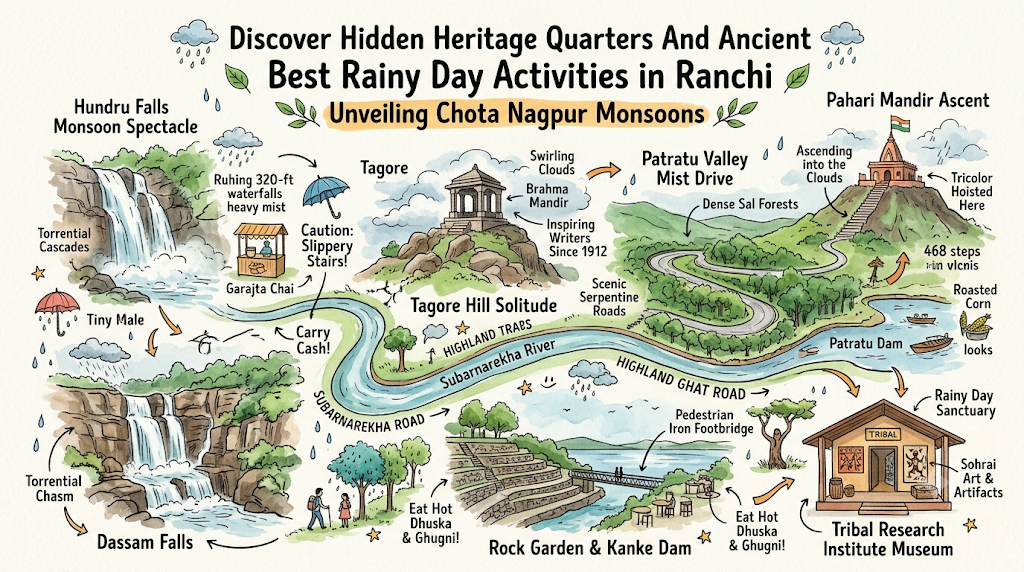
Hundru Falls Monsoon Spectacle
Hundru Falls represents the sheer, untamed fury of the Subarnarekha River as it plunges 320 feet down jagged metamorphic cliffs. During rainy afternoons, the falls swell into an awe-inspiring curtain of mist and amber water, shaking the gorge floor with visceral acoustic vibrations.
The winding descent through polished granite rocks reveals verdant rainforest vegetation draped in hanging vines. Standing near the designated viewing balconies as fine rain blends with waterfall vapor provides an exhilarating sensory experience that dry-season travelers never witness.
- Location: Angara block, approximately 45 km northeast of Ranchi city center.
- Why it is worth visiting: The highest and most dramatic waterfall drop in the Chota Nagpur circuit during peak water volume.
- Best things to do: Stand at the middle viewing ledge to photograph rushing spray, sip steaming ginger tea prepared by village vendors, and observe unique basalt rock erosion patterns.
- Best time to visit: 10:00 AM to 2:00 PM from July through September for daylight visibility through shifting fog.
- Ideal for whom: Nature enthusiasts, landscape photographers, and adventurous groups.
- Travel tip: Wear high-traction rubber-soled footwear; the concrete and stone steps get exceptionally slick when wet, and avoid walking beyond barricades.
Tagore Hill Solitude and Literary History
Rising 300 feet above the vibrant neighborhood of Morabadi, Tagore Hill (locally known as Morabadi Hill) stands as a monument of quiet contemplation. Jyotirindranath Tagore, the elder brother of Nobel laureate Rabindranath Tagore, made this rocky outcrop his permanent hermitage in 1912, constructing the serene Brahma Mandir pavilion at its summit.
On a rainy day, ascending the stone stairs feels like climbing into the clouds. The panoramic view of Ranchi’s sprawling tree canopies soaked in rain is unmatched, offering the exact serene atmosphere that once inspired immortal Bengali literature and philosophy.
- Location: Morabadi, roughly 4 km north of Ranchi Railway Station.
- Why it is worth visiting: An authentic convergence of colonial-era literary heritage, spiritual architecture, and 360-degree hilltop panoramas.
- Best things to do: Read or write beneath the stone dome of Brahma Mandir while listening to rain, explore the restored Shanti Dham quarters at the base, and enjoy hot pakodas at the Morabadi ground kiosks.
- Best time to visit: 7:00 AM to 9:30 AM or late afternoon around 4:30 PM during soft drizzle.
- Ideal for whom: Solo travelers, literature buffs, couples, and creative artists.
- Travel tip: Carry an umbrella or a windproof raincoat, as gusty plateau winds at the hilltop pavilion easily invert lightweight umbrellas.
Patratu Valley Mist Drive and Dam Overlook
Carved through dense saal ridges, the Patratu Valley ghat road is an engineering marvel characterized by rhythmic hairpin bends and sweeping asphalt curves. During the monsoon, dense clouds sink into the valley gaps, turning the entire descent into a dramatic, surreal alpine pass.
At the base of the ghat lies the expansive Patratu Dam reservoir, where gray storm clouds reflect across miles of tranquil, rippling water. The newly developed tourism complex provides safe, covered promenades where you can gaze over the lake while monsoon winds sweep across the reservoir.
- Location: Ramgarh border route, roughly 35 km northwest of Ranchi city.
- Why it is worth visiting: One of the most photogenic serpentine hill-driving corridors in eastern India, surrounded by cloud forests.
- Best things to do: Stop at designated valley laybys for sweeping aerial photographs, take a covered speed-boat ride across Patratu Dam if rain eases, and sample roasted corn cobs with lime and rock salt.
- Best time to visit: 2:00 PM to 6:00 PM to catch drifting evening fog and the illuminated highway curve lights.
- Ideal for whom: Road trippers, motorcyclists, families, and leisure travelers.
- Travel tip: Drive with low-beam headlights on; sudden cloud blankets can drop visibility to less than 15 meters within minutes.
Pahari Mandir Spiritual Monsoon Ascent
Dominating the central skyline, Pahari Mandir sits atop the volcanic Ranchi Hill at an elevation of 2,140 feet. Dedicated to Lord Shiva, this sacred temple holds deep emotional resonance for locals, especially during the holy monsoon month of Shravan, when saffron-clad devotees walk from far corners of the state.
Climbing the 468 stone steps under a gentle drizzle is an invigorating ritual. Beyond religious devotion, the site carries a unique patriotic legacy: during British colonial rule, Indian freedom fighters were martyred on this hill, which is why the Indian National Tricolor is proudly hoisted here every Independence Day.
- Location: Kishoreganj, roughly 3 km west of Ranchi Main Road.
- Why it is worth visiting: Sacred Shaivite history combined with historic national significance and a bird’s-eye perspective of central Ranchi.
- Best things to do: Ring the historic temple bells echoing across the plateau, admire the expansive aerial view of Ranchi Lake below, and observe Shravan rituals.
- Best time to visit: Early morning between 6:00 AM and 8:30 AM before daily temple crowds assemble.
- Ideal for whom: Cultural seekers, photographers, spiritual pilgrims, and fitness walkers.
- Travel tip: The stone steps become slick; hold on to the sheltered side railings and deposit your footwear at the covered base counter.
Dassam Falls Torrential Chasm
Dassam Falls (originally Da-song in indigenous Mundari, meaning “pouring water”) is where the Kanchi River cascades 144 feet over clean, horizontal rock terraces. In peak monsoon, the river spreads into ten distinct silvery chutes that thunder in unison into an emerald plunge pool.
Surrounded by pristine dry-deciduous forests of sal and mahua, the natural setting remains remarkably wild and undisturbed. The state tourism department has constructed paved sheltered walkways and high-altitude viewing shelters, allowing visitors to experience the immense raw power of the river safely out of reach of sudden flash surges.
- Location: Taimara village, Bundu block, roughly 40 km southeast of Ranchi along NH 33.
- Why it is worth visiting: Broad, multi-tiered cataract formation set against deep forested plateaus.
- Best things to do: Observe the multi-chute water split from the safety pavilions, spot native monsoon bird species in the surrounding sal canopy, and sample local seasonal fruit like jamun and wild berries.
- Best time to visit: 11:00 AM to 3:00 PM for optimum overhead lighting piercing through storm clouds.
- Ideal for whom: Adventure groups, nature photographers, and eco-tourists.
- Travel tip: Never attempt to descend to the water’s edge or cross the safety fencing; the Kanchi River suffers sudden upstream surges during rainfall.
Rock Garden and Kanke Dam Waterscape
Crafted directly from the weathered granite of Gonda Hill, the Rock Garden in Ranchi is an ingenious artistic blend of landscape design and natural rock formations. Overlooking the serene Kanke Dam reservoir, the garden features tiered waterfalls, iron bridges, and sculptures carved out of living stone.
On overcast days, the contrast between dark granite stones, manicured green hedges, and the misty reservoir creates a poetic, contemplative setting. Strolling along the pedestrian footbridges while light rain taps the lake surface is an iconic local leisure experience.
- Location: Kanke Road, approximately 6 km north of Albert Ekka Chowk.
- Why it is worth visiting: An artistic community park offering tranquil shoreline views of the water reservoir without leaving town.
- Best things to do: Walk across the suspension footbridge spanning the stone pools, enjoy fresh local tea at the covered garden cafeteria, and view the sprawling waters of Kanke Dam.
- Best time to visit: 3:30 PM to 6:30 PM for cool evening breezes and dramatic sunset cloud formations.
- Ideal for whom: Families with children, elderly travelers, and casual couples.
- Travel tip: Carry small cash denominations for parking and entry tickets, as digital payment signals can fluctuate during rain storms near the hill base.
Offbeat Exploration: Hidden Gems Tourists Miss
Jonha Falls and the Gautam Buddha Hermitage
While tourists crowd the wider Hundru Falls, Jonha Falls (also known as Gautamdhara) offers a more intimate encounter with nature. Fed by the Raru River, this 141-foot hanging valley cataract requires descending over 700 stairs surrounded by quiet sal woodlands. At the top sits an ancient ashram and shrine dedicated to Lord Buddha, providing a peaceful retreat filled with the scent of wild forest rain.
Ranchi Lake (Bada Talab) Evening Solitude
Excavated in 1842 by British commissioner Colonel Onsely, this massive heritage water body in the city center features a towering 33-foot bronze statue of Swami Vivekananda situated on an island. On monsoon twilights, cool gusts send ripples across the lake while the reflection of evening lamps cuts through the rolling fog, offering a contemplative walk away from commercial traffic.
Tribal Research Institute Museum Rainy Day Sanctuary
Located in Morabadi, this cultural gem houses preserved artifacts, traditional agricultural tools, musical instruments, and life-size dioramas of Jharkhand’s 32 tribal communities, including Santhal, Munda, Oraon, and Ho groups. It is the premier indoor refuge during torrential downpours to understand the deep animist philosophy and craftsmanship of the region.
Detailed Practical Guidance for Travelers
| Destination | Standard Entry Fee | General Timings | Best Local Food Options Nearby | Recommended Nearby Attractions |
| Hundru Falls | ₹20 per person | 8:00 AM – 5:00 PM | Village stalls: Dhuska, Ghugni, roasted corn | Getalsud Dam, Jonha Falls |
| Tagore Hill | Free entry | 6:00 AM – 6:30 PM | Morabadi stalls: Litti Chokha, kulhad tea | Ram Dayal Munda Tribal Museum |
| Patratu Valley | Free entry (Park fee: ₹30) | 24 Hours (Park: 9 AM – 7 PM) | Patratu Lake Resort Restaurant: Jharkhand Thali | Patratu Dam, Thermal Dam Viewpoint |
| Pahari Mandir | Free entry | 5:00 AM – 8:30 PM | Ratu Road street carts: Samosas, Jalebis | Ranchi Lake, Nakshatra Van |
| Dassam Falls | ₹20 per person | 8:30 AM – 4:30 PM | Bundu highway dhabas: Desi chicken, roti | Surya Mandir Bundu |
| Rock Garden | ₹30 per person | 9:00 AM – 7:00 PM | Kanke Road cafes: Artisanal coffee, momos | Kanke Dam, Birsa Agricultural campus |
Logistics & On-Ground Navigation
Local Transport Options
- App-Based Cabs (Ola/Uber): Highly reliable for intra-city hops between Morabadi, Main Road, and Kanke. However, avoid booking one-way trips to distant waterfalls via apps, as drivers rarely get return rides.
- Pre-Booked Private Taxis: The safest choice for waterfall circuits (Hundru, Jonha, Dassam) and Patratu Valley. Full-day private hires cost between ₹2,200 and ₹3,200, depending on vehicle size.
- Shared Auto-Rickshaws & E-Rickshaws (Totos): The backbone of urban Ranchi. Shared autos run set arterial lines (e.g., Overbridge to Kanke or Ratu Road) for ₹10 to ₹25 per seat.
- Self-Drive Two-Wheelers: Ideal for experienced riders heading up the winding roads of Patratu Valley, but exercise extreme caution on wet rural gravel roads.
Budget Planning
- Budget / Backpacker Tier: Expect to spend ₹1,200 to ₹1,800 per day. This covers a clean homestay or traveler lodge near the railway station, shared auto transits, street food meals (Dhuska, Litti), and nominal entry fees.
- Mid-Range / Comfort Tier: Expect to spend ₹3,500 to ₹6,500 per day. This includes a 3- or 4-star business hotel, a private air-conditioned cab for daily rural sightseeing, dining at heritage restaurants, and guided visits.
Safety and Inclusivity Tips
- Families: The paved walkways at Rock Garden and Patratu Dam complex are secure and stroller-friendly. Keep young children by the hand at waterfalls due to slippery rocks and sheer drop-offs.
- Couples: Public spaces like Tagore Hill and Patratu Valley are welcoming. Avoid secluded rural waterfall tracks past sunset, returning to city limits by 6:00 PM.
- General Safety: Water levels can swell without warning during heavy downpours. Never cross low-lying concrete bridges or enter plunge pools, regardless of how calm the water appears.
Strategic Travel Planning Guardrails
Travel Planning Tips for Ranchi
- Pack True Monsoon Gear: High-grade waterproof rain jackets, silicone phone pouches, and quick-drying shoes with rugged treads are essential.
- Keep Liquid Cash Handy: While UPI is widely accepted across city shops, deep valley viewpoints and highway stalls often experience network drops during heavy cloud cover.
- Respect Sacred Groves (Sarna): Many wooded hilltops are sacred animist worship grounds. Do not litter, break branches, or disrupt painted stone altars.
- Start Early: Monsoon mornings in Ranchi generally see gentle drizzles; heavier convection thunderstorms tend to build up in the mid-to-late afternoon.
- Plan Waterfall Stops Logistically: Never attempt more than two distant waterfall visits in a single day, as rain slows rural road speeds down to 30–40 km/h.
Common Mistakes to Avoid
- Venturing into Unmarked Water Pools: Slippery granite rock formations hide dangerous underwater whirlpools and sudden drop-offs.
- Assuming All Falls Are on One Loop: Hundru (northeast) and Dassam (southeast) sit on different highway corridors; combining them hurriedly results in spending your day trapped inside a car.
- Skipping Regional Cuisine: Eating solely at multi-cuisine hotel buffets deprives you of Jharkhand’s authentic seasonal tribal dishes.
- Driving Without Fog Lights in the Valley: Descending Patratu Pass without lights during sudden cloud shifts puts you at risk with heavy commercial vehicles.
- Neglecting Forest Checkpoint Timings: Rural waterfall reserves close access gates firmly around 4:30 PM to 5:00 PM for wildlife protection and visitor safety.
Suggested Itinerary Blueprints
1. Day Quick Dash (The Monastic & Highland Circuit)
Target: Transit professionals and weekenders short on time seeking nature and iconic vistas.
- Morning (8:00 AM – 11:30 AM): Climb Tagore Hill in Morabadi for cool views, followed by breakfast of hot Dhuska and Ghugni at Morabadi ground.
- Midday (12:00 PM – 3:30 PM): Head down Kanke Road to Rock Garden, overlooking Kanke Dam, then have lunch at an authentic regional restaurant.
- Afternoon/Evening (4:00 PM – 7:30 PM): Take the scenic scenic road through Patratu Valley, pausing at the cloud-covered viewpoints before heading back to the city.
2. Day Deep-Dive (The Cascades & Tribal Roots Trail)
Target: Curious culture travelers and landscape photographers.
- Day 1: Waterfalls & Rural Rhythms: Start out early along NH 33 to witness the sheer power of Hundru Falls. Have lunch at a local village dhaba, then take the winding road to Jonha Falls, returning via the serene Getalsud Dam catchment area.
- Day 2: City Heritage & Hill Sanctuaries: Begin with an early ascent of Pahari Mandir. Spend midday exploring the collections inside the Tribal Research Institute Museum, then unwind with an evening stroll around Ranchi Lake before indulging in regional street foods.
3. Complete Weekend Travel Plan (The Comprehensive Chota Nagpur Loop)
Target: Road trippers, slow travelers, and families looking for a complete break.
- Friday: Arrive in Ranchi, check into your hotel, and spend a relaxed rainy evening sampling local tea and Litti Chokha around Morabadi.
- Saturday: Reserve the entire day for the Southern Highway circuit. Drive along the four-lane highway to Dassam Falls, stop by the historic 17-domed Bundu Sun Temple, and enjoy a traditional dinner featuring tender bamboo shoot curries and local river fish.
- Sunday: Take an early morning drive through the misty bends of Patratu Valley. Enjoy the peaceful views across Patratu Dam, return for handicraft shopping at Jharcraft on Main Road, and catch an evening flight or train out.
Common Tourist Mistakes to Avoid
- Geographic Blunders: Don’t attempt to visit Hundru Falls and Patratu Valley on the same afternoon. They sit on diametrically opposite sides of the district, and cross-city traffic during rainy rush hours will drain your travel time.
- Commercial Traps: Don’t waste your afternoons in air-conditioned shopping malls on Circular Road. Ranchi’s soul during monsoon lies in its lush open spaces, misty ridges, and lively roadside kiosks.
- Neglecting Modern/Alternative Zones: Don’t confine your trip strictly to older cantonment areas. The expanded artistic spaces, open-air garden bistros, and quiet avenues around Morabadi and Kanke offer a glimpse into contemporary local life.
- Transport Overpayment: Always cross-reference roadside taxi fares against ride-hailing apps or book fixed-rate vehicles directly through official Jharkhand Tourism Development Corporation counters.
- Luxury Dining Bias: Sticking exclusively to hotel dining rooms misses the city’s culinary soul. You would overlook the crispy texture of freshly fried dhuska served with spicy chickpea curry, or roasted litti cooked slowly over coal braziers.
Local Food Guide: Head to small local stalls for Dhuska (deep-fried fermented rice and chana dal patties served with aloo-chana curry). Pair it with Marua Roti (finger millet flatbreads), seasonal tender Sanai flowers, or sweet Arsa pitha. For authentic local souvenirs, visit the state-run Jharcraft Emporium on Main Road to pick up genuine Sohrai paintings, brass Dhokra figures, and handwoven Tussar silk sarees.
Frequently Asked Questions
1. Is it safe to visit the waterfalls around Ranchi during the peak monsoon season?
Visiting the designated viewing decks at waterfalls like Hundru and Dassam is completely safe because tourism authorities maintain sturdy railings. However, stepping beyond the safety barriers, walking over slick rocks, or attempting to swim in the currents is strictly prohibited due to sudden flash surges from upstream rains.
2. How do I get to Ranchi easily by air, train, or road?
Birsa Munda Airport connects directly to primary hubs like Delhi, Mumbai, Kolkata, and Bengaluru. Ranchi Junction and Hatia stations receive premier express and Vande Bharat trains across the country. Smooth national highways, including NH 20 and NH 33, provide excellent, scenic roadway access from neighboring cities.
3. What is the signature local breakfast dish to try on a rainy morning?
The most iconic regional breakfast is hot Dhuska served alongside spicy Ghugni (black gram curry) and tangy tomato chutney. Made from a stone-ground batter of soaked rice and chana dal deep-fried to a golden crisp, it is available fresh at morning kiosks across Morabadi and Ratu Road.
4. Can I easily book app-based cabs for full-day sightseeing tours?
Apps like Uber and Ola operate reliably within the city limits, but they are not practical for long-distance waterfall circuits. Drivers will usually decline distant drops because finding return passengers is difficult. It is best to arrange a full-day private vehicle through your hotel or local transport agencies.
5. Are special permits required for visiting tourist attractions or tribal zones in Ranchi?
General domestic and international travelers do not require special inner-line permits to visit waterfalls, public temples, museums, or standard cultural viewpoints around Ranchi. However, taking photographs may require small, formal camera fees at designated wildlife reserves and heritage parks. Always respect local village privacy when exploring offbeat tribal settlements.
6. What clothes and footwear are best for traveling around the plateau in the rain?
Pack quick-drying synthetic clothing, light layers, and a heavy-duty waterproof raincoat or windcheater. Sturdy, closed-toe walking shoes or sandals with deep rubber treads are essential, as moss-covered stone stairs at the waterfalls and hills become slick when wet.
7. Where can I buy authentic regional tribal handicrafts and handloom textiles?
The premier destination for authentic souvenirs is the government-run Jharcraft Mega Emporium located on Main Road. Here you can buy genuine Tussar silk garments, handcrafted brass Dhokra tribal artifacts, fragrant lac bangles, and authentic hand-painted Sohrai tribal art pieces at regulated, fair-trade prices.
8. Is the Patratu Valley drive safe for self-driving during cloudy weather?
The Patratu Valley ghat road is wide, well-maintained, and features solid guard rails along every sharp turn. Driving is safe provided you use low-beam headlights in thick fog, stay strictly within marked lanes, respect the speed limits, and avoid overtaking on blind curves.
9. Are there good indoor cultural attractions if it rains heavily all day?
Yes, Ranchi offers enriching indoor cultural spots like the Ram Dayal Munda Tribal Research Institute Museum in Morabadi. You can also explore the State Museum in Hotwar, which showcases extensive collections of tribal weapons, sculptures, historical archaeology, and traditional folk instruments under covered galleries.
10. How many days make for an ideal vacation to experience Ranchi and its surroundings?
A 3-day, 2-night itinerary is ideal to take in Ranchi’s highlights at a comfortable pace. This allows one full day for the eastern waterfall circuit, a second day for the northern heights of Patratu Valley and Tagore Hill, and a third day for city temples, local markets, and culinary walks.
11. Is UPI digital payment widely accepted at tourist spots outside the city?
Digital payments via UPI QR codes work at most urban stores, cafes, and fuel stations. However, mobile data signals can drop in deep valleys and rural waterfall sites during heavy monsoon cloud cover. It is always wise to keep ₹1,500 to ₹2,000 in physical cash for entry tickets and small vendors.
12. What unique local etiquette should travelers keep in mind when visiting rural areas?
Always ask for permission before taking close-up portraits of village residents or tribal shrines. Sacred groves, known locally as Sarna Sthal, are deeply revered; avoid walking through them with footwear or littering. A warm, humble attitude and a respectful greeting in Hindi or Sadri will be met with genuine warmth.
Conclusion
Traveling to Ranchi during the rains offers an experience far removed from standard, crowded tourist trails. Standing upon mist-draped granite plateaus, listening to the roaring music of cascading waterfalls, and sharing warm plates of dhuska with welcoming locals reveals the true, enduring soul of Jharkhand. This plateau journey stays with you—not merely as snapshots of misty vistas, but as a grounding encounter with the earth, tribal heritage, and the quiet beauty of the monsoons.
