Introduction
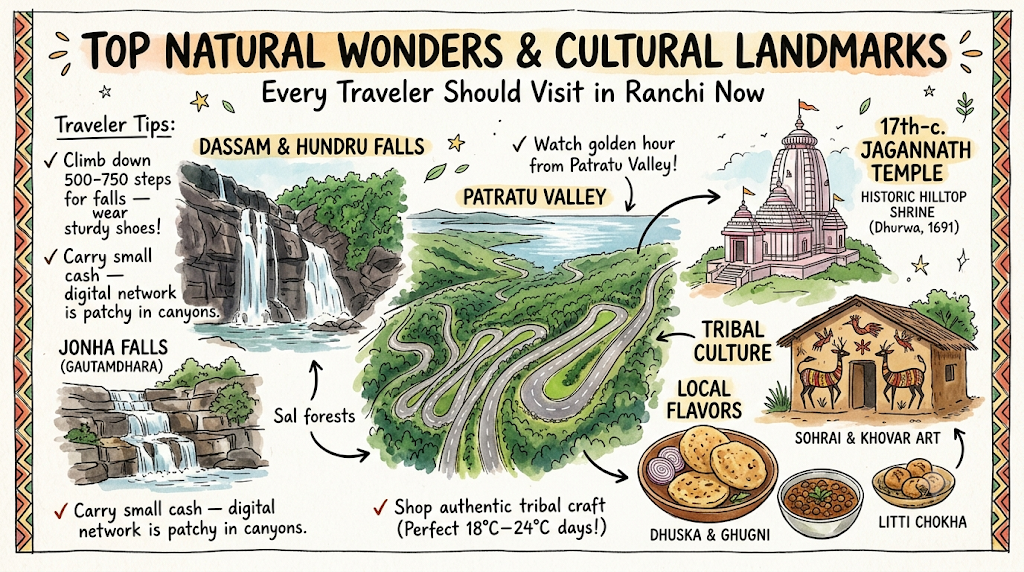
Skip the gridlocked hill stations of Himachal and the over-commercialized beach shacks of Goa this season. While mainstream tourist circuits drown in selfie sticks and inflated hotel tariffs, Ranchi quietly transforms into a crisp, sun-drenched sanctuary every November through February.
Nestled atop the ancient Chotanagpur Plateau, Jharkhand’s capital offers raw geological drama, centuries-old tribal heritage, and roaring cascades framed by dense Sal forests. You do not just sightsee here; you breathe in woodsmoke, taste slow-fermented rice delicacies, and stand beside granite formations older than the Himalayas.
Why Ranchi is a must-visit city
Known across eastern India as the City of Waterfalls, Ranchi sits at an elevation of roughly 2,140 feet above sea level, granting it a temperate microclimate that feels distinctly alpine during winter. Beyond its natural topography, the region is the beating heart of Adivasi (tribal) culture, where Munda, Oraon, and Ho traditions remain deeply woven into daily life, art, and seasonal harvest festivals like Sohrai and Tusu.
Getting here is remarkably straightforward for weekenders and slow travelers alike. Birsa Munda Airport connects directly to Delhi, Mumbai, Bengaluru, and Kolkata, while Ranchi Junction and Hatia Railway Station anchor major rail routes, complemented by smooth four-lane highways like NH-33 and NH-20.
The regional travel circuit splits cleanly into three distinct geographic corridors: the Eastern Waterfall Belt (Jonha, Hundru, and Sita Falls), the Southern Tamar Corridor (Dassam Falls and Panchghagh), and the Northern Ghat Loop (Patratu Valley and Kanke Dam).
| Key Metric | Ranchi Winter Travel Overview |
|---|---|
| Elevation & Terrain | 2,140 ft; undulating granite plateau, Sal forests, and river gorges |
| Peak Winter Window | November to February (Daytime: 18°C–24°C; Nighttime: 7°C–11°C) |
| Primary Transit Hubs | Birsa Munda Airport (IXR), Ranchi Junction (RNC), Hatia Station (HTE) |
| Cultural Identity | Epicenter of Munda and Oraon heritage, Sohrai wall art, and Dokra craft |
| Signature Circuit Focus | Plunge waterfalls, hairpin mountain drives, 17th-century temples, and tribal markets |
Best Places to Visit in Ranchi During Winter
Dassam Falls
Fed by the Kanchi River, a tributary of the Subarnarekha, Dassam Falls drops cleanly from a height of 144 feet across a sheer, jagged granite ledge. In the local Mundari language, the name originates from Da:song, meaning the act of pouring water, which captures the sheer volume of the cascade during post-monsoon winter months.
Surrounded by thick deciduous woodland, the canyon traps the morning mist until nearly 9:30 AM, creating dramatic light beams over the emerald plunge pool. Unlike seasonal trickles elsewhere in central India, Dassam maintains a thunderous, steady flow right through January.
Dassam Falls plunging into the Kanchi River gorge. Source: Incredible India
- Location: Taimara village along the Ranchi-Jamshedpur Highway (NH-33), approximately 40 km southeast of Ranchi city center.
- Why it is worth visiting: It delivers the highest single-drop visual drama near the city, framed by untouched forest canopies and dramatic basalt rock formations.
- Best things to do: Descend the stone steps to the lower viewing deck for mist photography, explore the upper river rapids upstream, and sample freshly roasted peanuts and Litti Chokha near the entrance gate.
- Best time to visit: 8:30 AM to 11:30 AM between November and January, when angled winter sunlight hits the water spray directly.
- Ideal for whom: Landscape photographers, road-trippers, and nature lovers.
- Travel tip: Never step onto the wet, moss-covered boulders near the plunge pool; strong undercurrents and slippery granite cause frequent accidents.
Hundru Falls
Carved over millennia by the Subarnarekha River, Hundru Falls plunges 322 feet down a dramatic, stepped rock face, making it one of the highest waterfalls in Jharkhand. The interplay of relentless water against ancient Precambrian gneiss has sculpted bizarre, smooth-walled potholes and natural amphitheaters at the base of the gorge.
Walking down the 750-plus stone steps into the canyon feels like descending into a lost prehistoric valley. By midday in winter, the pool at the bottom glows a deep jade green, offering a stark, photogenic contrast against the bleached white boulders and golden grass clinging to the cliffside.
The 322-foot cascade at Hundru Falls.
- Location: Sikidiri corridor via Ormanjhi, roughly 45 km northeast of central Ranchi.
- Why it is worth visiting: Its towering 322-foot drop and massive boulder-strewn canyon floor offer an unmatched sense of geological scale.
- Best things to do: Hike down to the main river basin, photograph the natural rainbow that forms in the mist around noon, and browse hand-carved wooden artifacts sold by local villagers along the stairway.
- Best time to visit: 10:00 AM to 2:00 PM from November to February so sunlight reaches deep into the narrow canyon floor.
- Ideal for whom: Adventure seekers, geology enthusiasts, and active travelers comfortable with steep stairs.
- Travel tip: Carry drinking water and light snacks before starting your descent, as climbing back up the 750 steps at altitude requires steady pacing.
Patratu Valley
Snaking across the northern edge of the Ranchi plateau, Patratu Valley is a masterclass in mountain road engineering, featuring sweeping S-curves and hairpin bends flanked by dense forest ridges. As you descend from the plateau toward the Patratu Dam, the landscape opens up to reveal a vast, shimmering reservoir framed by undulating hills.
During winter afternoons, the valley comes alive with crisp mountain breezes and golden-hour haze that settles softly over the water. The lakeside promenade near the dam offers boating, lakeside tea stalls, and unobstructed views of the sun dipping behind the hills.
Sweeping S-curves descending through Patratu Valley.
- Location: Ramgarh-Ranchi border corridor, approximately 38 km northwest of Ranchi city center.
- Why it is worth visiting: It combines one of eastern India’s most scenic asphalt drives with tranquil lakeside relaxation at Patratu Dam.
- Best things to do: Stop at the upper valley viewpoints for panoramic drone-style photos, take a sunset boat ride on Patratu Reservoir, and sip hot masala chai along the dam embankment.
- Best time to visit: 3:00 PM to 5:30 PM during winter to catch golden hour across the hairpin bends and sunset over the dam.
- Ideal for whom: Couples, bikers, sunset chasers, and families seeking a relaxed half-day excursion.
- Travel tip: Avoid driving back up the ghat road late at night, as thick winter valley fog reduces visibility to a few meters after 7:30 PM.
Jonha Falls (Gautamdhara)
Named after the nearby village of Jonha and revered locally as Gautamdhara—where legend holds that Lord Buddha once meditated—this hanging valley waterfall drops 141 feet where the Gunga River meets the Raru River. Unlike plunge falls that crash violently onto flat rock, Jonha cascades gracefully over tiered granite ledges shaded by towering tropical trees.
Reaching the base requires descending roughly 500 well-maintained concrete steps, lined with small shrines and rest pavilions. The microclimate at the bottom stays cool and tranquil even on bright winter afternoons, making it an ideal spot for slow contemplation.
Tiered rock ledges at Jonha Falls (Gautamdhara).
- Location: Off the Ranchi-Purulia Road near Angara, about 40 km east of Ranchi.
- Why it is worth visiting: Its hanging-valley geology, tranquil forest canopy, and Buddhist heritage set it apart from louder picnic spots.
- Best things to do: Visit the small Buddha shrine halfway down the steps, walk along the shallow rocky stream beds downstream, and try local Dhuska sold near the upper parking area.
- Best time to visit: 9:00 AM to 1:00 PM between November and mid-February for crisp air and peaceful crowds.
- Ideal for whom: Spiritual travelers, nature walkers, and families looking for a safer, tiered waterfall environment.
- Travel tip: Pair Jonha Falls with nearby Sita Falls (just 6 km away) on the same morning trip to maximize your eastern corridor route.
Jagannath Temple
Built in 1691 by King Ani Nath Shahdeo of the Barkagarh estate, this hilltop temple mirrors the classic Kalinga architectural style of Puri’s famous Jagannath Temple. Perched atop a steep granite outcrop, the whitewashed shikhara (spire) rises starkly against the clear blue winter sky, visible for miles across the southern outskirts of Ranchi.
Climbing the stone steps or driving up the winding hill road rewards you with sweeping 360-degree views of the city skyline and surrounding forests. Inside the courtyard, the atmosphere hums with devotional chants, incense, and cool winter wind whistling through the stone colonnades.
The 17th-century Jagannath Temple in Dhurwa.
- Location: Dhurwa sector, roughly 10 km southwest of Ranchi Junction.
- Why it is worth visiting: It is Ranchi’s most important surviving 17th-century architectural monument, offering panoramic city vistas alongside deep cultural history.
- Best things to do: Admire the intricate stone carvings on the main sanctum, watch the evening aarti as city lights flicker on below, and walk the outer ramparts at dusk.
- Best time to visit: 4:00 PM to 6:00 PM for warm sunset light on the temple spire and cool evening breezes.
- Ideal for whom: History buffs, architecture lovers, and cultural travelers.
- Travel tip: Remove footwear at the designated lower counter before ascending the final stone staircase, as the granite slabs stay icy cold in winter mornings and evenings.
Tagore Hill
Rising 300 feet above the Morabadi neighborhood, Tagore Hill is named after Jyotirindranath Tagore—elder brother of Nobel laureate Rabindranath Tagore—who purchased the land in 1908 and built a quiet retreat here. Surrounded by groves of eucalyptus and mahua trees, the hill served as a sanctuary for painting, translation, and philosophical reflection.
At the summit sits the historic Shanti Dham pavilion, offering an unobstructed vantage point over Ranchi’s northern plains. In winter, locals gather here at dawn for yoga and brisk walks, while sunset draws travelers looking for quiet solitude without leaving city limits.
Evening views from the summit of Tagore Hill.
- Location: Morabadi, approximately 4 km north of Ranchi city center.
- Why it is worth visiting: It bridges Bengal Renaissance literary history with the finest sunrise and sunset viewpoints inside central Ranchi.
- Best things to do: Climb the carved rock steps to Shanti Dham, visit the Ramakrishna Mission Ashrama at the base, and enjoy quiet sunset photography overlooking Morabadi Ground.
- Best time to visit: 6:00 AM to 7:30 AM for misty sunrise views or 4:30 PM to 5:45 PM for sunset.
- Ideal for whom: Solo travelers, writers, couples, and morning walkers.
- Travel tip: The rock-cut steps near the very top are uneven and lack railings in sections, so wear sturdy sneakers rather than flat sandals.
Offbeat Exploration: Hidden Gems Tourists Miss
Nakshatra Van & Sidhu Kanhu Park Art Walk
Located right opposite the Governor’s House on Raj Bhavan Road, Nakshatra Van is designed around ancient astrological constellations, featuring specific medicinal trees mapped to each zodiac sign. Walk across to nearby Sidhu Kanhu Park in the late afternoon to spot vibrant Sohrai and Khovar tribal murals painted along the boundary walls, celebrating indigenous harvest folklore.
Pithoria Valley & Ancient Ruins
Situated roughly 18 km north of Ranchi along the old Pithoria-Patratu route, this quiet rural stretch hides the crumbling 19th-century stone ruins of Jagatpal Singh’s fort. Surrounded by mustard fields that bloom bright yellow in January, Pithoria offers a peaceful, crowd-free alternative to main highway stops.
Dhurwa Dam Backwater Birding Trail
While tourists crowd the main dam gate, walking two kilometers along the southern earthen embankment of Dhurwa Dam during December and January reveals dozens of migratory waterfowl, including Ruddy Shelducks, Northern Pintails, and Red-crested Pochards.
Detailed Practical Guidance for Travelers
| Destination | Standard Entry Fee | General Timings | Best Local Food Options Nearby | Recommended Nearby Attractions |
|---|---|---|---|---|
| Dassam Falls | INR 20 per person; INR 50 parking | 7:00 AM – 5:00 PM | Hot Litti Chokha, roasted corn, local masala chai stalls | Sun Temple (Bundu), Panchghagh Falls |
| Hundru Falls | INR 20 per person; INR 50 parking | 7:00 AM – 5:00 PM | Dhuska with ghugni (black chickpea curry) at gate stalls | Getalsud Dam, Sikidiri Hydel Project |
| Patratu Valley | Free (Valley); INR 20–50 (Dam park) | Open 24 hrs (Dam: 8 AM – 6 PM) | Patratu Lake Resort restaurant, lakeside pakora & tea kiosks | Nalkari River banks, Pithoria Valley |
| Jonha Falls | INR 20 per person; INR 40 parking | 7:30 AM – 4:30 PM | Freshly fried Dhuska, Aloo Chop, and jaggery sweets | Sita Falls, Angara tribal weekly haat |
| Jagannath Temple | Free | 5:00 AM – 12:00 PM; 3:00 PM – 8:00 PM | Temple prasad sweets, Dhurwa market samosa and jalebi | Dhurwa Dam, JSCA International Stadium |
| Tagore Hill | INR 10 per person | 6:00 AM – 6:30 PM | Morabadi Ground street food lane (momos, chaat, chai) | Rock Garden, Kanke Dam, Tribal Research Museum |
Logistics & On-Ground Navigation
Local Transport Options
- Private Cab Rentals: Essential for waterfall circuits (Dassam, Hundru, Jonha) and Patratu Valley, since public transport does not reach canyon entrances. Full-day sedan rentals cost roughly INR 2,200 to INR 2,800 including fuel.
- App-Based Cabs & Autos: Ola, Uber, and Rapido operate reliably across central Ranchi neighborhoods like Lalpur, Doranda, Morabadi, and Kanke, ideal for city sights like Tagore Hill and Jagannath Temple.
- Shared Auto-Rickshaws & E-Rickshaws: Ubiquitous along Main Road, Circular Road, and Ratu Road for short hops costing INR 10 to INR 30, though they rarely travel beyond municipal limits.
- Self-Drive Two-Wheelers: Local rental agencies near Ranchi Railway Station and Lalpur offer scooters and commuter bikes for INR 500 to INR 800 per day, great for solo riders heading to Patratu Valley.
Budget Planning
- Budget / Backpacking Tier (INR 1,500 – INR 2,200 per day): Stay in clean hostels or budget guesthouses near Station Road or Lalpur (INR 700–1,000), eat at local dhabas and street stalls (INR 300–400), and use shared autos or split a rented scooter (INR 500–800).
- Mid-Range / Comfort Tier (INR 4,500 – INR 7,000 per day): Stay at boutique business hotels along Main Road or Kanke Road (INR 2,500–4,000), hire a dedicated AC cab for full-day waterfall excursions (INR 2,200), and dine at regional specialty restaurants (INR 800–1,200).
Safety and Inclusivity Tips
- For Families: Stick to Jonha Falls, Patratu Dam, and Rock Garden, which feature paved walkways and guardrails. Keep children strictly away from unfenced river rocks at Dassam and Hundru.
- For Couples: Patratu Valley and Kanke Dam are safe and welcoming during daylight hours, though you should return to central Ranchi before dark as highway stretches lack street lighting.
- General Safety: Always exit waterfall canyons by 4:30 PM. Darkness falls rapidly across forested gorges after 5:00 PM in winter, and mobile network coverage drops inside deep rock basins.
Strategic Travel Planning Guardrails
Travel Planning Tips for Ranchi
- Pack Smart Layers: Daytime winter sun feels warm at 22°C, especially when climbing waterfall stairs, so wear breathable cotton base layers paired with a windproof fleece or light down jacket for mornings and evenings.
- Carry Small Cash Denominations: While UPI works seamlessly across Ranchi city, mobile data signals fail inside waterfall gorges and rural villages—keep INR 10, INR 20, and INR 50 notes for parking, entry tickets, and village tea stalls.
- Shop at Authentic Tribal Co-ops: Skip generic mall gift shops and visit Jharcraft emporiums on Main Road or the Tribal Research Institute Museum in Morabadi to buy genuine Dokra brassware, Tussar silk, and Sohrai paintings.
- Visit a Rural Weekly Haat: Ask your driver to stop at a local haat (village market) near Angara or Bundu to witness indigenous produce trading and traditional rice-beer (Handia) culture respectfully.
- Respect Sacred Groves (Sarna Sthal): If you spot clusters of Sal trees marked with red-and-white striped flags, do not enter with shoes or disturb ritual stones, as these are sacred tribal worship sites.
Local Culinary Must-Try: Never leave Ranchi without eating Dhuska (deep-fried fermented rice and lentil pancakes) served piping hot with spicy black chickpea ghugni, followed by steamed Chilka Roti paired with roasted tomato chutney and Rugra (wild seasonal forest mushrooms).
Common Mistakes to Avoid
- Chasing Three Waterfalls in One Day: Climbing 500–750 steep stone steps at multiple gorges in a single afternoon causes severe leg fatigue; cap your itinerary at two waterfalls per day.
- Trusting Sunset Timings Blindly: Official sunset in Ranchi during December and January occurs around 5:10 PM, meaning deep forest valleys lose daylight by 4:15 PM.
- Skipping Street-Level Tribal Food: Relying solely on hotel buffets means missing Ranchi’s true culinary soul—seek out authentic Jharkhandi eateries like Adivasi Kitchen or morning stalls near Albert Ekka Chowk.
- Wearing Smooth-Soled Shoes: Polished granite around riverbeds is slick even in dry winter weather; wear high-traction trail shoes or grooved sneakers.
- Leaving Hotel Bookings Late in December: Between December 20 and January 5, domestic tourists from West Bengal and Bihar fill up Patratu resorts and city hotels—book at least three weeks ahead.
Suggested Itinerary Blueprints
- 1-Day Quick Dash (The Ghat & City Highlights Loop): Designed for business travelers and tight schedules. Start at 7:30 AM with sunrise at Tagore Hill, drive north to Patratu Valley by 10:30 AM for hairpin viewpoints and lakeside lunch, return via Kanke Dam by 3:30 PM, and finish with evening aarti at Jagannath Temple.
- 2-Day Deep-Dive (Waterfalls & Heritage Circuit):
- Day 1: Depart at 8:00 AM for the eastern corridor—explore Jonha Falls and Sita Falls in the morning, enjoy a traditional Jharkhandi thali lunch, and spend the afternoon descending the canyon at Hundru Falls.
- Day 2: Head south to Dassam Falls at 8:30 AM, visit the Tribal Research Institute Museum in Morabadi by afternoon, and catch sunset from Tagore Hill.
- Complete Weekend Travel Plan (The Full Chotanagpur Immersion):
- Friday: Arrive by afternoon, explore Nakshatra Van, walk the Sidhu Kanhu Park Sohrai mural stretch, and dine on Dhuska and Chilka Roti along Main Road.
- Saturday: Full-day eastern waterfall expedition covering Hundru Falls, Jonha Falls, and a local village haat stop near Angara, returning for evening shopping at Jharcraft.
- Sunday: Morning drive to Dassam Falls, afternoon scenic cruise down Patratu Valley for sunset boating at Patratu Dam, and night departure from Ranchi Junction or Birsa Munda Airport.
Common Tourist Mistakes to Avoid
- Geographic Blunders: Trying to combine Dassam Falls (far south on NH-33) and Hundru Falls (far northeast via Ormanjhi) on the same day wastes over three hours backtracking through city traffic. Always group eastern falls together and pair Dassam with southern landmarks.
- Commercial Traps: Spending precious afternoon hours inside modernized shopping malls along Main Road or Ratu Road strips away the region’s character; trade air-conditioned retail chains for open-air tribal craft markets and historic hilltop temples.
- Neglecting Modern/Alternative Zones: Overlooking quieter residential and cultural pockets like Morabadi, Bariatu, and Kanke Road means missing Ranchi’s vibrant cafe culture, literary landmarks, and peaceful lakeside walking trails.
- Transport Overpayment: Accepting inflated flat-rate quotes from unverified taxi stands outside Ranchi Junction often doubles your fare; always cross-check city distances on Ola or Uber first, and negotiate fixed all-inclusive day packages with registered travel desks for outstation falls.
- Luxury Dining Bias: Dining exclusively at upscale multi-cuisine restaurants deprives you of Ranchi’s indigenous flavors; street-side vendors near Albert Ekka Chowk, Doranda, and Morabadi serve fresh, regional specialties cooked over wood and charcoal that high-end kitchens rarely replicate.
Frequently Asked Questions
1. Is December a good time to visit Ranchi?
Yes, December is one of the finest months to visit Ranchi. Daytime temperatures hover comfortably around 18°C to 22°C under clear blue skies, making waterfall hikes and valley drives pleasant. Water flow at Dassam, Hundru, and Jonha remains strong post-monsoon, while crisp mornings and cool nights create ideal winter holiday weather.
2. How many days are enough for a complete Ranchi trip?
A well-paced trip requires 3 days and 2 nights. This window lets you comfortably cover the eastern waterfall circuit (Hundru and Jonha), the southern cascade (Dassam Falls), the scenic Patratu Valley drive, and urban cultural landmarks like Jagannath Temple, Tagore Hill, and the Tribal Research Institute Museum without rushing.
3. Are waterfalls in Ranchi safe to visit during winter?
Waterfalls in Ranchi are safe during winter if you follow marked pathways and basic precautions. Unlike the monsoon season when flash floods occur, winter water levels are predictable and calm. However, always stay behind safety railings, avoid climbing wet granite boulders near plunge pools, and exit canyons before 4:30 PM.
4. What kind of winter clothes should I pack for Ranchi?
Pack layered clothing rather than heavy sub-zero gear. Daytime temperatures feel warm and sunny, especially while climbing stairs at waterfalls, so light full-sleeve shirts or cotton tees work well. However, temperatures drop to 7°C–10°C after sunset and early morning, requiring a warm fleece, windcheater, or medium-weight jacket.
5. Is Ranchi safe for solo female travelers and families?
Ranchi is generally safe and welcoming for both families and solo travelers, particularly around major tourist hubs, Morabadi, Kanke Road, and Main Road. For outstation waterfalls and Patratu Valley, book cabs through reputable operators or hotel desks, stick to daylight hours between 8:00 AM and 5:00 PM, and keep offline maps downloaded.
6. What is the most famous traditional food to try in Ranchi?
The most iconic dish to try in Ranchi is Dhuska, a deep-fried savory pancake made from fermented rice and chana dal batter, served with spicy black chickpea ghugni. Other must-try regional specialties include Chilka Roti, Arsa Pitha (sweet rice-jaggery fritters), Malpua, and seasonal wild forest mushrooms known locally as Rugra.
7. Can I get Ola or Uber cabs to Dassam Falls and Patratu Valley?
While Ola and Uber operate reliably within Ranchi city limits, regular one-way rides rarely accept bookings to outstation spots like Dassam Falls, Hundru Falls, or Patratu Valley because drivers struggle to find return fares. Instead, book an Ola/Uber Rental hourly package or hire a local full-day cab.
8. Which waterfall in Ranchi is best if I cannot climb too many stairs?
If you want to avoid steep climbs, visit Dassam Falls or Panchghagh Falls. Dassam features an upper viewing viewpoint easily accessible from the parking area without descending into the deep gorge, whereas Hundru (750+ steps) and Jonha (500 steps) require strenuous stair climbing to reach their main viewpoints.
9. What authentic souvenirs should I buy from Ranchi?
Look for Dokra metal craft (ancient lost-wax brass figurines), hand-painted Sohrai and Khovar tribal art scrolls, Tussar silk sarees or stoles, and intricate bamboo basketry. You can purchase fair-trade, government-certified pieces at Jharcraft showrooms on Main Road or at museum craft shops in Morabadi.
10. How far is Patratu Valley from Ranchi Airport?
Patratu Valley lies approximately 45 km northwest of Birsa Munda Airport, taking roughly 1 hour and 15 minutes by road via Kanke Road and Pithoria. The route passes through scenic rural landscapes and undulating hills, making it an easy afternoon drive right after a morning flight arrival.
11. Are there good vegetarian and vegan food options in Ranchi?
Yes, Ranchi offers abundant vegetarian and naturally vegan dishes rooted in traditional Jharkhandi cuisine. Staples like Dhuska, Chilka Roti, Litti Chokha, Rugra curry, and bamboo shoot stir-fries are plant-based and cooked in mustard oil, alongside numerous pure-vegetarian restaurants along Main Road, Lalpur, and Upper Bazar.
12. Do I need any special permits to visit waterfalls or tribal areas around Ranchi?
No special permits are required for Indian or foreign tourists to visit Ranchi’s waterfalls, Patratu Valley, temples, or city museums. Standard entry tickets costing INR 10 to INR 20 are purchased directly at gate counters. Always carry a valid government photo ID for hotel check-ins and vehicle rentals.
Conclusion
Choosing Ranchi over a predictable winter vacation rewards you with something increasingly rare in modern travel: raw, unfiltered authenticity. Standing beneath the thundering mist of Hundru, tracing 17th-century stone carvings at Jagannath Temple, or sharing warm Dhuska beside a quiet forest market connects you directly to the ancient rhythms of the Chotanagpur Plateau—leaving you with memories far richer than any crowded tourist postcard could ever offer.
