Introduction
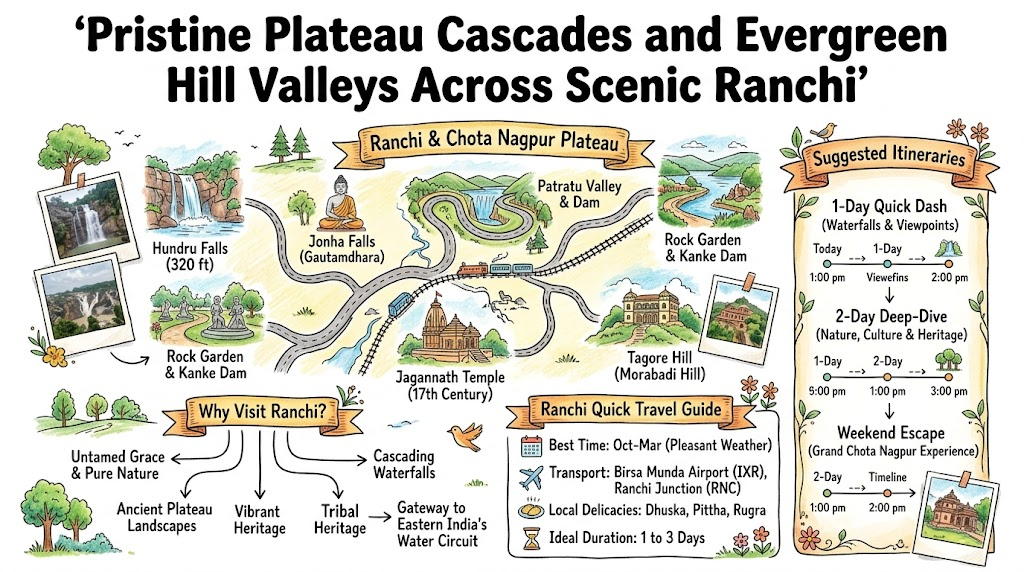
While commercial hill stations struggle under heavy footfall, Ranchi retains a quiet, untamed grace rooted deep within Chota Nagpur’s ancient plateau. This city offers travelers pure natural landscapes, cascading waterfalls, and vibrant tribal heritage without the artificial tourist traps.
Unlocking the capital of Jharkhand reveals a refreshing landscape defined by misty mornings, dense Sal forests, and granite rock formations. It is a destination where ancient indigenous traditions seamlessly meet modern regional vitality
.
The hairpin curves of Patratu Valley.
Why Ranchi is a must-visit city
Ranchi acts as the cultural and geographical heart of Jharkhand, carved into a high plateau that gives it pleasant weather year-round. It serves as an essential chapter for travel enthusiasts seeking unmapped wilderness, indigenous art, and rich history without compromising on accessibility. Excellent highway networks, major railway hubs, and Birsa Munda Airport make it effortlessly accessible for luxury travelers, solo backpackers, and families alike.
The city serves as the gateway to the famous water circuit of Eastern India, surrounded by gushing rivers, pristine reservoirs, and sacred hills. Exploring this region takes you from tranquil morning lakeside vistas to dramatic afternoon gorge drops.
| Travel Parameter | Details |
|---|---|
| Best Time to Visit | October to March (Pleasant weather & peak waterfall flow) |
| Nearest Airport | Birsa Munda Airport, Ranchi (IXR) |
| Nearest Main Railway Station | Ranchi Junction (RNC) / Hatia (HTE) |
| Key Regional Delicacy | Dhuska with Aloo-Chana Sabzi, Pittha, Rugra |
| Ideal Trip Duration | 1 to 3 Days |
Best Places or Experiences
Hundru Falls
Cascading dramatically from a height of 320 feet, Hundru Falls is created by the Subarnarekha River slicing through massive rock formations. The thunderous roar of water echoing through the surrounding Sal canopy creates an unforgettable natural sensory experience.
Over centuries, the continuous torrent has sculpted unique rock pools and polished granite formations around the plunge pool below. Descending the stairs through the lush green foliage reveals one of Jharkhand’s most celebrated outdoor wonders.
Hundru Falls plunging down granite cliffs.
- Location: Purulia Road zone, approximately 45 km east of central Ranchi.
- Why it is worth visiting: It is one of the highest waterfalls in the state, offering breathtaking natural geology and scenic photography.
- Best things to do: Hike down the 750 carved steps to the base pool, photograph the mist-draped granite rocks, and enjoy fresh local snacks from nearby stalls.
- Best time to visit: Post-monsoon months (September to December) for peak water volume and pleasant morning light.
- Ideal for whom: Adventure enthusiasts, nature photographers, and fit travelers who enjoy scenic hikes.
- Travel tip: Wear sturdy footwear with good grip as the rock steps near the plunge pool get slippery.
Jonha Falls (Gautamdhara)
Framed by dense forests and rugged mountain slopes, Jonha Falls drops gracefully over a tier of natural rocky terraces. Legend holds that Lord Buddha spent time meditating near these waters, earning the site its traditional local name, Gautamdhara.
The site features a serene ashram dedicated to Lord Buddha perched atop the hill near the main stairwell. The surroundings foster a quiet atmosphere where travelers can enjoy peaceful nature walks away from busy urban centers
.
Tranquil streams flowing at Jonha Falls.
- Location: Anara district area, roughly 40 km east of Ranchi city center.
- Why it is worth visiting: It combines pristine nature with spiritual history, offering scenic tiered water cascades.
- Best things to do: Visit the hilltop Buddha temple, explore the rocky riverbanks, and capture panoramas from the observation decks.
- Best time to visit: October to February, ideally during early morning hours for peaceful sightseeing.
- Ideal for whom: Wellness seekers, spiritual travelers, and families looking for a relaxing day out.
- Travel tip: The step descent is easier than Hundru, but carry your own bottled water for the walk back up.
Patratu Valley and Dam
The road descending into Patratu Valley features a stunning series of hairpin turns carved directly into the emerald mountain slopes. Driving along this modern road offers scenic vistas that match top international mountain passes.
At the base lies the vast expanse of Patratu Dam, an immense body of water framed by forest-covered hills. The reservoir offers peaceful boat rides, waterfront promenades, and scenic sunset views across the water.
- Location: Ramgarh border corridor, about 35 km north of central Ranchi.
- Why it is worth visiting: Provides scenic winding hill drives paired with watersports and sunset views across the reservoir.
- Best things to do: Drive down the hairpin loops, hire a motorboat or speed boat at the lake, and capture sunset photography from higher vantage points.
- Best time to visit: 3:30 PM to 6:30 PM to enjoy cool afternoon breezes and vibrant sunset colors.
- Ideal for whom: Road-trip lovers, couples, photography enthusiasts, and leisure groups.
- Travel tip: Stop at designated pull-outs on the drive down for photos rather than parking along tight hairpin turns.
Rock Garden and Kanke Dam
Constructed creatively using rocks extracted from Gonda Hill, Rock Garden sits directly alongside the serene shoreline of Kanke Dam. The park features iron sculptures, rock bridges, and tiered garden terraces overlooking the peaceful reservoir water.
It provides a popular local retreat to watch the sun drop behind the distant hills. The park blends natural rock formations with artistic landscaping right along the edge of the city.
Rock Garden terraces overlooking Kanke Dam.
- Location: Kanke Road zone, roughly 6 km north of Ranchi Railway Station.
- Why it is worth visiting: Offers an accessible urban escape that combines creative rock art with serene lake views.
- Best things to do: Stroll across the iron footbridges, relax at sunset vantage points, and explore street food vendors near the entrance.
- Best time to visit: 4:00 PM to 6:30 PM for cool evening light and relaxed strolls.
- Ideal for whom: Families with children, couples, and casual travelers looking for a quick break.
- Travel tip: Pair this visit with a warm culinary stop along Kanke Road to sample authentic regional snacks.
Jagannath Temple
Perched atop a isolated hillock, the 17th-century Jagannath Temple shares architectural ties with the iconic shrine in Puri, Odisha. Built in 1691 by King Ani Nath Shahdeo, the stone structure stands out against the Ranchi skyline.
The climb up the stone stairs rewards visitors with expansive views of the surrounding urban plateau. During the annual Rath Yatra festival, the hilltop comes alive with colorful tribal gatherings and spiritual celebrations.
- Location: Dhurwa zone, approximately 10 km southwest of the city core.
- Why it is worth visiting: Holds immense historical, architectural, and spiritual significance for the entire Chota Nagpur region.
- Best things to do: Climb the historic stone stairways, admire the medieval stone carving work, and take in panoramic city vistas from the hilltop compound.
- Best time to visit: Early morning hours (6:00 AM to 8:30 AM) for cool weather and quiet reflection.
- Ideal for whom: History buffs, cultural explorers, and spiritual travelers.
- Travel tip: Dress modestly as required for active temple grounds, and use the newer ramp road if stairs pose accessibility challenges.
Tagore Hill
Rising 300 feet above the surrounding plain, Tagore Hill (Morabadi Hill) carries rich literary and artistic heritage. Jyotirindranath Tagore, brother of Nobel Laureate Rabindranath Tagore, chose this quiet hill as his home, building the historic Brahma Temple atop its peak.
Rabindranath Tagore visited this peaceful retreat multiple times, finding creative inspiration in its serene surroundings. Today, it remains an artistic landmark offering panoramic views of Ranchi’s landscape.
- Location: Morabadi zone, nearly 4 km north of central Ranchi.
- Why it is worth visiting: It connects travelers directly to Bengal’s literary history amidst great natural surroundings.
- Best things to do: Climb to the Brahma Temple at the summit, read quietly in the shaded pavilions, and visit the nearby cultural center.
- Best time to visit: 6:30 AM for sunrise views or 5:00 PM for cool evening breezes.
- Ideal for whom: Literature enthusiasts, solo travelers, and heritage seekers.
- Travel tip: Bring a notebook or book; the quiet hill breeze makes it a perfect reading spot.
Offbeat Exploration: Hidden Gems Tourists Miss
Dassam Falls (Taimara Bend)
While casual tourists head straight to primary viewing decks, seasoned explorers head to the quieter rock stretches of Dassam Falls. Located near Taimara, the Kanchi River drops 144 feet over jagged rock walls, creating mist-filled valleys surrounded by Sal forests.
McCluskieganj Anglo-Indian Settlement
Situated an hour’s drive from Ranchi, McCluskieganj is a historic colonial village founded in the 1930s as a haven for the Anglo-Indian community. Strolling past old brick bungalows, quiet pine groves, and heritage churches offers a unique glimpse into the region’s diverse history.
Ranchi Lake and Bada Talab Island
Located in the heart of the city, Bada Talab features a giant bronze statue of Swami Vivekananda mounted on a central island. Visiting during early morning light lets you enjoy quiet lake views away from standard daytime city crowds.
Detailed Practical Guidance for Travelers
| Destination | Standard Entry Fee | General Timings | Best Local Food Options Nearby | Recommended Nearby Attractions |
|---|---|---|---|---|
| Hundru Falls | ₹10–₹20 per person | 8:00 AM – 5:00 PM | Freshly fried Dhuska, Bamboo-cooked chicken | Getalsud Dam |
| Jonha Falls | ₹10 per person | 8:00 AM – 4:30 PM | Local tea stalls, boiled corn, seasonal fruits | Sita Falls |
| Patratu Valley | Free entry (Boating extra: ₹150–₹500) | Open 24 Hours (Boating: 9:00 AM – 6:00 PM) | Waterfront resorts, Dhaba-style Fish Curry | Patratu Thermal Power Lake |
| Rock Garden | ₹20 per person | 9:00 AM – 7:00 PM | Kanke Road street food stalls, Samosa-Chaat | Kanke Dam Park |
| Jagannath Temple | Free entry | 5:00 AM – 12:00 PM, 4:00 PM – 8:30 PM | Traditional sweets, Malpua stalls outside gate | JSCA International Stadium |
| Tagore Hill | Free entry | 6:00 AM – 6:00 PM | Morabadi street cafes, Litti Chokha kiosks | Tribal Research Institute Museum |
Logistics & On-Ground Navigation
Local Transport Options
- Auto-Rickshaws & E-Rickshaws: shared auto-rickshaws run key routes (Main Road to Kanke or Morabadi) for ₹10–₹30. E-rickshaws work great for short neighborhood trips.
- App-Based Taxis: Services like Ola and Uber operate reliably within city limits for quick trips to Tagore Hill, Rock Garden, and the railway station.
- Car Rentals & Hired Drivers: For out-of-town trips to Hundru, Jonha, or Patratu Valley, hiring a private taxi (₹2,500–₹3,500 per day) is the most comfortable option.
- Local City Buses: Managed by local municipal bodies, these offer very budget-friendly transit along major city arteries.
Budget Planning
- Budget / Backpacking Tier (₹1,200 – ₹1,800 per day):
- Stay: Budget guesthouses or homestays (₹700–₹1,000/night).
- Food: Street vendors, local eateries, and sweet shops (₹300–₹400/day).
- Transport: Shared auto-rickshaws and buses (₹150–₹250/day).
- Mid-Range / Comfort Tier (₹3,500 – ₹6,000 per day):
- Stay: 3-star boutique hotels (₹2,200–₹3,800/night).
- Food: Mid-range regional restaurants and cafes (₹800–₹1,200/day).
- Transport: Private full-day rented car (₹2,500–₹3,500/day).
Safety and Inclusivity Tips
- Family Safety: Stick to early return schedules when visiting outlying waterfalls, leaving by 4:30 PM to avoid driving along rural forest roads after dark.
- Couples Comfort: Stick to well-traveled trails at major waterfall parks like Hundru and Jonha rather than wandering off into unmarked river sections.
- General Safety: Keep cash handy, as mobile network signals can drop in deep valleys near waterfall basins.
Strategic Travel Planning Guardrails
Travel Planning Tips for Ranchi
- Book your out-of-city private cab the night before to ensure a prompt start for early morning waterfall visits.
- Carry physical cash for small purchases; rural vendors near waterfalls often lack reliable digital payment connectivity.
- Dress in comfortable, breathable layers; plateau mornings stay cool while afternoons bring warm sunshine.
- Pack slip-resistant shoes if you plan to explore the granite rocks near water plunge pools.
- Taste local seasonal specialties like Rugra (indigenous wild mushrooms) during the monsoon season.
- Keep a reliable portable power bank in your daypack, as cold valley air and mapping apps drain batteries fast.
Common Mistakes to Avoid
- Attempting to pack Hundru, Jonha, Dassam, and Patratu into a single day’s journey.
- Ignoring safety signs and swimming in dangerous currents near deep plunge pools.
- Depending solely on mobile app cabs for long return trips from out-of-town waterfalls.
- Relying exclusively on UPI payments at small rural fruit stalls and village entry gates.
- Skipping authentic street food stalls to dine exclusively at modern hotel restaurants.
- Planning afternoon climbs up Tagore Hill during peak summer heat without sun protection.
Suggested Itinerary Blueprints
1 Day Quick Dash (The Waterfall & Viewpoint Loop)
- Target Audience: Travelers on tight business schedules or brief layovers.
- Morning: Start early at 7:30 AM with a drive to Hundru Falls to enjoy mist-filled gorge views before morning crowds arrive.
- Afternoon: Head back toward the city for lunch, stopping at Tagore Hill for broad city views.
- Evening: Finish your trip with a scenic sunset drive down Patratu Valley, returning to the city for a traditional Dhuska dinner.
2 Day Deep-Dive (Nature, Culture & Heritage Circuit)
- Day 1: Explore Hundru Falls and Jonha Falls, stopping at local roadside dhabas for authentic regional thalis. Return to Ranchi for a relaxed evening around Rock Garden.
- Day 2: Visit Jagannath Temple in the morning. Afternoon trip to Patratu Valley and Dam for lakeside boating, returning to explore the evening markets along Main Road.
Complete Weekend Travel Plan (The Grand Chota Nagpur Escape)
- Friday Evening: Arrive, check into your hotel, and enjoy regional street food near Morabadi Ground.
- Saturday: Full-day trip covering Jonha Falls, Sita Falls, and Hundru Falls. Spend the late evening unwinding near Kanke Dam.
- Sunday: Morning heritage walk at Tagore Hill and Jagannath Temple. Spend the afternoon cruising at Patratu Dam before heading home.
Common Tourist Mistakes to Avoid
Geographic Blunders
A common mistake travelers make is trying to visit Patratu Valley (north) and Dassam Falls (south) on the same morning. These locations sit on opposite sides of Ranchi’s plateau; trying to link them wastes hours in traffic. Group your daily trips into distinct geographic zones: Eastern Waterfalls, Northern Lakes/Valleys, or Southern Heritage Sites.
Commercial Traps
Spending your vacation time inside air-conditioned shopping malls robs you of Ranchi’s true charm. Skip modern retail hubs and explore authentic local markets like Upper Bazar or Firayalal Chowk, where you can browse genuine tribal handicrafts, brassware, and traditional textiles.
Neglecting Modern/Alternative Zones
Visitors often focus exclusively on rural waterfalls, missing out on Ranchi’s vibrant modern neighborhoods. Take time to explore Morabadi, home to quiet residential avenues, open green spaces, literary historical sites, and cozy local cafes.
Transport Overpayment
Unnegotiated auto-rickshaw rides from major transit hubs can quickly double your local travel costs. Always request the official meter rate or check ride-sharing apps like Ola or Uber to gauge fair pricing before agreeing to a fare.
Luxury Dining Bias
Eating exclusively at high-end hotel buffets means missing out on Jharkhand’s rich culinary traditions. Local street-side vendors serve iconic regional dishes like Dhuska (deep-fried rice and lentil snack), Chana Ghugni, and Pittha, which carry the true flavor of the region.
Frequently Asked Questions
1. What is the absolute best time of year to visit Ranchi for waterfalls?
The best window runs from September to February. The post-monsoon months of September and October keep waterfalls flowing at maximum volume, while winter brings pleasant, cool weather for outdoor exploration.
2. How do I travel to Ranchi from major Indian cities?
Ranchi is well-connected by air via Birsa Munda Airport (IXR), offering direct flights to major hubs like Delhi, Mumbai, Bengaluru, and Kolkata. Ranchi Junction (RNC) also connects via express trains to major national rail routes.
3. Is it safe to travel to waterfalls around Ranchi with young children?
Yes, popular spots like Hundru and Jonha feature secure concrete steps and designated viewing platforms. Keep close watch on children near wet granite surfaces and stick to marked tourist trails.
4. What is Dhuska and where can I try the best version in the city?
Dhuska is a classic regional snack made from a fermented batter of rice and chana dal, deep-fried to a golden crisp. It is served hot with spicy aloo-chana sabzi at street vendors near Morabadi Ground and Old Hazari Bagh Road.
5. Can I hire app-based cabs for full-day trips to Patratu Valley?
You can easily book app cabs to reach Patratu, but securing a return ride from the valley late in the evening can be tricky. It is better to hire a local taxi for a round-trip day package.
6. How many steps do I need to climb down at Hundru Falls?
Reaching the plunge pool at Hundru Falls requires descending about 750 concrete steps. The walk down is pleasant, but save energy and bring water for the climb back up.
7. Are there entry permits required for international tourists visiting Ranchi?
No special inner-line permits are required for standard tourist zones in Ranchi. International visitors only need a valid Indian visa and standard identification for hotel check-ins.
8. What authentic local souvenirs should I purchase in Ranchi?
Look for handcrafted Dokra brass metal artifacts, Paitkar paintings, bamboo crafts, and traditional organic forest honey available at state emporiums like Jharcraft.
9. Is one day sufficient time to explore Ranchi completely?
A single day lets you experience a focused snapshot (such as Tagore Hill, Jagannath Temple, and Patratu Valley). Exploring the full waterfall loop comfortably requires 2 to 3 days.
10. What clothes should I pack for a winter trip to Ranchi?
Winter temperatures can drop to 8°C (46°F) at night while remaining sunny during the day. Pack light woolens, a warm mid-layer jacket for early mornings, and comfortable walking shoes.
11. Is public transport readily available late at night in Ranchi?
Main transit arteries have auto-rickshaws available until around 9:30 PM. For late-night travel, it is best to pre-book an app-based taxi.
12. Can elderly travelers easily access Ranchi’s major tourist attractions?
Places like Patratu Lake, Rock Garden, and Tagore Hill’s base offer easy level access. Sites like Hundru Falls involve steep step climbs, though higher viewing decks remain accessible.
Conclusion
Choosing Ranchi over standard travel destinations rewards you with an authentic connection to nature and culture. Walking through quiet forest trails, feeling the cool mist of high waterfalls, and taking in vast plateau vistas brings a welcome sense of calm. Ranchi offers far more than a simple getaway; it provides a refreshing journey into the serene heart of Eastern India.
