Introduction
Most popular holiday destinations greet travelers with crowded souvenir alleys and commercial tourist corridors. In stark contrast, the Chota Nagpur plateau offers a refreshing, grounded sanctuary shaped by ancient sal forests, misty waterfalls, and indigenous folklore.
Here, morning air smells of damp red earth and woodsmoke rather than exhaust fumes. Choosing this plateau means trading manicured resort walls for genuine conversations, steaming leaf-bowl street snacks, and untamed hill vistas.
Why Ranchi is a must-visit city
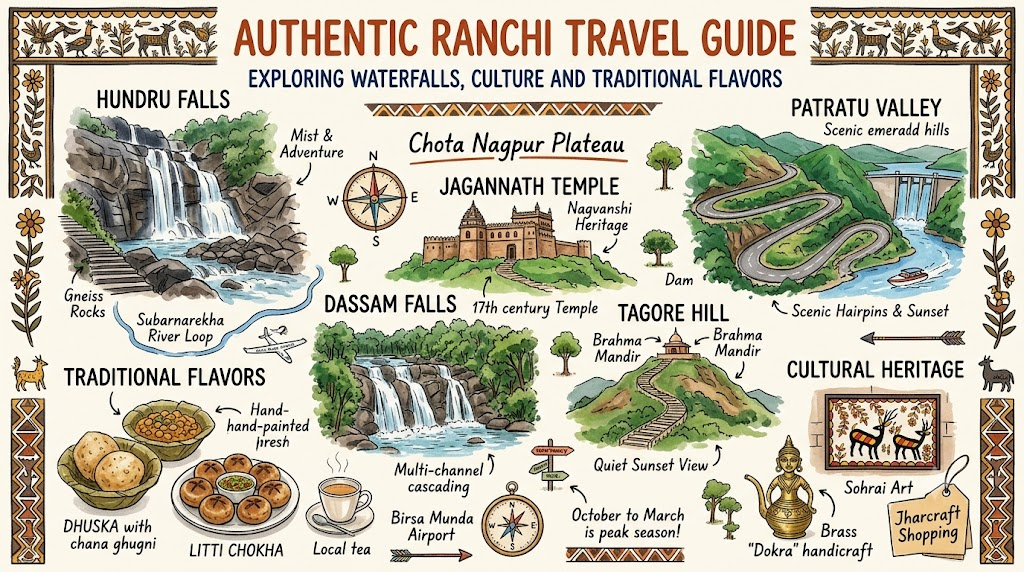
Perched at an elevation of 651 meters, this capital city blends historic tribal heritage with sweeping geological formations. The plateau sits along the Subarnarekha River basin, serving as an ancient crossroad where prehistoric rock art meets classical Odishan temple architecture. Modern highways, extensive railway connectivity through Ranchi Junction and Hatia, and Birsa Munda Airport ensure seamless access for solo adventurers, cultural researchers, and road-trippers alike.
The local travel circuit divides into three distinctive geographic rings: the serene urban lake and heritage district, the dramatic southern and eastern waterfall belt, and the winding northern valley escapes. This layout allows travelers to transition effortlessly from urban craft hubs to rugged wilderness.
| Travel Factor | Details & Practical Highlights |
| Geographic Identity | Chota Nagpur Plateau, known as the “City of Waterfalls” |
| Primary Connectivity | Birsa Munda Airport (IXR), NH 20, NH 33, Ranchi Junction (RNC) |
| Peak Season Window | October to March for pleasant weather and roaring post-monsoon falls |
| Signature Native Dish | Dhuska served with chana ghugni and spicy mutton jhol |
| Indigenous Arts | Sohrai and Kohbar mural traditions, dokra brass casting |
| Top Travel Circuit | Subarnarekha Waterfall Loop & Patratu Ghat Valley Corridor |
Best Places or Experiences
Hundru Falls
Plunging from a sheer height of 98 meters, Hundru Falls represents one of the most magnificent cataracts sculpted by the Subarnarekha River. Over millennia, the torrential water has polished the dark gneiss and amphibolite rocks into sculpted natural steps and broad bathing pools below.
The descent through roughly 750 stone stairs rewards visitors with a dramatic amphitheater of mist and raw hydrologic power. Surrounded by dense woodland, the site echoes with the roaring cascade, offering a striking display of Jharkhand’s untamed natural topography.
- Location: Ormanjhi-Siket block, approximately 45 km northeast of Ranchi city center.
- Why it is worth visiting: The highest vertical drop in the district, showcasing ancient plateau rock formations.
- Best things to do: Photograph the misty river basin, explore sculpted rock pools downriver, and hike shaded surrounding trails.
- Best time to visit: October to January for clear blue skies and optimal river flow.
- Ideal for whom: Adventure enthusiasts, landscape photographers, and trekking groups.
- Travel tip: Wear high-traction hiking shoes; the riverbed rocks are exceptionally slippery due to fine river algae.
Patratu Valley and Dam
The drive down Patratu Valley features an engineering marvel: a winding hairpin road slicing through lush forested hill ranges before opening into a massive reservoir. The route resembles iconic European alpine passes, offering panoramic switchback curves draped against emerald slopes.
Down at the water basin, the Patratu Dam stretches across a tranquil, expansive lake backdropped by rolling ridge lines. Speedboating across the reservoir during sunset provides a serene visual escape from city life.
- Location: Ramgarh border route, roughly 40 km north of Ranchi.
- Why it is worth visiting: Sweeping serpentine roads paired with expansive lake waters and tranquil island viewpoints.
- Best things to do: Take an evening speedboat tour, capture sweeping hilltop aerial shots, and relax at lakeside viewpoints.
- Best time to visit: 4:00 PM to 6:30 PM during winter months for sunset over the ghats.
- Ideal for whom: Road-trip lovers, motorcycle touring groups, and romantic couples.
- Travel tip: Start your descent back before midnight, as dense hill fog frequently covers the unlit hairpin corners.
Jagannath Temple
Erected in 1691 by King Ani Nath Shahdeo of the Nagvanshi dynasty, this hilltop fortress-style shrine mirrors the architectural spirit of Puri’s historic Jagannath Temple. The stone sanctuary rises dramatically over a green hillock in Dhurwa, visible from miles away across southern Ranchi.
The complex hosts an annual Rath Yatra festival that draws hundreds of thousands of tribal and non-tribal devotees in vibrant shared devotion. Climbing the broad stone stairways offers sweeping vistas of the cityscape and adjacent industrial complexes.
- Location: Jagannathpur, Dhurwa, situated 10 km southwest of the main railway station.
- Why it is worth visiting: A rare 17th-century Nagvanshi architectural monument fusing defense architecture with spiritual design.
- Best things to do: Climb the historic steps during morning prayer, admire panoramic views, and visit the lower sibling shrine.
- Best time to visit: 6:00 AM to 9:00 AM for quiet contemplation, or during June/July for Rath Yatra.
- Ideal for whom: Architectural historians, spiritual seekers, and multigenerational families.
- Travel tip: A newly paved vehicular road reaches the upper courtyard, helping travelers with limited mobility skip the steep staircase.
Dassam Falls
Also known locally as Da-song, Dassam Falls forms as the Kanchi River tumbles 44 meters over an impressive geological fault line. The waterfall breaks into multiple pristine silver ribbons as it crashes across jagged granite walls.
The surrounding landscape remains dense and rugged, shaded by sal and mahua canopies. Viewing platforms provide secure, elevated vantages to experience the roaring spray without treading on treacherous slippery bedrock.
- Location: Near Taimara village along NH 33, roughly 40 km southeast of Ranchi.
- Why it is worth visiting: Broad, multi-channel cascade set inside a secluded, deep forest ravine.
- Best things to do: Watch water split across rock faces from viewing decks, picnic under woodland groves, and observe native birdlife.
- Best time to visit: November to February when water clarity improves and outdoor weather remains crisp.
- Ideal for whom: Nature lovers, birdwatchers, and road travelers driving toward Jamshedpur.
- Travel tip: Strictly observe safety barriers; deep river undercurrents and submerged crevices make swimming extremely dangerous.
Tagore Hill
Named in honor of Jyotirindranath Tagore—the elder brother of Nobel laureate Rabindranath Tagore—this 300-foot isolated granite monolith served as a peaceful writing retreat. The elder Tagore built a charming retreat named Brahma Mandir atop the summit in 1908.
The climb up the winding brick stairs takes you into a quiet, breezy atmosphere high above the Morabadi residential area. The monument at the peak offers commanding 360-degree views of Ranchi’s tree-filled skyline.
- Location: Morabadi grounds, roughly 4 km north of Ranchi city center.
- Why it is worth visiting: Blends Bengal Renaissance literary history with serene plateau sunsets.
- Best things to do: Explore the restored hill cottage, browse the Ramakrishna Mission grounds below, and enjoy panoramic evening views.
- Best time to visit: 5:00 PM to 6:30 PM to watch the sunset paint the plateau horizon.
- Ideal for whom: Literature enthusiasts, solo writers, and evening walkers.
- Travel tip: Combine your walk with a stop at the nearby Morabadi open grounds to sample authentic regional evening tea.
Jonha Falls (Gautam Dhara)
Nestled within steep forested valleys, Jonha Falls cascades 43 meters down smooth terraced rocks fed by the holy Raru River. Local lore tells that Lord Buddha bathed in these secluded waters, earning the site its revered name, Gautam Dhara.
A scenic ashram and Buddhist shrine rest near the head of the falls, adding a peaceful contemplative atmosphere. The descent involves descending around 500 wide steps surrounded by natural bird calls and the gentle hum of cascading water.
- Location: Purulia Road axis, approximately 42 km east of Ranchi.
- Why it is worth visiting: Terraced stepped cataract complemented by historic Buddhist spiritual folklore.
- Best things to do: Visit the hilltop Buddhist ashram, explore the natural rocky river terraces, and sample roasted country corn at trail stalls.
- Best time to visit: October to February during cool daytime hours.
- Ideal for whom: Cultural travelers, spiritual seekers, and active walkers.
- Travel tip: Plan your ascent before dusk, as the staircase path has limited solar lighting after dark.
Offbeat Exploration: Hidden Gems Tourists Miss
McCluskieganj Colonial Enclave
Nestled 65 km northwest among tranquil pine and sal thickets lies McCluskieganj, established in the 1930s as the world’s only homeland for Anglo-Indians. The hamlet still features old brick bungalows with red-tiled roofs, sprawling verandas, and overgrown orchards. Walking down these silent paths reveals a rare chapter of colonial history.
Ranchi Science Centre and Chiraundi Hill
Tucked behind Morabadi, Chiraundi Hill holds an innovative green campus away from typical tourist routes. The grounds feature interactive open-air science exhibits, manicured native floral borders, and quiet viewpoints over northern agricultural flats. It offers a calm spot for quiet writing, reading, and gentle evening strolls.
Surya Mandir Bundu
Situated roughly 39 km along the Ranchi-Tata highway, the Sun Temple at Bundu is built in the design of a grand mythical chariot with eighteen wheels pulled by seven intricately sculpted stone horses. The shrine sits within clean green grounds adjacent to a sacred pond, offering an artistic break during waterfall excursions.
Detailed Practical Guidance for Travelers
| Destination | Standard Entry Fee | General Timings | Best Local Food Options Nearby | Recommended Nearby Attractions |
| Hundru Falls | ₹10 per person | 7:00 AM – 5:00 PM | Fried fish, desi chicken curry, and chai at roadside shacks | Getalsud Dam reservoir, Ormanjhi Zoo |
| Patratu Valley | Free (Boating: ₹150–₹400) | Open 24/7 (Boating: 9:00 AM – 5:30 PM) | Lakeview resort cafes, spicy local pakoras at viewpoints | Patratu Dam island park, Ramgarh ghats |
| Jagannath Temple | Free entry | 5:00 AM – 12:30 PM, 4:00 PM – 8:30 PM | Hot dhuska-ghugni and aloo chop stalls near base steps | Dhurwa Dam, HEC township parks |
| Dassam Falls | ₹15 per person | 8:00 AM – 4:30 PM | Forest canteen parathas, sweet roasted corn cobs | Surya Mandir Bundu, Tamar heritage shrines |
| Tagore Hill | ₹10 per person | 6:00 AM – 6:00 PM | Morabadi street vendors (chaat, litti chokha, artisanal tea) | Morabadi Ground, Tribal Research Institute |
| Jonha Falls | ₹10 per person | 7:30 AM – 4:30 PM | Tribal snack stalls serving boiled tubers, poha, and chai | Sita Falls, Gautam Dhara Ashram |
Logistics & On-Ground Navigation
Local Transport Options
Getting around Ranchi requires a mix of central city transit and private outstation cabs.
- App-Based Cabs: Uber and Ola operate reliably within municipal limits, covering the airport, railway stations, and hotels.
- Auto-Rickshaws & E-Rickshaws: Green e-rickshaws dominate shorter hops across Main Road and Lalpur for ₹10 to ₹20 per seat.
- Pre-Booked Private Taxis: The best choice for waterfall circuits; full-day rentals range from ₹2,200 to ₹3,200 including driver allowances.
- Shared Suburban Jeeps: Budget-friendly vehicles connecting Ormanjhi, Khunti, and Bundu for under ₹50 per passenger.
Budget Planning
Understanding operational costs ensures a smooth trip without unexpected expenses.
- Backpacker Tier (₹1,000 – ₹1,600 / day): Stay in railway retiring rooms or budget guesthouses around Station Road; eat street dhuska and litti chokha; use shared transport.
- Mid-Range Comfort Tier (₹3,500 – ₹6,000 / day): Stay in comfortable 3-star hotels in Lalpur or Morabadi; use private cabs for day trips; dine at traditional multi-cuisine restaurants.
Safety and Inclusivity Tips
- For Families: Stick to designated viewing barricades at all waterfalls, especially when traveling with children.
- For Couples: Complete outdoor valley routes like Patratu by dusk to avoid unlit roads and spotty network coverage.
- General Safety Protocol: Do not enter swift waterfall currents or swim outside supervised zones along the Subarnarekha riverbed.
Strategic Travel Planning Guardrails
Travel Planning Tips for Ranchi
- Book Winter Stays Early: Peak tourism arrives between November and January; reserve central accommodations well ahead.
- Carry Cash for Rural Belts: Outlying waterfall vendors and parking booths frequently experience network drops that disrupt digital payments.
- Dress in Breathable Layers: Winter mornings start chilly around 8°C to 12°C, but afternoons warm up under bright plateau sunshine.
- Respect Sacred Sarna Groves: Do not litter or disrupt traditional sacred forest groves marked by tribal flags.
- Hire Reliable Vehicles: Ensure rental cabs have good brakes and tires for the steep, winding curves of Patratu Ghat.
Common Mistakes to Avoid
- Overpacking Daily Routes: Trying to visit both Hundru and Dassam Falls on the same afternoon leads to hours stuck on rural roads.
- Ignoring Local Canteen Food: Relying only on standard hotel buffets means missing signature dishes like dhuska, marua roti, and rugda curry.
- Arriving Unprepared at Falls: Expecting elevators or ramps at Hundru and Jonha; both require climbing hundreds of steep stone stairs.
- Skipping Water Supplies: Rural trekking paths lack purified water stalls; bring a reusable insulated water flask.
- Underestimating Sunset Timings: Winter dusk sets in fast around 5:15 PM, making hillside descents dark much earlier than expected.
Suggested Itinerary Blueprints
1. Day Quick Dash (The City Heritage Express)
Designed for business travelers and short-stay visitors seeking an authentic glimpse of the city within eight daylight hours. Start with a 7:30 AM plate of piping hot dhuska near Daily Market, followed by a quiet morning climb up Jagannath Temple. Spend the early afternoon exploring the tribal galleries at the Morabadi State Museum before catching the sunset atop Tagore Hill.
2. Day Deep-Dive (Waterfalls and Winding Ghats)
- Day 1 (The Eastern Waterfalls): Depart early toward Hundru Falls to enjoy quiet morning viewpoints. Head south to Jonha Falls for lunch and explore the terraced riverbed, returning via the Getalsud Dam reservoir.
- Day 2 (Valleys and Living Culture): Enjoy an early morning drive down the winding hairpins of Patratu Valley for reservoir speedboating. Return to town by afternoon to shop for native Sohrai paintings and Dokra brass crafts at Jharcraft.
3. Complete Weekend Travel Plan (The Grand Plateau Circuit)
- Friday: Arrive in Ranchi, check into your hotel, and head straight to Morabadi for evening kulhad chai, litti chokha, and sunset at Tagore Hill.
- Saturday: Full-day excursion to Dassam Falls along the southern highway, with an afternoon stop at the Sun Temple at Bundu and authentic dinner at a tribal restaurant.
- Sunday: Morning visit to Jagannath Temple, followed by an afternoon road trip to Patratu Valley for sunset views before heading to the airport.
Common Tourist Mistakes to Avoid
- Geographic Blunders: Combining Dassam Falls (south) and Patratu Valley (north) on the same day wastes half your time navigating heavy city traffic.
- Commercial Traps: Spending afternoons in modern shopping malls instead of exploring vibrant, authentic bazaars like Upper Bazar or local weekly Haats.
- Neglecting Modern/Alternative Zones: Overlooking pleasant residential zones like Morabadi and Kanke, which house great open-air cafes, art studios, and cultural centers.
- Transport Overpayment: Agreeing to the first unmetered auto-rickshaw quote at the station; always cross-check prices on ride-hailing apps or confirm the standard rate with locals first.
- Luxury Dining Bias: Eating only generic continental cuisine at five-star hotels and completely missing Jharkhand’s earthy culinary gems like bamboo shoot curry and arsa pitha.
Frequently Asked Questions
1. What is the absolute best time of year to visit the waterfalls around Ranchi?
The most rewarding window falls between October and February. The monsoon rains recharge the rivers from July to September, leaving the waterfalls full, roaring, and surrounded by lush green forests through late autumn. Winter brings pleasant daytime temperatures averaging 18°C to 24°C, perfect for long outdoor walks, climbs, and day-long sightseeing trips.
2. Is it safe to drive along the Patratu Valley roads after dark?
While the highway is well-paved, driving the steep hairpin turns late at night is not recommended. Dense winter fog can reduce visibility down to a few meters, and the road has minimal lighting along several stretches. For safety and the best scenic views, finish your descent before 7:30 PM.
3. What traditional local food dishes should every traveler try when visiting?
Every visitor should taste dhuska, a deep-fried rice and lentil snack served with spicy chickpea ghugni. During the monsoon, look for seasonal specialties like rugda (wild earthball mushrooms) and fresh bamboo shoot curry (karil). Sweet lovers should try arsa, a crisp festive treat made from jaggery and rice flour.
4. How accessible are the major waterfalls for elderly travelers or small children?
Both Hundru Falls and Jonha Falls require climbing between 500 and 750 steep stone steps down into river ravines. This can be physically demanding for seniors with joint issues or travelers with limited mobility. Dassam Falls offers easier upper viewing decks, while Patratu Valley provides level, drive-up overlooks that require minimal walking.
5. Can I hire reliable self-drive cars or rented motorbikes across the city?
Self-drive rentals remain limited compared to major metropolitan centers, though a few local agencies offer private motorcycle rentals. For a smoother experience, hire a chauffeur-driven private taxi from verified tour operators or through your hotel concierge. This takes the stress out of navigating steep rural roads and narrow market lanes.
6. Where can tourists buy authentic tribal handicrafts and certified indigenous artwork?
The most reliable destination is Jharcraft (Jharkhand Silk Textile and Handicraft Development Corporation) located in central Ranchi. Here, you will find certified Tussar silk saris, handcrafted Dokra brass figures, and original tribal Sohrai paintings directly supporting rural artisans. The Urban Haat craft bazaar also hosts seasonal exhibitions featuring regional woodcraft and bamboo basketry.
7. How many days are needed to comfortably experience the main highlights?
A 3-day, 2-night trip provides an ideal balance. This schedule lets you explore the eastern waterfall circuit at an unhurried pace on day one, take a scenic road trip through Patratu Valley on day two, and spend day three visiting heritage shrines, cultural museums, and bustling local craft markets.
8. Are credit cards and mobile digital payments widely accepted around tourist spots?
Central restaurants, established hotels, and urban shopping centers reliably accept credit cards and UPI QR payments. However, mobile connectivity can drop near steep ravines, waterfalls, and rural toll gates. Always keep ₹1,500 to ₹2,500 in physical cash for entry tickets, parking fees, and small roadside snack purchases.
9. What clothing should travelers pack for a winter vacation in the plateau?
Pack light woolen sweaters or fleece jackets for the daytime, along with a heavier coat for chilly mornings and nights when temperatures can drop to 7°C. Sturdy sneakers or hiking shoes with good traction are essential for navigating damp rocks and steep stairways around the waterfalls safely.
10. What is the nearest major airport and railway hub serving this region?
Birsa Munda Airport (IXR) sits just 5 km from the city center, offering regular direct flights to Delhi, Mumbai, Bengaluru, Hyderabad, and Kolkata. Ranchi Junction (RNC) and nearby Hatia Station (HTE) provide extensive rail connections across India, including comfortable high-speed Vande Bharat and Rajdhani Express services.
11. Is swimming permitted in the natural plunge pools beneath the waterfalls?
Swimming is strongly discouraged and strictly restricted across most major cascades, including Hundru and Dassam Falls. Hidden rock crevices, slippery moss, and powerful undercurrents pose serious drowning risks even for experienced swimmers. Visitors should always stay within fenced viewing decks and follow safety instructions from local tourist guards.
12. Do I need any special permits to explore rural tribal villages or forested trails?
General domestic and international travelers do not need permits to visit standard waterfall reserves, nature parks, or cultural spots. However, if you plan to film commercial documentaries or explore deep wildlife corridors inside reserves like Betla, you must obtain advance permission from the Jharkhand Forest and Tourism Department.
Conclusion
Traveling through the heart of the Chota Nagpur plateau leaves a lasting impression that typical commercial vacations simply cannot match. From the misty roar of ancient waterfalls carving through granite canyons to the quiet warmth of sharing hot dhuska at a bustling roadside stall, this city rewards the unhurried traveler. Setting aside fast-paced itineraries to listen to the whisper of the sal canopy reveals the enduring spirit of an ancient, grounded land.
