Introduction
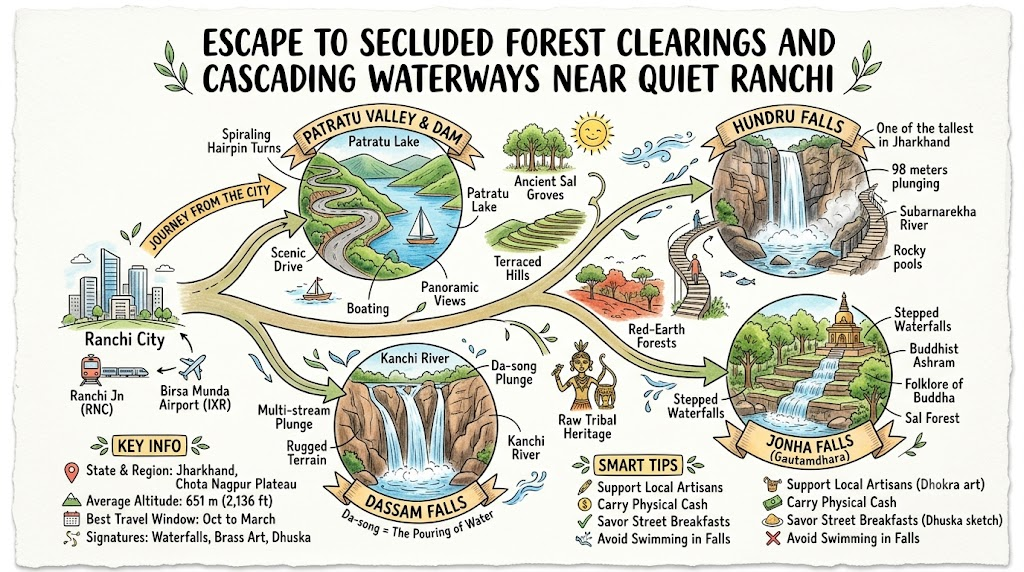
Most popular holiday destinations greet you with gridlocked mountain passes, commercialized strip malls, and crowded viewpoints where serenity is sold as a luxury. Ranchi quietly stands apart from this chaotic tourist circuit, offering an unfiltered world of ancient red-earth forests, gushing waterfalls, and raw tribal heritage.
Perched atop the rugged Chota Nagpur Plateau, Jharkhand’s capital balances urban expansion with pastoral tranquility. Traveling here is not about checking off generic tourist traps; it is an immersion into primeval sal groves, quiet reservoir waters, and authentic regional hospitality.
Why Ranchi is a must-visit city
Ranchi is a geographically and culturally rich frontier that holds deep significance in eastern India. As the seat of tribal freedom fighters like Birsa Munda and a historic summer capital during the British Raj, the city possesses an earthy heritage rooted in indigenous harmony with nature.
The modern travel circuit connects smoothly via Birsa Munda Airport (IXR) and comprehensive railway links to major metros. Flanked by well-paved national highways and emerging eco-resorts, Ranchi effortlessly accommodates solo wanderers, road-tripping families, and weekend leisure seekers.
| Category | Details |
| State & Region | Jharkhand, Chota Nagpur Plateau |
| Average Altitude | 651 meters (2,136 feet) above sea level |
| Primary Airport | Birsa Munda Airport (IXR) |
| Major Rail Terminals | Ranchi Junction (RNC), Hatia (HTE) |
| Best Travel Window | October to March |
| Signatures | Waterfalls, Terraced Hills, Tribal Brass Art, Dhuska |
Best Places or Experiences
Patratu Valley and Dam
The drive down Patratu Valley features an engineering spectacle of spiraling hairpin turns wrapped around rolling green hills. Emerging from the plateau ridge, the descent reveals panoramic views of deep deciduous forest canopy that looks painterly during golden hour.
At the valley base lies Patratu Lake, an immense reservoir framed by waterfront promenades and tranquil boat docks. Modern lakeside resorts and adventure camps allow visitors to enjoy aquatic sports or unwind alongside misty waters away from city traffic.
- Location: Ramgarh/Ranchi border zone, approximately 35 km north of central Ranchi.
- Why it is worth visiting: Unmatched scenic hairpin highway drives paired with tranquil reservoir boating and modern waterfront promenades.
- Best things to do: Drive the ghat stretch during sunrise, take an island-loop motorboat ride, and relax with tea at the hilltop scenic overlook.
- Best time to visit: Late afternoon (3:30 PM to 6:00 PM) for dramatic sunset lighting across the valley switchbacks.
- Ideal for whom: Road trip enthusiasts, landscape photographers, couples, and leisure road travelers.
- Travel tip: The ghat road experiences heavy truck and tourist traffic after dark, so complete your valley descent before twilight sets in.
Hundru Falls
Plunging nearly 98 meters over jagged gneiss and metamorphic rock, Hundru Falls represents the sheer power of the Subarnarekha River. Over millennia, the torrential water has sculpted deep crevices, smooth rock baths, and dramatic pools across the riverbed.
The hike down the stone steps through dense foliage is an exhilarating journey filled with roaring echoes and cool mist. The surrounding granite boulders provide natural perches to view the cascade as it fans out across the rocky floor.
- Location: Purulia Road circuit, approximately 45 km east of Ranchi city center.
- Why it is worth visiting: One of the tallest and most visually striking tiered cataracts in Jharkhand.
- Best things to do: Climb down the 750 stone steps, photograph the natural riverbed rock formations, and sip fresh local lemon tea at base shacks.
- Best time to visit: October to January, when post-monsoon river volume is high and forest trails remain accessible.
- Ideal for whom: Adventure travelers, nature photographers, and fit family groups.
- Travel tip: Wear sturdy sports shoes with strong traction; riverbed algae makes smooth rock surfaces dangerously slick.
Jonha Falls (Gautamdhara)
Jonha Falls cascades smoothly down an amphitheater of black stone terraces fed by the Raru River. Named Gautamdhara after Lord Buddha, who according to regional folklore meditated in these hills, this retreat carries a distinctly spiritual ambiance.
Ascending the stone stairway brings you to an ancient Buddhist ashram and temple perched directly above the valley rim. The surrounding sal forest remains lush and serene, making it a peaceful sanctuary away from noisier commercial tourist stops.
- Location: Ranchi-Purulia Highway stretch, around 42 km east of the capital.
- Why it is worth visiting: A harmonious blend of stepped natural waterfalls and monastic Buddhist heritage nestled within a sal-tree gorge.
- Best things to do: Explore the upper Buddhist temple, picnic along the lower rocky pool shores, and buy locally woven bamboo crafts from village vendors.
- Best time to visit: Morning hours (8:00 AM to 12:00 PM) when sunlight lights up the gorge base.
- Ideal for whom: Spiritual travelers, culture enthusiasts, and families seeking shaded picnic grounds.
- Travel tip: While stepping stones near the base look inviting, avoid entering deep water pools due to sudden drops and strong undercurrents.
Dassam Falls
Dassam Falls, also known as Da-song in local Mundari dialects, translates to “the pouring of water.” Fed by the Kanchi River, the stream splits into ten distinct channels as it plunges 44 meters down sheer cliff faces into an emerald basin.
The surrounding terrain is rugged, raw, and largely preserved from overdevelopment. The viewing decks built along the rocky ridge offer striking angles to witness the mist rising from the gorge below.
- Location: Near Taimara village on NH-33, roughly 40 km southeast of Ranchi.
- Why it is worth visiting: Distinctive multi-stream plunge dynamic that unleashes immense auditory and visual power.
- Best things to do: Watch the ten water streams merge from the upper watchtower, photograph the misty gorge, and explore the rustic countryside trails.
- Best time to visit: November through February for comfortable hiking temperatures and clear cascade views.
- Ideal for whom: Trekking buffs, geography geeks, and offbeat nature lovers.
- Travel tip: Swimming or wading into the water here is strictly prohibited due to submerged razor-sharp rock shelves.
Tagore Hill (Morabadi)
Rising 300 feet above the surrounding residential plains of Morabadi, Tagore Hill has long served as a creative haven. Jyotirindranath Tagore, the elder brother of Nobel laureate Rabindranath Tagore, made this rocky summit his permanent residence in the early 20th century.
At the summit sits Brahma Sthal, an open-air domed pavilion where Jyotirindranath meditated and translated classical works. The base houses Kharudham, a cultural center celebrating the profound artistic and literary connections between Bengal and the Chota Nagpur region.
- Location: Morabadi neighborhood, approximately 5 km north of Ranchi Railway Station.
- Why it is worth visiting: An iconic hilltop heritage monument bridging historical literature with panoramic 360-degree city views.
- Best things to do: Climb the historic masonry stairway, tour the cultural museum exhibits at the base, and catch the sunset over the Morabadi skyline.
- Best time to visit: Late afternoon (4:30 PM to 6:00 PM) to enjoy cool breezes and evening city lights.
- Ideal for whom: History lovers, solo travelers, avid readers, and urban explorers.
- Travel tip: Keep an eye out for curious monkeys along the stair railings; keep water bottles and snacks packed inside your bag.
Jagannath Temple (Dhurwa)
Standing atop a solitary granite hillock in Dhurwa, the 17th-century Jagannath Temple resembles a fortified castle from afar. Built in 1691 by King Ani Nath Shahdeo of the Nagvanshi dynasty, the temple reflects classic Kalinga architectural traditions.
During the annual Ratha Yatra festival, the hillside fills with thousands of pilgrims, transforming the rural plains into a colorful cultural fair. The elevated stone courtyard also offers vast views of the modern Smart City developments and the serene Dhurwa Dam waters below.
- Location: Dhurwa sector, approximately 10 km southwest of main Ranchi.
- Why it is worth visiting: Centuries-old Nagvanshi dynastic architecture standing above the urban sprawl.
- Best things to do: Admire the stone carvings on the temple plinth, attend the evening prayer rituals, and take in the panoramic vista of Dhurwa Dam.
- Best time to visit: Early morning (6:30 AM to 9:00 AM) for peaceful temple rites, or during the grand June-July Ratha Yatra festival.
- Ideal for whom: Architecture enthusiasts, pilgrims, and heritage travelers.
- Travel tip: The main stone steps can get very hot under the midday sun; visit in the early morning or evening hours when removing footwear is comfortable.
Offbeat Exploration: Hidden Gems Tourists Miss
McCluskieganj
Tucked away 65 km northwest of Ranchi lies McCluskieganj, the world’s only established homeland settlement for the Anglo-Indian community, founded in 1933 by Ernest Timothy McCluskie. Winding lanes lined with colonial-era brick cottages, European chimneys, and overgrown orchards evoke a bygone chapter of Indian history. It remains a tranquil, atmospheric retreat where you can unwind in converted heritage homestays.
Getalsud Dam and Rukka Beach
While crowds pack into Hundru and Dassam, local travelers head to the eastern shoreline of Getalsud Dam, affectionately called Rukka Beach. The vast freshwater expanse is framed by red-earth banks, whispering eucalyptus groves, and traditional fishing boats. Sunset paints the reservoir waters in brilliant violet and amber shades, offering total quiet with no commercial ticket booths in sight.
Pahari Mandir Hill Steps
Pahari Mandir sits atop a 2,140-foot volcanic hillock in the heart of town. Beyond its historic Shiva shrine, the peak holds unique patriotic significance: during colonial rule, British officers hanged freedom fighters here, leading locals to unfurl the Indian National Flag at the summit on Independence Day and Republic Day. Climbing the 468 stone steps reveals sweeping views of Ranchi Lake and the historic city center.
Detailed Practical Guidance for Travelers
| Destination | Standard Entry Fee | General Timings | Best Local Food Options Nearby | Recommended Nearby Attractions |
| Patratu Valley | Free (Boating: ₹150–₹400) | 6:00 AM – 6:30 PM | Lakeside Dhaba Curry, Local Fish Fry | Patratu Dam, Thermal Power Viewpoint |
| Hundru Falls | ₹10 per person | 7:00 AM – 5:30 PM | Forest stall Dhuska, Hot Pakoras, Lemon Chai | Getalsud Dam, Sita Falls |
| Jonha Falls | ₹10 per person | 7:30 AM – 5:00 PM | Bamboo Shoot Curry (Seasonal), Local Maggi | Gautam Buddha Temple, Sita Falls |
| Dassam Falls | ₹15 per person | 8:00 AM – 5:00 PM | Fried Til-Laddoo, Roasted Corn, Chai stalls | Sun Temple, Tamar Tribal Belt |
| Tagore Hill | Free | 6:00 AM – 6:30 PM | Morabadi Litti Chokha, Pushpa Sweets | Morabadi Ground, Tribal Museum |
| Jagannath Temple | Free | 5:00 AM – 12:00 PM, 3:00 PM – 8:00 PM | Dhurwa Market Samosas, Jalebi | Dhurwa Dam, JSCA International Stadium |
Logistics & On-Ground Navigation
Local Transport Options
- Self-Drive and Hired Cabs: Reserving an outstation taxi or booking through Ola/Uber rentals is the most practical way to explore rural waterfall circuits. Full-day taxi bookings typically range between ₹2,200 and ₹3,500 depending on the vehicle class.
- Auto-Rickshaws: Shared auto-rickshaws ply fixed corridors along Main Road, Kanke Road, and Doranda for ₹15 to ₹40. Dedicated private auto bookings require upfront negotiation, as meters are rarely used.
- E-Rickshaws (Totos): Excellent for navigating congested historic neighborhoods like Lalpur, Hindpiri, and Upper Bazaar, costing just ₹10 to ₹20 per drop.
- Inter-District Buses: State transport and private luxury buses run frequently from ITI Bus Stand and Birsa Munda Inter-State Bus Terminal (Khadgarha) to regional centers like Jamshedpur, Hazaribagh, and Dhanbad.
Budget Planning
- Budget Tier (Backpacker/Solo): Expect to spend roughly ₹1,200 to ₹1,800 per day. This covers clean dormitory or budget guesthouse stays, meals at street-side dhuskha and litti vendors, and shared transport via trains or shared autos.
- Mid-Range Tier (Comfort/Family): Budget approximately ₹4,500 to ₹7,500 per day. This covers boutique 3- or 4-star hotel stays, a dedicated air-conditioned private taxi for waterfall excursions, sit-down regional meals, and lake boating activities.
Safety and Inclusivity Tips
- For Families: Stick to developed viewpoints with guardrails at Hundru and Jonha. Carry packaged drinking water and avoid hiking deep into slippery gorge basins with young children or elders.
- For Couples: Patratu Valley and Tagore Hill offer lovely outings, but plan your return to Ranchi’s urban core before 7:30 PM, as isolated valley ghats are sparsely lit.
- General Safety: The Chota Nagpur hinterland is welcoming, but it is smart practice to avoid driving on unpaved village dirt tracks after dark. Stay on marked national and state highways.
Strategic Travel Planning Guardrails
Travel Planning Tips for Ranchi
- Timing is Everything: Schedule your trip between October and February when post-monsoon foliage is green and daytime temperatures stay around a pleasant 20°C to 25°C.
- Carry Physical Cash: While UPI digital payments work reliably within the city, mobile network reception can dip near valley floors and waterfall entrances, making cash necessary for parking and local snacks.
- Support Local Artisans: Purchase genuine terracotta pottery, brass Dhokra art, and bamboo home decor directly from village cooperatives or Jharcraft state emporiums.
- Pack Smart Shoes: Bring trail walking shoes with strong rubber soles; reaching the best waterfalls requires descending and climbing hundreds of damp stone steps.
- Savor Street Breakfasts: Skip generic continental hotel buffets and begin your mornings at roadside stalls serving hot dhuska with spicy chana ghugni.
Common Mistakes to Avoid
- Overloading the Daily Schedule: Do not attempt to visit Hundru, Dassam, and Patratu on the same day; they sit on opposite radial highways.
- Assuming Flat Terrain: Underestimating the physical stamina required to climb 700+ stairs back up from waterfall basins can cause severe exhaustion.
- Ignoring Regional Cuisine: Leaving without trying Marua roti, rustic Litti Chokha, seasonal tender bamboo shoots, and sweet Arsa pitha means missing the culinary heart of Jharkhand.
- Skipping Pre-Booked Taxis: Waiting until late afternoon to hail a cab at remote waterfalls can leave you stranded; arrange round-trip transport before departing the city.
- Littering in Forest Belts: Avoid tossing single-use plastics into the sacred forest gorges; carry a small waste bag until you find a municipal disposal bin.
Suggested Itinerary Blueprints
- 1-Day Quick Dash (The City & Valley Circuit): Ideal for business travelers or short weekend stopovers. Begin your morning exploring Tagore Hill, followed by a midday tour of the tribal displays at the State Museum Hotwar. Spend the afternoon driving the winding roads of Patratu Valley, enjoy an hour of lake boating, and finish with a traditional thali meal along Kanke Road.
- 2-Day Deep-Dive (The Great Cataract & Heritage Loop):
- Day 1: Head out early along the Purulia corridor to discover Hundru Falls and Jonha Falls. Enjoy hot dhuska for breakfast and return via Getalsud Dam for sunset before an evening dinner in Lalpur.
- Day 2: Visit the historic Jagannath Temple in Dhurwa during morning prayers, drive down NH-33 to the powerful Dassam Falls, and spend your evening picking up Dhokra handicrafts at Jharcraft on Main Road.
- Complete Weekend Travel Plan (The Grand Chota Nagpur Escape):
- Friday: Arrive in Ranchi, check into your hotel, explore the vibrant evening street-food carts around Morabadi Ground, and visit the historic Pahari Mandir.
- Saturday: Head out for a full-day excursion through the serene Anglo-Indian settlement of McCluskieganj, returning by late afternoon for lakeside sunset views at Patratu Dam.
- Sunday: Spend your morning visiting Dassam Falls and the Sun Temple along the highway, return for an authentic lunch of mutton curry and rice, and complete your final souvenir shopping before evening airport departures.
Common Tourist Mistakes to Avoid
- Geographic Blunders: Grouping Hundru Falls (East) and Patratu Valley (North-West) on the same afternoon creates a frustrating, 4-hour cross-city traffic headache. Group attractions strictly along regional highway spokes.
- Commercial Traps: Spending afternoons wandering generic indoor shopping malls around Circular Road deprives you of experiencing Ranchi’s vibrant open-air fruit markets, village weekly haats, and heritage sites.
- Neglecting Modern Alternative Zones: Overlooking the quiet residential cafes, manicured walking loops, and open-air food trucks around Morabadi Ground and Kanke ignores the city’s lively student energy.
- Transport Overpayment: Agreeing to fixed-rate auto quotes outside Ranchi Junction without checking ride-hailing apps (Uber or Rapido) often results in paying double the local fare.
- Luxury Dining Bias: Sticking exclusively to five-star hotel dining rooms cuts you off from authentic regional flavors; the true magic of Jharkhand cuisine lives in street-corner kadhais frying crisp dhuska and roadside coal-fired litti.
Frequently Asked Questions
1. What is the most convenient way to reach Ranchi from other Indian states?
Ranchi is easily reached through Birsa Munda Airport, which connects directly to hubs like New Delhi, Mumbai, Bengaluru, and Kolkata. Ranchi Junction and Hatia terminals run premium express trains across India. In addition, national highways link smoothly to neighboring state capitals.
2. Which waterfall is considered the most accessible for senior citizens?
Jonha Falls provides the most forgiving descent thanks to well-spaced resting landings, whereas Hundru requires tackling over 700 continuous steep stone stairs. Dassam Falls features an upper paved viewing gallery that lets elderly travelers admire the cascade without climbing down into the gorge.
3. Is hiring a private rental taxi mandatory for sightseeing around Ranchi?
While city-center attractions are easily reached using auto-rickshaws and app cabs, visiting peripheral waterfalls like Hundru or Dassam requires a dedicated round-trip taxi. Public buses drop travelers along highway junctions, leaving a challenging 5-to-10 km gap to reach entrance gates.
4. What unique regional dishes should every traveler try in the city?
Be sure to sample Dhuska, a fried rice-and-lentil batter cake paired with spicy gram curry. Other local staples include roasted Litti Chokha, Marua (finger millet) rotis, seasonal Rugra mushrooms, and sweet pan-fried Arsa pitha sold in neighborhood sweet marts.
5. How cold does Ranchi get during peak winter months?
Between December and January, evening temperatures on the plateau regularly drop between 7°C and 10°C, with occasional dips to 4°C in open valleys like Patratu. Pack warm woolens, jackets, and thermal layers, particularly for early morning drives and open boat rides.
6. Are credit cards and mobile UPI payments universally accepted across all spots?
Card swiping is largely restricted to established city hotels, upscale restaurants, and organized fuel pumps. QR-code UPI transfers work widely throughout town, but carrying ₹1,500 to ₹2,000 in physical cash is essential for remote entry gates and village roadside snacks.
7. Is it safe to drive across rural ghat routes like Patratu after twilight?
The main switchback road through Patratu Valley is well-engineered and frequented by state traffic, making it generally secure. However, descending these winding mountain turns after dark can be challenging due to blinding high-beam truck lights and roaming cattle; day drives are much safer.
8. Can visitors swim in the natural plunge pools at Hundru and Dassam Falls?
Swimming is strongly discouraged and strictly restricted across these natural plunge basins. Sudden water depth shifts, strong underwater crosscurrents, and slippery submerged granite ledges have caused tragic accidents for unsuspecting swimmers. Enjoy the refreshing spray safely from dry rocks along the shoreline.
9. What are the best authentic souvenirs to purchase before leaving Jharkhand?
Pick up Dhokra metalcraft figurines made using the lost-wax casting technique, intricate bamboo homeware, and handcrafted tribal wood carvings. You can also buy handloom Tussar silk sarees and traditional lac bangles from government-certified Jharcraft stores along Main Road.
10. Do travelers need special permits to explore the tribal villages around Ranchi?
Standard day-tourist circuits and public sightseeing spots require no special domestic permits. However, travelers planning deep research, documentary filming, or multi-day stays in protected tribal scheduled zones should seek formal guidance and local community clearances from district collectorates.
11. How many total days are ideal for a well-paced trip to Ranchi?
A 3-day, 2-night itinerary is ideal to experience Ranchi without rushing. This timeframe allows you to spend one full day touring eastern waterfalls, an afternoon exploring the Patratu Valley circuit, and your remaining hours enjoying city shrines, museums, and local food markets.
12. Is Ranchi an affordable destination for budget backpackers?
Ranchi is one of the most budget-friendly state capitals in eastern India. Modest guesthouses, widely available shared transit, inexpensive state museum tickets, and flavorful street-side food enable backpackers to travel comfortably on less than ₹1,500 per day.
Conclusion
Traveling through Ranchi offers an authentic escape far removed from conventional, crowded tourist circuits. Standing above the misty depths of Hundru Falls, watching dusk settle over the winding curves of Patratu Valley, or sharing a warm plate of street-side dhuska reveals a place that remains grounded in its natural rhythms and ancient heritage. If you are seeking a vacation that trades manicured tourist traps for the raw beauty of sal forests, stone riverbeds, and heartfelt tribal warmth, the Chota Nagpur Plateau welcomes you with open arms.
