Introduction
Mainstream tourism often traps travelers in crowded corridors where homogenized buffets and commercialized sightseeing dull the senses. Ranchi offers the exact antidote—a land where gastronomy is not an industrial performance, but an ancient, living dialogue with soil, seasonal monsoons, and sacred Sal groves.
Rooted deep in the Chota Nagpur Plateau, this indigenous heartland invites you to step away from predictable vacation tracks. Here, culinary discovery reveals an unbroken cultural lineage practiced by the Munda, Oraon, and Santhal communities, turning every rustic kitchen into an archive of regional folklore.
Why Ranchi is a must-visit city
Ranchi stands as the cultural, historical, and geographic anchor of Jharkhand. Perched at an elevation of roughly 651 meters above sea level, the plateau provides a pleasant microclimate framed by rolling hills, ancient water catchment zones, and dense deciduous forests. Geographically, it serves as the ultimate staging ground for discovering the indigenous traditions of Eastern India.
The city balances pristine natural wilderness with seamless modern access. The Birsa Munda Airport (IXR) connects directly to major Indian metros like Delhi, Mumbai, Bengaluru, and Kolkata, while extensive rail links and smooth four-lane national highways (NH-33 and NH-43) make transit effortless. Whether you are a solo backpacker chasing indigenous heritage or a family seeking unhurried nature, the regional travel circuit effortlessly weaves cascading waterfalls with rustic tribal kitchens.
| Feature | Regional Highlight | Traveler Relevance |
|---|---|---|
| Geographic Terrain | Chota Nagpur Plateau, elevated ridge topography | Cool breezes, rolling valleys, year-round scenic drives |
| Cultural Heritage | Indigenous Munda, Oraon, Ho, and Santhal traditions | Earth-to-table food ways, sacred groves, artisanal craft |
| Key Circuit | Ranchi – Khunti – Patratu – Dassam corridor | Dynamic mix of wild waterfalls, valleys, and culinary hubs |
| Accessibility Hub | Birsa Munda Airport & Ranchi Junction Railway Station | High-frequency flights, express rail lines, well-paved roads |
| Culinary Identity | Cold-pressed mustard, sal leaves, forest foraging | Low-oil, seasonal, medicinal, earth-baked preparations |
Best Places or Experiences
Ajam Emba: The Pioneering Indigenous Dining Sanctuary
Ajam Emba, translating to “great taste” in the indigenous Kudukh dialect, is an authentic culinary movement founded to restore and showcase tribal food sovereignty. Housed in a thoughtfully crafted mud-and-bamboo space in the heart of Ranchi, it bridges the gap between ancient rural kitchens and urban diners seeking authentic flavors.
The dining experience centers around forgotten grains like finger millet (marua), indigenous red rice, foraged forest greens, and slow-cooked village meats cooked over low flames. Every recipe serves as living folklore, preserving ancestral nutritional wisdom without westernized adaptations or artificial shortcuts.
- Location: Near Harmu Housing Colony, Ranchi (approx. 4 km from Ranchi Railway Station).
- Why it is worth visiting: It is Jharkhand’s foremost social enterprise kitchen celebrating pure, unadulterated indigenous cooking techniques.
- Best things to do: Feast on the complete Tribal Thali, sip warm marua jhor (millet soup), and learn about native grain preservation from the on-ground staff.
- Best time to visit: Evening dinner (7:00 PM – 9:30 PM) when earth lamps illuminate the rustic interior.
- Ideal for whom: Slow-food purveyors, solo cultural explorers, and culinary documentarians.
- Travel tip: Tables fill quickly on weekends; arrive by 7:15 PM to secure the full thali before daily portions sell out.
The Early Morning Dhuska Trail at Upper Bazar and Firayalal Chowk
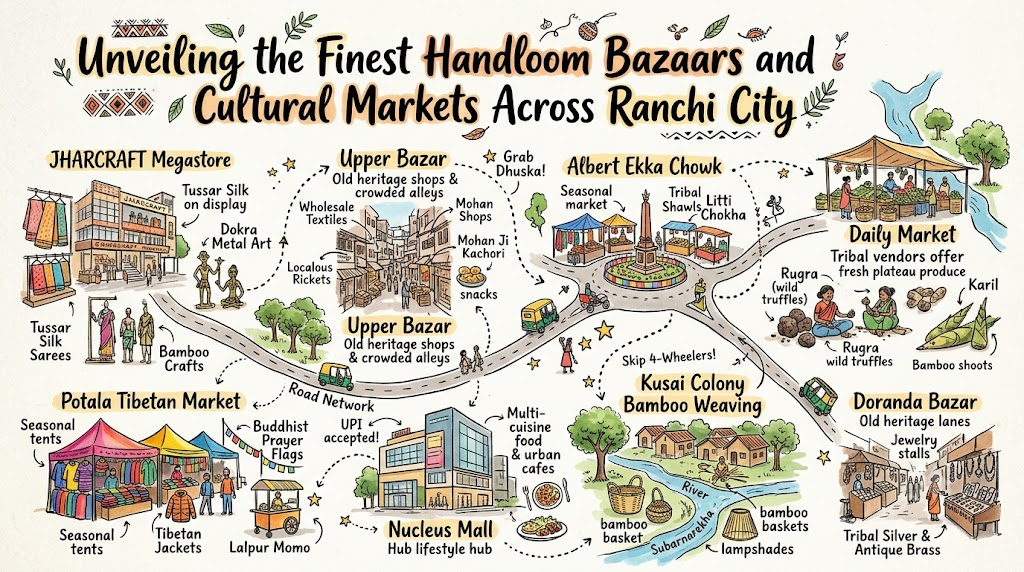
To understand Ranchi’s pulse, one must wake up with its street-side iron cauldrons. The bustling alleys around Upper Bazar and Firayalal Chowk transform every dawn into a vibrant sanctuary of sizzling street food.
Golden fried Dhuska with ghugni.
Dhuska is the undisputed star here—a savory fritter made from soaked rice and chana dal ground into a rich batter, seasoned with cumin, ginger, and green chillies, then fried to golden perfection. Paired with a robust chickpea curry (ghugni) and fresh coriander-garlic chutney, it fuels the city with rich textures and aromatic spices.
- Location: Upper Bazar and Albert Ekka Chowk, Central Ranchi (approx. 3 km from Ranchi Junction).
- Why it is worth visiting: Offers an unvarnished window into daily city life and the region’s classic breakfast culture.
- Best things to do: Watch vendors ladle batter directly into boiling kadhais, pair crispy dhuska with tangy aloo chana ghugni, and sample piping-hot steamed dal pitha. Raahzo
- Best time to visit: Morning between 7:00 AM and 9:30 AM when the oil is fresh and the crowds are buzzing.
- Ideal for whom: Street-food lovers, early risers, and budget backpackers.
- Travel tip: Head directly to heritage stalls like Churuwala or corner carts opposite GEL Church Complex for the crispest batches. Quora
Seasonal Foraging Trails at Khunti Weekly Tribal Haat
Just outside Ranchi’s southern periphery lies the historic town of Khunti, where traditional weekly markets (haats) convene under sprawling canopies of banyan and tamarind trees. These open-air markets serve as vital trade exchanges for local villagers bringing produce straight from the forest.
Depending on the season, tribal elders display freshly harvested bamboo shoots (karil), wild mushrooms (rugra and khukhri), edible mahua flowers, and bundles of wild greens like koinar sag. Wandering these stalls provides an unmatched sensory lesson in seasonal forest ecology.
- Location: Khunti District Center (approx. 38 km south of Ranchi via NH-20).
- Why it is worth visiting: Offers direct access to wild, foraged produce that never reaches standard supermarket shelves.
- Best things to do: Identify rare subterranean rugra mushrooms, watch villagers measure fresh mahua flowers in iron bowls, and purchase hand-rolled tamarind blocks.
- Best time to visit: Tuesday or Friday mornings (8:00 AM – 11:30 AM) when village foragers lay out their freshly harvested yields.
- Ideal for whom: Botanists, adventurous eaters, and documentary photographers.
- Travel tip: Carry plenty of small cash denominations, as digital payments rarely function in open village haats.
Clay-Oven Champaran and Sattu Hearth Cookery near Patratu Valley
As you ascend the breathtaking hairpin turns of Patratu Valley, the roadside air fills with the aroma of burning sal wood, dried cow-dung cakes, and mustard oil. The rustic roadside tapris and dhabas dotting the ridgeline have refined the art of earthen slow-cooking.
Winding turns of Patratu Valley.
Here, tender countryside mutton and chicken simmer inside sealed earthenware pots (handi), seasoned with whole pods of roasted garlic, dry red chillies, and crushed cloves. Beside these bubbling pots, cooks roast hearty whole-wheat dough balls stuffed with spiced roasted gram flour (litti) over glowing coals, serving them drowned in pure desi ghee alongside charred brinjal mash (chokha).
- Location: Patratu Valley Ghat Road, Ramgarh/Ranchi border (approx. 35 km north of Ranchi).
- Why it is worth visiting: Combines world-class road trip vistas with charcoal-cooked frontier dining.
- Best things to do: Feast on charcoal-roasted litti chokha with smoky tomato relish, enjoy slow-simmered handi mutton, and watch sunset light paint the valley loops.
- Best time to visit: Late afternoon (3:30 PM – 6:30 PM) for optimal photography and cooler mountain breezes.
- Ideal for whom: Road-trippers, meat lovers, and landscape photographers.
- Travel tip: Stop at family-run dhabas along the crest rather than commercial food plazas for true slow-cooked handi preparations.
The Sal Leaf Forest Feasts near Dassam Falls
Hidden away from the main lookout points of Dassam Falls are small rural homesteads and tribal kitchens that cater to discerning day travelers. The deep river gorge and roaring water provide a dramatic backdrop to meals prepared entirely inside folded sal leaf pockets (patra).
Local cooks wrap village-harvested river fish, country chicken, or crushed seasonal greens in tender sal leaves, tying them with dried bark before burying them under embers. This ancient steaming technique infuses the food with woodsmoke and an herbal, tea-like tannin flavor that no modern kitchen can replicate.
- Location: Dassam Falls access corridor, Bundu block (approx. 40 km southeast of Ranchi via NH-33).
- Why it is worth visiting: Showcases sustainable cooking where biodegradable forest foliage replaces metal pots and plates.
- Best things to do: Dine on river-fish patra cooked over wood embers, sample delicate steamed chilka roti with wild tomato chutney, and hike the forested perimeter trail. Raahzo
- Best time to visit: Post-monsoon through winter (October to February) when the waterfalls run clear and forest paths remain dry.
- Ideal for whom: Nature enthusiasts, eco-conscious travelers, and rustic culinary seekers.
- Travel tip: Arrange your meal with local cooks upon arrival before descending the waterfall steps; leaf-steaming takes at least 45 minutes of slow embers.
Offbeat Exploration: Hidden Gems Tourists Miss
McCluskieganj: Colonial Bakery Nostalgia and Anglo-Indian Country Dining
Nestled in deep woods roughly 65 km northwest of Ranchi, McCluskieganj was established in the 1930s as the world’s only homeland for Anglo-Indians. Beyond its crumbling colonial cottages, it hides a charming culinary heritage.
A handful of heritage homestays prepare slow-roasted country fowl, handmade fruit chutneys, and colonial plum cakes using wood-fired masonry ovens. Exploring this quiet settlement lets you taste a fascinating blend of English cottage cookery and local Chota Nagpur ingredients.
Angara Haat: The Earth-Baked Desi Khasi Epicenter
While busloads of tourists head straight to Jonha Falls, food lovers stop earlier at the rural Angara crossroad during market days. Here, local pitmasters prepare fresh mutton over open pits using nothing more than rock salt, cold-pressed mustard oil, green chillies, and sal wood smoke.
Eaten fresh off fresh sal leaf plates (dona), the meat is extraordinarily tender and carries the deep, smoky aroma of the surrounding woodland.
The Monsoon Wild Rugra Hunting Belt of Ormanjhi
During the initial monsoon rains of July and August, the sal forest floors around Ormanjhi undergo a quiet transformation. Local women scour the leaf litter to forage for rugra—a rare, subterranean wild mushroom that looks like a small speckled stone.
Biting into a spicy rugra curry releases an earthy, rich liquid reminiscent of truffles, boasting a firm, meat-like texture. It is one of India’s most prized seasonal delicacies, yet remains largely unknown outside Jharkhand.
Detailed Practical Guidance for Travelers
| Destination | Standard Entry Fee | General Timings | Best Local Food Options Nearby | Recommended Nearby Attractions |
|---|---|---|---|---|
| Ajam Emba Cultural Center | Free entry (Meals approx. ₹250–₹500) | 11:30 AM – 10:00 PM | Marua roti, red rice thali, Santhal-style chicken | Ranchi Lake, Pahari Mandir |
| Upper Bazar Street Stalls | Free access (Dishes ₹30–₹80) | 6:30 AM – 1:00 PM | Classic dhuska-ghugni, dal pitha, fresh samosas | Jagannath Temple, Tagor Hill |
| Khunti Rural Haat | Free entry (Produce prices variable) | 7:30 AM – 2:00 PM (Tues/Fri) | Bamboo shoot curry, boiled seasonal tubers, mahua drink | Ulihatu (Birsa Munda Birthplace), Panch Gagh Falls |
| Patratu Valley Lookouts | Free access (Lake complex ₹30–₹50) | Open 24/7 (Daylight recommended) | Handi mutton, roadside litti chokha, roasted corn | Patratu Dam Lake, Boating complex |
| Dassam Forest Homesteads | ₹20 waterfall parking entry | 8:30 AM – 5:00 PM | Sal leaf steamed fish, chilka roti, desi chicken curry | Dassam Falls, Kanchi River Basin |
Logistics & On-Ground Navigation
Local Transport Options
- Self-Drive and Chauffeur Rentals: The most reliable way to navigate forest ghats and rural haats is booking a private taxi or rental car from Ranchi city (₹2,200 to ₹3,500 per day including fuel).
- Auto-Rickshaws & E-Rickshaws: Inside city limits, green compressed-gas autos and e-rickshaws provide quick transport for short distances (₹10 to ₹30 on shared routes, or ₹100 to ₹200 for private drops).
- App-Based Cabs: Services like Ola and Uber run consistently within Ranchi municipal zones and to the airport, but drop in availability once you head toward Khunti or Dassam.
- State & Private Buses: Inexpensive buses depart from ITI Bus Stand and Kantatoli toward Ramgarh, Khunti, and Bundu every thirty minutes (₹40 to ₹80 per ride), ideal for budget travel.
Budget Planning
- Backpacker / Solo Explorer Tier: Expect to spend roughly ₹1,200 to ₹1,800 per day. This covers clean guest house stays or dorms (₹700–₹1,000), public buses and shared autos (₹200), and generous street-food feasts of dhuska, litti, and tea (₹300–₹400). Welcome :: Jharkhand Tourism – Official Website of Deparment of …
- Mid-Range / Comfort Tier: Expect to spend roughly ₹4,500 to ₹7,500 per day. This budget includes a comfortable 3-star business hotel or boutique homestay (₹2,800–₹4,500), dedicated private AC cab hire (₹2,500), and full tribal thalis and sit-down dinners at specialty restaurants like Ajam Emba (₹1,000–₹1,500). Quora
Safety and Inclusivity Tips
- For Families: The rural routes around Patratu and Dassam are welcoming and scenic, but rest stops are rustic. Keep bottled drinking water and light snacks in the car, and aim to return to the city by twilight.
- For Couples: Look for open, well-visited viewpoints around Patratu Lake and Jonha Falls. Avoid isolated forest trails late in the evening, and opt for respected dining spaces like Ajam Emba or reputed highway dhabas. Quora
- General Outdoor Safety: Forest river currents near Dassam and Hundru falls are deceptively strong, with slippery granite boulders. Heed local warning signs, avoid stepping into deep water pools, and always respect village photography boundaries.
Strategic Travel Planning Guardrails
Travel Planning Tips for Ranchi
- Time Your Visits for Peak Seasons: Plan your travel between October and March for crisp plateau air, or visit in July and August if your main goal is foraging for wild rugra mushrooms and bamboo shoots. Village in India
- Carry Cash for Village Haats: Digital UPI payments work well in city stores, but rural forest markets and village vendors rely exclusively on paper currency.
- Embrace Pacing and Simple Amenities: Village kitchens cook with care over wood fires. Avoid rushing your meals; real slow-cooked country meat and leaf pockets take time to prepare.
- Wear Practical Footwear: Navigating uneven village markets, rocky forest trails, and stepped waterfalls calls for sturdy walking shoes or hiking sandals.
- Support Local Forest Communities: Purchase hand-ground spices, cold-pressed oils, and bamboo crafts directly from tribal cooperative stalls to keep tourist money in the local economy.
Common Mistakes to Avoid
- Skipping Morning Street Stalls: Don’t settle for bland hotel breakfast buffets when neighborhood carts are serving freshly fried dhuska and piping-hot ghugni. Raahzo
- Drinking Untreated Stream Water: Rely strictly on sealed or filtered water, especially when exploring rustic river valleys and waterfall corridors.
- Attempting Too Many Distant Valleys in One Day: Packing Patratu (north) and Dassam (south) into a single afternoon leaves you stuck in traffic instead of enjoying the scenery.
- Treating Sacred Groves as Casual Picnic Grounds: Show quiet respect when visiting Sarna sthals (sacred tribal groves marked with red-and-white flags); these are revered community sanctuaries.
- Bypassing the Monsoon Season Entirely: Many assume the rainy season ruins travel, but the monsoon brings lush green forests, roaring waterfalls, and Jharkhand’s finest seasonal delicacies. Village in India
Suggested Itinerary Blueprints
1. 1-Day Quick Dash (The Urban Heritage & Street Route)
Tailored for business travelers or weekend layovers looking to experience Ranchi’s quintessential flavors within twelve hours.
- Morning (7:30 AM – 10:30 AM): Start at Upper Bazar for hot dhuska, chana ghugni, and steamed dal pitha. Walk off breakfast with a brief climb up Tagore Hill for panoramic city views. Village in India
- Afternoon (12:30 PM – 3:30 PM): Head to Ajam Emba for an authentic tribal thali featuring red rice, foraged greens, and marua roti. Stop by the State Museum in Hotwar to appreciate tribal artifacts and crafts. Quora
- Evening (4:30 PM – 8:00 PM): Catch the sunset over Ranchi Lake, followed by evening tea and street-side litti chokha along the lively stalls of Doranda. Quora
2. 2-Day Deep-Dive (The Forest, Waterfall & Frontier Hearth Loop)
Designed for cultural food lovers wanting to balance scenic landscapes with traditional country dining.
- Day 1: The Cascades & Sal Leaf Kitchens
- Morning: Drive southeast along NH-33 toward Dassam Falls, enjoying views of lush sal forests along the plateau.
- Lunch: Savor slow-steamed fish wrapped in sal leaves, paired with soft chilka roti prepared by local cooks near the gorge. Raahzo
- Evening: Return to Ranchi to browse handloom shawls and bamboo crafts at Jharcraft, finishing with dinner at a neighborhood tribal kitchen.
- Day 2: The Ghat Road & Clay Handi Trail
- Morning: Head north toward Patratu Valley, admiring the rolling green hills and wide hairpin curves.
- Lunch: Savor clay-pot handi meat and smoky litti at roadside dhabas near the ridge. Welcome :: Jharkhand Tourism – Official Website of Deparment of …
- Evening: Take a relaxing sunset boat cruise across Patratu Lake, returning to Ranchi for dinner at a local cafe.
3. Complete Weekend Travel Plan (The Grand Chota Nagpur Circuit)
A Friday-to-Sunday loop for travelers looking to fully immerse themselves in the region’s culinary culture, forest markets, and natural beauty.
- Friday: Arrive in Ranchi. Check in, enjoy a comfort lunch of litti chokha at Doranda, and spend a relaxing evening sampling local delicacies around Firayalal Chowk. Quora
- Saturday: Take a day trip to the historic town of Khunti. Explore the vibrant morning haat, browse seasonal forest mushrooms, and visit Panch Gagh Falls. Wrap up the evening with dinner at Ajam Emba. Village in India+ 1
- Sunday: Drive through the winding curves of Patratu Valley, enjoy a slow lunch of handi mutton by the dam, and return to Ranchi in time for your evening flight or train.
Common Tourist Mistakes to Avoid
- Geographic Blunders: Don’t attempt to visit Hundru Falls (east), Patratu Valley (north), and Khunti (south) on the same day. These sites require travel across opposite sides of the plateau; keep your excursions bundled within a single compass quadrant.
- Commercial Traps: Don’t spend precious afternoon hours in generic shopping malls along Circular Road. Ranchi’s true charm lives in village haats, heritage sweet shops, and open-air food stalls.
- Neglecting Modern/Alternative Zones: Don’t overlook Ranchi’s evolving contemporary side. Residential neighborhoods like Morabadi and Ashok Nagar host charming artisanal cafes, art studios, and cultural hubs alongside traditional street stalls.
- Transport Overpayment: Always cross-reference prices with ride-sharing apps before hiring private autos at railway exits. For city rides, insist on standard meter rates or agree on a firm price before boarding.
- Luxury Dining Bias: Sticking only to upscale hotel dining rooms causes you to miss the real heart of Jharkhand’s cuisine. The region’s defining flavors—like smoky litti, freshly fried dhuska, and fragrant steamed pitha—are perfected at street carts and rustic village dhabas. Village in India
Frequently Asked Questions
1. What distinct ingredients make tribal cuisine around Ranchi unique?
The cooking relies on cold-pressed mustard oil, fermented rice batters, and foraged forest greens like koinar sag. Rather than heavy commercial spices, dishes are flavored with woodsmoke, fresh chillies, wild herbs, and slow-cooking inside fragrant sal leaves.
2. Is Ranchi’s indigenous food safe for travelers with sensitive stomachs?
Yes, tribal food is naturally wholesome, nutrient-dense, and uses minimal heavy spices. Dishes like chilka roti, marua porridge, and dal pitha are easily digestible. For fried snacks like dhuska, simply choose busy stalls where the food is cooked fresh to order.
3. What is the traditional breakfast staple in Ranchi?
Dhuska is Ranchi’s undisputed morning favorite. It is made from a ground, spiced batter of soaked rice and lentils that is fried until golden and crisp, then served alongside spicy potato or chickpea ghugni and tangy chutneys.
4. When can travelers find wild rugra mushrooms in local markets?
Rugra grows underground in sal forests exclusively during the monsoon, typically between July and late August. It is harvested by local foragers and sold fresh at rural markets like Khunti and Ormanjhi.
Village in India
5. Are there vegetarian choices available in traditional Jharkhand dining?
Traditional cuisine offers plenty of vegetarian options. Staples include steamed dal pitha, chilka roti, bamboo shoot curry, sattu litti, and dishes featuring a variety of wild forest greens.
6. Can travelers buy indigenous spices and ingredients to take home?
Yes, cooperative outlets like Jharcraft, as well as stalls at the Khunti haat, sell locally sourced wild honey, cold-pressed mustard oil, dry mahua flowers, and freshly ground finger-millet flour.
7. How accessible are rural tribal dining spots for non-Hindi speakers?
Locals across Jharkhand are very hospitable and helpful. While villagers speak Kudukh, Mundari, or Sadri, most know Hindi, and ride drivers or cafe staff can easily help translate and recommend dishes.
8. Is it possible to find authentic tribal food within Ranchi city limits?
Ajam Emba near Harmu Housing Colony is the premier spot for traditional tribal dining in town. You’ll also find authentic dishes at neighborhood markets around Morabadi and Upper Bazar.
9. What should visitors wear when exploring rural villages and waterfalls around Ranchi?
Dress modestly and comfortably with breathable cotton clothing that covers shoulders and knees. Sturdy walking shoes with reliable grip are essential for handling rocky waterfall paths and muddy village lanes.
10. How do cooks prepare the local specialty known as Champaran handi meat?
Country meat is marinated with whole garlic pods, onions, ginger, and cold-pressed mustard oil, then sealed inside an earthen clay pot with wheat dough. It slowly stews over warm charcoal embers until perfectly tender.
11. Is hiring a private rental taxi necessary for exploring culinary routes outside Ranchi?
Renting a private taxi is highly recommended for day trips to Patratu, Khunti, or Dassam. Public buses run between main towns, but a dedicated car gives you the freedom to explore scenic viewpoints and hidden roadside dhabas at your own pace.
12. What cultural etiquette should travelers observe in tribal villages?
Always ask for permission before taking photographs of residents, home hearths, or religious spaces. Remove your shoes before entering private home courtyards, and avoid disturbing sacred groves marked with flags.
Conclusion
Traveling through Ranchi and its surrounding plateau offers far more than a conventional vacation—it is an invitation to slow down and reconnect with the Earth’s natural rhythms. Sitting beside a wood-fired hearth, listening to the crackle of sal embers, and sharing a simple meal on fresh leaves reminds us that the best travel moments are rooted in community, tradition, and a deep respect for the land.
