Introduction
Most travelers head straight to overcrowded, commercialized tourist hubs that offer little more than chaotic noise and artificial sights. However, discerning explorers crave something far deeper, looking for destinations steeped in raw authenticity and ancient narratives. The landscape around this region provides exactly that, serving as an entry point to untouched historic worlds. Consequently, stepping away from the typical tourist trails reveals an incredible tapestry of forgotten dynasties, sacred confluences, and architectural wonders.
Choosing a historical trip here means swapping superficial sightseeing for deep cultural immersion. You will walk through ancient stone ruins, discover centuries-old tribal secrets, and witness living spiritual traditions. Therefore, these close-by getaways offer an incredible chance to reconnect with heritage far away from modern distractions.
Why Ranchi is a must visit city
This region serves as a massive cultural and geographical anchor in Eastern India. Historically, the land witnessed the glorious rise of the Chero Kings, the deep footprints of early Buddhist monks, and legendary tribal uprisings led by freedom fighters. Geographically, the city sits on the scenic Chota Nagpur Plateau, ensuring pleasant weather and great connectivity through well-maintained national highways and extensive rail lines. Thus, all archetypes of travelers find navigating this historic landscape extremely straightforward and rewarding.
The travel circuit seamlessly blends ancient archaeological ruins with stunning natural backdrops like dense forests and cascading waterfalls. Furthermore, local hospitality options accommodate both budget backpackers and luxury seekers. To help you plan your journey effectively, the table below summarizes the core operational facts of this regional circuit.
| Circuit Parameter | Key Details and Insights |
| Primary Highway Connections | NH 33, NH 75, and Ranchi-Purulia Highway |
| Major Rail Junctions | Ranchi Railway Station, Hatia Station |
| Cultural Heritage Blend | Hindu, Buddhist, Jain, and Tribal Sanctuaries |
| Peak Operational Season | October to March |
Best Places or Experiences
Palamu Forts
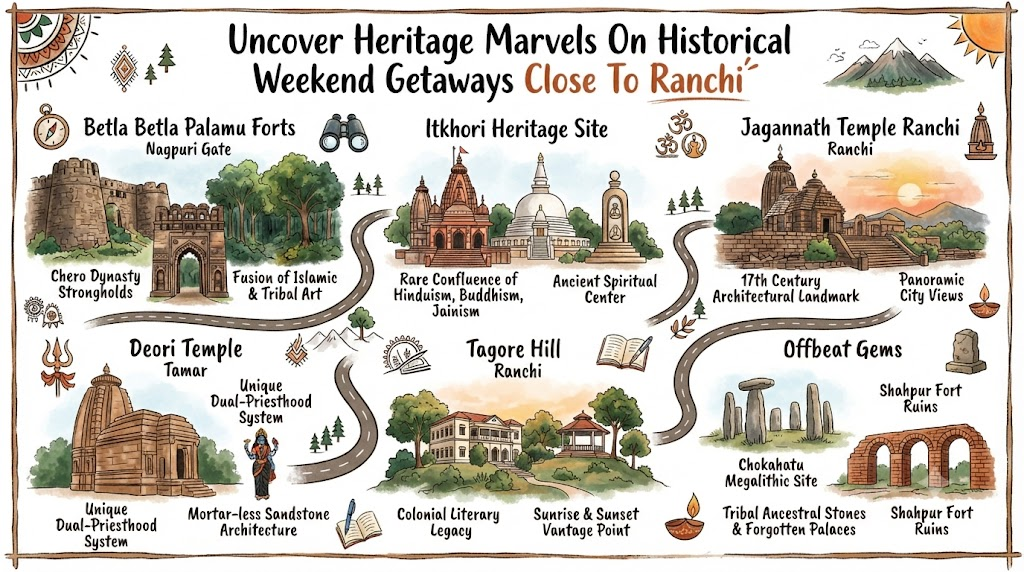
Deep within the dense, emerald forests of the Betla region lie the majestic twin structures known as the Palamu Forts. Built during the early Mughal period, these towering sentinels comprise the Purana Qila and the Naya Qila. The legendary Chero kings, Raja Medini Ray and Raja Pratap Ray, engineered these strongholds to protect their territory from invading forces. Consequently, the architecture showcases a brilliant fusion of Islamic design elements and indigenous tribal craftsmanship.
Walking through the ruins reveals massive stone walls that have withstood centuries of warfare and weathering. The iconic Nagpuri Gate, built with intricate fine stone carvings, stands out as a true crowning architectural achievement. Visiting this site allows you to hear the echoes of a forgotten kingdom while standing amidst a thriving wildlife sanctuary.
- Location: Latehar district, roughly 175 kilometers from the capital city.
- Why it is worth visiting: It stands as a rare, authentic example of Chero architectural brilliance hidden inside a dense jungle.
- Best things to do: Explore the intricately carved Nagpuri Gate, climb the ramparts for forest views, and photograph the ancient stone step-wells.
- Best time to visit: November to February during the cooler morning hours.
- Ideal for whom: History buffs, landscape photographers, and adventure trekkers.
- Travel tip: Hire an authorized local guide at the Betla forest entrance because navigating the dense foliage alone can get confusing.
Itkhori Heritage Site
Itkhori represents a unique pinnacle of religious harmony, where Hinduism, Buddhism, and Jainism converge gracefully at a single destination. The sprawling complex houses the revered Maa Bhadrakali Temple, which archaeologists date back to the 9th century during the Pala dynasty rule. Nearby, extensive excavation fields showcase ancient Buddhist stupas and exquisite Jain relics, confirming that this town served as a major global spiritual center.
The main temple features exceptional stone carvings, including the highly celebrated Sahastra Shivling, which displays 1008 miniature lingas carved onto a single surface. Furthermore, local legends claim that Lord Buddha’s relatives spent significant time here, adding immense spiritual weight to the soil. As the serene Mahane River flows quietly alongside the complex, visitors experience an immediate sense of profound peace and intellectual curiosity.
- Location: Chatra district, approximately 140 kilometers north of the city hub.
- Why it is worth visiting: It holds the rarest archaeological confluence of three major global religions in one single sacred compound.
- Best things to do: Marvel at the Sahastra Shivling, explore the open-air archaeological museum, and stroll along the peaceful Mahane riverbanks.
- Best time to visit: October to March, particularly during the vibrant annual Itkhori Mahotsav cultural celebration.
- Ideal for whom: Spiritual seekers, archaeological researchers, and family vacationers.
- Travel tip: Maintain the strict local dress code and ensure you remove leather items before entering the core temple sanctum.
Jagannath Temple
Perched elegantly on a green hillock on the outskirts of the capital, the 17th-century Jagannath Temple stands as a brilliant architectural landmark. King Aninath Shahdeo constructed this fortress-like shrine to resemble the famous world-renowned seaside temple in Puri, Odisha. The white towering shikhara rises dramatically against the sky, serving as a beacon of heritage visible from miles away.
Climbing the stone steps to the main courtyard rewards travelers with sweeping panoramic views of the modern urban expansion below. Inside, the ancient idols carved from sacred wood carry forward centuries of uninterrupted daily rituals. The atmospheric complex fills with a powerful energy every evening as traditional brass lamps illuminate the intricate inner chambers.
- Location: Dhurwa zone, roughly 10 kilometers from the central railway station.
- Why it is worth visiting: It offers an authentic 17th-century hilltop temple experience mirroring Odishan architecture without the coastal crowds.
- Best things to do: Attend the mesmerizing evening aarti ceremony, enjoy panoramic city views, and witness the grand annual Rath Yatra festival.
- Best time to visit: July for the festive atmosphere or any winter evening around sunset.
- Ideal for whom: Couples looking for quiet spots, families, and architecture enthusiasts.
- Travel tip: Visit during the late afternoon to avoid the heated stone steps under the direct midday sun.
Deori Temple
The ancient Deori Temple in Tamar holds an unparalleled position in regional folklore due to its unique dual-priesthood system. Here, traditional tribal priests known as Pahans perform sacred rituals alongside conventional Brahmin priests, highlighting an ancient cultural synthesis. Built entirely from interlocking sandstone blocks without mortar, the structure dedicated to the 16-armed Goddess Kali puzzles modern architectural engineers.
The simple, unadorned exterior contrast sharply with the intense spiritual devotion found within the dark, sacred inner sanctorum. For centuries, tribal communities and kings have visited this shrine to tie sacred threads around bamboo pillars for blessings. Today, the energy remains incredibly raw, authentic, and untamed by commercial modern influences.
- Location: Tamar region on the Ranchi-Tata National Highway, about 60 kilometers away.
- Why it is worth visiting: It showcases a fascinating living example of tribal and Vedic religious traditions merging seamlessly.
- Best things to do: Observe the unique tribal ritual methods, admire the mortar-less sandstone architecture, and tie a prayer thread.
- Best time to visit: October during the Navratri celebrations or early morning on weekdays.
- Ideal for whom: Cultural explorers, anthropology enthusiasts, and curious travelers.
- Travel tip: Expect massive queues on Tuesdays and Saturdays, so plan a Thursday visit for a peaceful experience.
Tagore Hill
Standing at an elevation of 300 feet, Tagore Hill combines poetic legacy with breathtaking natural beauty. This peaceful hill served as an inspirational retreat for Jyotirindranath Tagore, the elder brother of Nobel Laureate Rabindranath Tagore. He constructed a beautiful colonial-style summer house and a dedicated meditation pavilion called the Shanti Dham atop this rocky outcrop.
The structures feature clean lines and classic arches that reflect early 19th-century aesthetic sensibilities. Walking up the paved pathways allows you to experience the exact serene atmosphere that nurtured great literary works. Today, it remains a fantastic vantage point to watch the sun sink behind the plateau hills.
- Location: Morabadi area, just 6 kilometers north of the city center.
- Why it is worth visiting: It provides a serene look into the colonial literary history of the famous Tagore family.
- Best things to do: Tour the historic meditation pavilion, sit quietly under the shady trees, and watch the sunset over the city.
- Best time to visit: October to March, specifically during sunrise or sunset hours.
- Ideal for whom: Writers, couples, solo travelers, and photography enthusiasts.
- Travel tip: Carry a water bottle with you as the climb involves ascending a long series of steps without shops on top.
Offbeat Exploration: Hidden Gems Tourists Miss
Chokahatu Megalithic Site
Very few travelers know that the small village of Chokahatu contains a massive archaeological treasure dating back over two thousand years. This ancient burial ground contains thousands of colossal stone slabs, known as megaliths, erected by the indigenous Munda tribe. Each giant stone honors an ancestor, representing a deep, physical connection to the spiritual world that generic guidebooks completely overlook. Walking among these weathered monuments gives you a profound respect for the timeless nature of local tribal customs.
Shahpur Fort Ruins
Perched quietly on the picturesque banks of the North Koel River, the forgotten Shahpur Fort offers an incredibly atmospheric escape. Built by the Chero rulers as a secondary palace, this structure features a network of hidden underground tunnels and strategic watchtowers. While mainstream tourists crowd nearby parks, you can explore these silent brick arches completely undisturbed. The golden hour turns the old palace walls into a glowing masterpiece, making it a dream destination for photographers.
Detailed Practical Guidance for Travelers
To maximize your efficiency while exploring these historical gems, you must plan your operational logistics in advance. The comprehensive breakdown below highlights standard operational timings, fees, and nearby culinary selections for a smooth journey.
| Destination | Standard Entry Fee | General Timings | Best Local Food Options Nearby | Recommended Nearby Attractions |
| Palamu Forts | Free Entry (Safari fees apply) | 06:00 AM – 05:00 PM | Tribal Rice Platters, Desi Chicken | Betla National Park, Kechki Sangam |
| Itkhori Site | Free Entry | 07:00 AM – 07:00 PM | Traditional Chhena Poda, Puri Sabzi | Mahane Riverbank, Local Museum |
| Jagannath Temple | Free Entry | 05:00 AM – 08:00 PM | Dhuska, Kachori, Sweet Malpua | Dhurwa Dam, Kanke Rock Garden |
| Deori Temple | Free Entry | 06:00 AM – 08:30 PM | Hot Pedas, Local Samosas | Dassam Falls, Jonha Highway Loop |
| Tagore Hill | Small Nominal Fee | 07:00 AM – 06:00 PM | Street Snacks, Litti Chokha | Morabadi Ground, Rock Garden |
Logistics & On-Ground Navigation
Local Transport Options
- Railways: The local railway network connects major hubs like Daltonganj and Barkakana efficiently, making it ideal for long-distance base travel.
- Auto-Rickshaws: Shared and private auto-rickshaws dominate city routes, offering a highly economical way to cover short distances between monuments.
- E-Rickshaws: These silent, eco-friendly vehicles operate continuously within residential zones and around central markets like Morabadi.
- Car Rentals: Booking a private taxi for the entire day remains the most comfortable method for reaching distant spots like Itkhori or Palamu.
Budget Planning
- Backpacking Tier (INR 1,200 – 1,800 per day): This budget covers cozy homestays, public bus transit, shared auto rides, and delicious local street food stalls.
- Comfort Tier (INR 3,500 – 6,000 per day): This plan includes mid-range hotels, private car rentals, air-conditioned travel, and meals at established heritage restaurants.
Safety and Inclusivity Tips
- Families: Ensure you travel during daylight hours, carry essential rehydration drinks, and pick destinations with clear paved walking paths like Tagore Hill.
- Couples: Stick to mainstream, well-populated view areas during sunset hours and respect the conservative local cultural etiquettes in temple zones.
- General Safety: Keep digital maps downloaded offline before entering dense forest reserves because mobile network signals can drop unexpectedly.
Strategic Travel Planning Guardrails
Travel Planning Tips for Ranchi
- Prioritize digital UPI payments in urban centers, but carry adequate physical cash notes before venturing into remote rural or forest circuits.
- Pack sturdy, comfortable walking shoes with excellent grip because historical exploration here involves climbing uneven stone steps and rocky paths.
- Book your jungle safari permits and forest rest house stays well in advance if your weekend itinerary includes the Palamu Fort region.
- Respect all local religious customs by dressing modestly and removing footwear outside temple boundaries without exception.
- Carry a basic first-aid kit containing personal medications, anti-insect sprays, and rehydration salts for long rural drives.
Common Mistakes to Avoid
- Over-packing your daily itinerary by trying to combine northern destinations like Itkhori with western circuits on the same afternoon.
- Assuming local transport options will be readily available late at night in remote village sectors near historical ruins.
- Skipping authentic local culinary vendors out of a misplaced bias toward expensive continental fine-dining spaces.
- Forgetting to cross-check standard online ride-hailing rates before negotiating fares with independent local auto drivers.
- Ignoring the smaller, neighborhood historical markers while rushing solely toward the largest, most famous landmarks.
Suggested Itinerary Blueprints
- 1-Day Quick Dash (The City Heritage Circuit): Start your morning early at Tagore Hill for sunrise views, move to the Jagannath Temple by noon, and conclude your evening exploring the vibrant local markets around Morabadi.
- 2-Day Deep-Dive (The Ancient Faith Loop): Dedicate Day 1 to the extensive archaeological marvels of Itkhori, stay overnight in Hazaribagh, and spend Day 2 exploring the sandstone architecture of Deori Temple and the nearby cascading waterfalls.
- Complete Weekend Travel Plan (The Royal Jungle Expedition): Leave early on Friday afternoon for Betla, spend Saturday tracking wildlife and exploring the historic Palamu Forts, and use Sunday to visit the scenic Kechki Sangam confluence before returning.
Common Tourist Mistakes to Avoid
- Geographic Blunders: Many travelers mistakenly try to club the Palamu Forts and Itkhori into a single day’s journey, which results in exhausting eight-hour drives across opposite ends of the regional map.
- Commercial Traps: Spending your precious evening hours inside modern, air-conditioned shopping malls rather than walking through the atmospheric, historic streets of the old town area.
- Neglecting Modern/Alternative Zones: Visitors often completely ignore the beautiful, artistic cafe culture and quiet residential lanes expanding around the serene Kanke Dam area.
- Transport Overpayment: Avoid agreeing to arbitrary lump-sum fares demanded by transit vendors; instead, look up current ride-sharing apps to establish a fair baseline price.
- Luxury Dining Bias: Sticking exclusively to fancy hotel menus prevents you from experiencing the true soul of the culture found in local snacks like hot, crispy Dhuska.
Frequently Asked Questions
1. Is it safe to explore the Palamu Forts area late in the evening?
No, you must leave the fort premises by late afternoon because the structures sit deep inside a protected wildlife reserve where wild animals roam after sunset.
2. Do I need to pay any special entry fee for taking cameras inside Itkhori?
Standard smartphone photography remains completely free, but using professional DSLR cameras or drone equipment might require a nominal permit fee from the local archaeological counter.
3. What is the most authentic local dish I should try during a weekend road trip?
You must try Dhuska, a deep-fried snack made from fermented rice and lentil batter, served hot with a spicy potato and chickpea curry.
4. Can we find comfortable overnight accommodation options near the Itkhori heritage site?
While basic pilgrim guest houses operate near the temple, booking a comfortable hotel stay in nearby Hazaribagh or Ranchi remains the best choice for families.
5. How many steps does one need to climb to reach the peak of Tagore Hill?
The climb is relatively easy and well-paved, involving roughly 150 to 200 stone steps punctuated by beautiful rest landing areas.
6. Are public buses readily available from the main city station to Deori Temple?
Yes, numerous government and private buses heading toward Jamshedpur stop directly in front of the Deori Temple along the main national highway route.
7. Is a special forest permit required to visit the Palamu Fort ruins?
You will need to pay standard national park entry fees and vehicle safari charges at the main Betla forest gate before accessing the fort trails.
8. What should I buy as an authentic historical souvenir from this cultural region?
Look for stunning Sohrai and Khovar paintings made by local tribal artisans, which depict ancient themes using natural earth colors.
9. Does the Jagannath Temple remain open throughout the entire afternoon?
The main temple doors close during the afternoon hours for rituals, so plan your visit between early morning or late afternoon for a complete experience.
10. Are digital payment modes like UPI accepted at rural street side food stalls?
While UPI usage is widespread across highway restaurants, carrying a small amount of paper cash remains highly recommended for remote village shops.
11. Which language is most useful when interacting with local drivers outside the city?
Hindi is universally understood and spoken across the state, though learning a few words of local dialects like Nagpuri can enhance your connection.
12. Can elderly travelers easily access the inner sanctum of the Deori Temple?
Yes, the temple stands on relatively flat ground with minimal steps, making it highly accessible for senior citizens compared to other hilltop shrines.
Conclusion
Choosing to explore the historical treasures around this region offers a rare intellectual and emotional reward that ordinary, commercial vacations simply cannot match. Instead of navigating synthetic crowds, you stand before timeless stone monuments that have quietly witnessed the rise and fall of great empires. Ultimately, these journeys expand your perspective, leaving you with a profound respect for the enduring, vibrant traditions of local communities.
