Introduction
Modern travel often funnels wanderers toward congested, commercialized tourist traps packed with generic souvenir shops and predictable itineraries. In stark contrast, Jharkhand’s bustling capital offers a refreshing detour into living indigenous traditions, dense sal forests, and artisan communities that celebrate timeless heritage.
Visiting this city allows travelers to bypass commercial mass tourism and discover rooted authenticity. From ancient lost-wax metal casting to hand-painted wall art traditions, every handicraft found here narrates an intimate story of ecological balance, community spirit, and centuries of preserved tribal artistry.
Why Ranchi is a must-visit city
Perched on the Chota Nagpur Plateau, this historic plateau city has evolved from an idyllic monsoon retreat into a vibrant epicenter of indigenous art and heritage. Its cultural weight stems from being home to prominent indigenous communities—including the Santhal, Munda, Oraon, and Ho—whose symbiotic bond with nature directly shapes local craft forms like Dokra metalwork, Sohrai murals, and wild Tassar silk weaving.
Accessible via Birsa Munda Airport, key rail junctions connecting pan-India lines, and smooth national highways, the city serves as a welcoming gateway for curious cultural explorers, design connoisseurs, and mindful shoppers alike. The surrounding landscape gracefully links cascading waterfalls, lush hills, and artisan workshops into an easily navigable regional loop.
| Metric / Dimension | Regional Detail |
|---|---|
| Geographic Location | Southern Chota Nagpur Plateau, Jharkhand, India |
| Altitude & Terrain | Approx. 651 meters (2,136 ft) above sea level; rolling hills & plateau forests |
| Prime Craft Specializations | Dokra brass casting, Sohrai & Khovar art, Tassar silk, woodcarving, bamboo crafts |
| Connectivity Hubs | Birsa Munda Airport (IXR), Ranchi Junction (RNC), NH 20, NH 43 |
| Ideal Exploration Season | October through March (pleasant, cool winter weather) |
Best Places to Buy Handicrafts in Ranchi
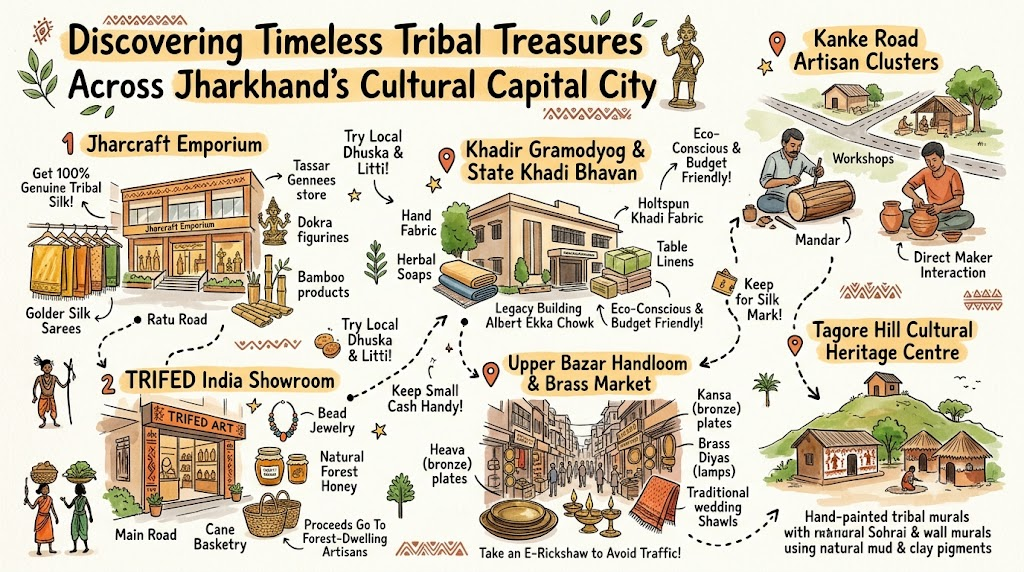
Jharcraft Emporium (Ratu Road)

This premier flagship center operated by the Jharkhand Silk Textile and Handicraft Development Corporation stands as the definitive repository of state-certified artisan crafts. Spanning multiple curated departments, the showroom brings village cluster produce directly to urban shoppers, cutting out middle intermediaries and guaranteeing fair trade directly to master weavers.
Visitors will find an unparalleled range of golden Tassar silk sarees, Kuchai organic silks, hand-carved wood artifacts, and brass tribal figurines. The pristine display and documented provenance make it an absolute necessity for collectors looking for authenticated indigenous treasures.
- Location: Udyog Bhawan, Ratu Road, approximately 3.5 km west of Ranchi Railway Station.
- Why it is worth visiting: It is the official government-backed repository ensuring 100% genuine tribal silk and authentic GI-certified crafts.
- Best things to do: Inspect hand-woven organic Kuchai silk yardage; admire intricate Dokra bell-metal statuettes; pick up lightweight tribal wood and bamboo kitchenware.
- Best time to visit: Late afternoons (between 3:00 PM and 6:00 PM) for leisurely browsing with helpful floor guides.
- Ideal for whom: Textile collectors, mindful luxury shoppers, and families seeking certified products.
- Travel tip: Check for the official Silk Mark and Craft Mark embossed tags on fabrics to verify authenticity.
Tribal Cooperative Marketing Development Federation of India (TRIFED) Tribes India Showroom
Operated directly under the Ministry of Tribal Affairs, this dedicated showroom serves as an ethical bridge between deep-forest indigenous makers and contemporary urban buyers. Every piece showcased here directly aids the socioeconomic empowerment of forest-dwelling artisans across eastern India.
The ambiance is calm and museum-like, showcasing intricate cane craft, herbal forest products, metal bells, and traditional jewelry. The curation allows you to explore regional artifacts that are rarely stocked in mainstream retail markets.
- Location: Main Road commercial corridor, roughly 2 km from Ranchi Junction.
- Why it is worth visiting: Guaranteed ethical sourcing with proceeds directly remitted to tribal cooperative societies.
- Best things to do: Browse handcrafted bead jewelry worn during Sarhul festivals; source unadulterated organic forest honey; collect miniature terracotta votive figurines.
- Best time to visit: Mornings between 11:00 AM and 1:00 PM before afternoon rush hours.
- Ideal for whom: Ethical shoppers, fair-trade advocates, and indigenous anthropology enthusiasts.
- Travel tip: Credit cards and UPI are widely accepted here, making electronic transactions effortless.
Khadir Gramodyog & State Khadi Bhavan
Situated near Albert Ekka Chowk, this legacy emporium reflects the soul of Indian self-reliance and rustic elegance. The building houses vast shelves of handspun cottons, coarse khadi dhotis, natural fiber rugs, and local herbal wellness items crafted by rural cottage industries.
The store carries a warm, nostalgic aroma of natural vegetable dyes and hand-pressed oils. It offers an earthy alternative to fast-fashion souvenir hubs, presenting organic fabrics that keep cool in summer and warm in winter.
- Location: Main Road near Albert Ekka Chowk, approximately 2.5 km from the main train terminus.
- Why it is worth visiting: Budget-friendly access to premium hand-spun khadi yardage, tribal jackets, and certified organic home items.
- Best things to do: Select customized cuts of raw khadi fabric; test cold-pressed herbal soaps and natural remedies; purchase handwoven table linen sets.
- Best time to visit: Post-lunch hours (around 2:00 PM to 4:00 PM) when aisles are quiet and unhurried.
- Ideal for whom: Eco-conscious travelers, budget souvenir hunters, and vintage textile lovers.
- Travel tip: During state festivals and national commemorative weeks, the emporium often extends store-wide discounts up to 20%.
Kanke Road Artisan Workshops and Craft Clusters
Stretching toward the scenic northern outskirts near Kanke, this area harbors informal clusters of independent woodworkers, stone carvers, and pottery specialists. Unlike standardized department showrooms, these open-front roadside ateliers let you watch artisans chisel raw sal timber and knead clay in real time.
Engaging with makers along this stretch reveals the immense human effort embedded in everyday objects. Travelers can request custom adjustments, commission bespoke sculptures, or purchase freshly kilned garden planters straight off the firing yard.
- Location: Kanke Road corridor, approximately 8 km north of the city center.
- Why it is worth visiting: Direct interaction with frontline sculptors and carpenters without retail markups.
- Best things to do: Watch master carvers craft wooden tribal drums (Mandar); commission custom terracotta pottery; purchase hand-carved wooden animal figurines.
- Best time to visit: Golden hour between 4:00 PM and 5:30 PM for softer outdoor light and open workshop fronts.
- Ideal for whom: Creative travelers, DIY art enthusiasts, and experiential backpackers.
- Travel tip: Carry liquid cash here, as small individual roadside workshops frequently face spotty mobile network connectivity for UPI.
Upper Bazar Handloom & Brass Market
Upper Bazar is the historical commercial engine of the city, a sensory labyrinth of narrow streets, vintage shopfronts, and ringing metal sounds. Tucked within its heritage alleys are family-run brassware and utensil merchants whose lineage traces back multiple generations.
Beyond everyday hardware, this bustling bazaar is the premier destination for substantial lost-wax bronze vessels, ceremonial tribal lamps, and brass dinner sets. The kinetic pace of the market provides an authentic glimpse into the city’s historic trade network.
- Location: Upper Bazar, around 3 km northwest of Ranchi Railway Station.
- Why it is worth visiting: The best spot for finding heavy brass singing bowls, traditional cookware, and unpolished heirloom items at wholesale rates.
- Best things to do: Unearth vintage brass oil lamps (Diyas); purchase authentic Kansa (bronze) dining plates; navigate the colorful textile lanes for traditional wedding shawls.
- Best time to visit: Early morning around 10:30 AM before alleyways get crowded with trade carts.
- Ideal for whom: Bargain shoppers, antique collectors, and street photographers.
- Travel tip: Avoid taking hired cars into Upper Bazar; take an e-rickshaw to the outer circle and explore the inner lanes on foot.
Offbeat Exploration: Hidden Gems Tourists Miss
Amadubi Rural Art Village Outpost

While the village of Amadubi is nestled a bit further in the Dhalbhumgarh tract, localized tribal guilds in Ranchi coordinate direct interactions with master Paitkar scroll painters. These artists produce narrative scrolls using natural pigments extracted from leaves, tree bark, and riverbed stones, depicting mythological epics and tribal folklore.
Tagore Hill Cultural Heritage Centre
Located atop a scenic granite outcrop in Morabadi, this peaceful sanctuary was once frequented by Jyotirindranath Tagore. In addition to offering panoramic vistas over the plateau, the surrounding artisan huts hold pop-up open-air displays of Sohrai and Khovar ceremonial wall murals painted using rich earthen mud and natural clay pigments.
Tupudana Lost-Wax Casting Settlement
Tucked away in the southern industrial fringe, this unassuming peri-urban cluster is home to traditional brass casters practicing ancient Dhokra sculpting techniques. Visiting this hamlet provides an unvarnished, raw look at melting wax wires, clay-mold packing, and pit-fire casting away from polished city storefronts.
Detailed Practical Guidance for Travelers
| Destination | Standard Entry Fee | General Timings | Best Local Food Options Nearby | Recommended Nearby Attractions |
|---|---|---|---|---|
| Jharcraft Emporium (Ratu Road) | Free | 10:00 AM – 8:00 PM (All days) | Local Dhuska and litti stalls near Ratu Chowk | Pahari Mandir, Ranchi Lake |
| TRIFED Tribes India (Main Road) | Free | 10:30 AM – 7:30 PM (Closed Sundays) | Traditional sweets and samosas at nearby Gel Church Complex | Nucleus Mall, Firayalal Chowk |
| Khadir Gramodyog Bhavan | Free | 10:00 AM – 7:30 PM (Mon–Sat) | Street-side Chaat and Chana Bhatura around Albert Ekka Chowk | Daily Market, Urdu Library |
| Kanke Road Artisan Workshops | Free | 9:00 AM – Sunset (Daily) | Fresh lake fish curries and roadside tea shacks near Kanke | Kanke Dam, Rock Garden |
| Upper Bazar Brass Quarter | Free | 11:00 AM – 8:30 PM (Closed Sundays) | Historic Marwari bhojanalayas, Kachori and Jalebi joints | Jagannathpur Temple link route |
Logistics & On-Ground Navigation
Local Transport Options
- E-Rickshaws (Totos): The most practical and affordable vehicle for short city dashes through congested areas like Upper Bazar and Main Road.
- Auto-Rickshaws: Readily available on shared corridors or on private hire (reserve) for cross-town travel.
- Ride-Hailing Apps: Services like Ola and Uber operate smoothly throughout urban limits, offering fixed rates to suburban spots like Kanke or Dhurwa.
- Private Car Rentals: Ideal for whole-day excursion hire when combining city emporiums with distant artisan hubs and waterfall corridors.
Budget Planning
- Budget / Backpacker Tier: Expect to spend approximately INR 1,200 to 1,800 per day, which easily covers guesthouse accommodation, public transport or e-rickshaws, and tasty street-side local food.
- Mid-Range / Comfort Tier: Expect to spend around INR 3,500 to 5,500 per day, allowing for comfortable business hotels, private app-cab transfers, full-service dining, and professional heritage guiding.
Safety and Inclusivity Tips
- For Families: The city is generally peaceful and family-oriented; stick to well-lit shopping complexes along Main Road and Ratu Road after dusk.
- For Couples: Public spaces like Rock Garden, Tagore Hill, and Kanke Dam are welcoming, though public displays of affection should remain modest in reverence to regional customs.
- General Safety: Plateau roads outside municipal zones get dark quickly after sundown; complete long-distance highway day trips back to urban zones before 8:00 PM.
Strategic Travel Planning Guardrails
Travel Planning Tips for Ranchi
- Prioritize Winter Visits: Schedule shopping expeditions between October and February when crisp morning air and gentle sun make walking pleasant.
- Carry Blended Payment: While emporiums accept cards and UPI, keep small cash notes (INR 50, 100, 200) handy for rural craft stalls and street food.
- Bargain with Respect: Government emporiums have fixed prices; at roadside stalls, negotiate gently without undermining the artisan’s manual labor.
- Pack Protective Layering: Plateau evenings between December and January turn surprisingly chilly; carry light fleece or woolens.
- Verify Silk Marks: Ensure your Tassar and Kuchai silk sarees feature the government Silk Mark tag to avoid blended polyester counterfeits.
Common Mistakes to Avoid
- Overpacking One Day: Do not attempt to cover distant waterfalls (Hundru or Jonha) and comprehensive bazaar shopping on the exact same afternoon.
- Ignoring Sunday Closures: Several traditional markets, independent craft clusters, and emporiums in Upper Bazar remain shuttered on Sundays.
- Assuming Fixed Auto Fares: Always clarify the total auto-rickshaw hire fare upfront if the vehicle is unmetered.
- Skipping Indigenous Street Food: Bypassing local culinary staples like Dhuska and Arsa in favor of standardized chain fast food robs you of genuine flavor.
- Neglecting Luggage Space: Handcrafted Dokra brass figurines and terracotta items add considerable weight to domestic airline baggage allowances.
Suggested Itinerary Blueprints
1. Day Quick Dash (Artisan Trail Express)
Designed for business transit travelers or weekend day-trippers seeking maximum craft exposure in limited hours.
- Morning: Begin at Jharcraft Emporium on Ratu Road to survey certified Tassar silk and Dokra metal pieces.
- Afternoon: Head toward Albert Ekka Chowk, browsing Khadi Bhavan and relishing a traditional lunch of hot Dhuska with spiced ghugni.
- Evening: Conclude with souvenir picking at TRIFED Tribes India along Main Road, wrapping up with coffee in the vibrant commercial core.
2. Day Deep-Dive (Heritage & Weaver Odyssey)
- Day 1: Explore downtown emporiums starting from Jharcraft, delve into the narrow brass metal quarter of Upper Bazar, and finish the sunset at Tagore Hill.
- Day 2: Take a morning drive northward along the scenic Kanke Road corridor to visit woodcarvers, stop by Kanke Dam, and tour the Tribal Research Institute Museum in Morabadi for deep contextual grounding.
3. Complete Weekend Travel Plan (Plateau Culture & Craft Loop)
- Friday: Arrive, settle into your hotel, and stroll through the modern dining spots along Circular Road before an evening orientation stop at Main Road’s tribal showrooms.
- Saturday: Spend a full morning at village workshops near Tupudana exploring Dhokra casting pits, followed by lunch and an afternoon exploring Pahari Mandir and Upper Bazar.
- Sunday: Take an early sunrise excursion to nearby Dhurwa Dam, followed by last-minute silk picking at state handloom emporiums before departing.
Common Tourist Mistakes to Avoid
- Geographic Blunders: Don’t attempt to cross from northern Kanke down to distant southern waterfalls and back into western Ratu Road during peak school and office commute hours.
- Commercial Traps: Spending your entire shopping budget in modern downtown shopping malls will leave you with mass-produced lifestyle goods rather than authentic indigenous crafts.
- Neglecting Modern/Alternative Zones: Skipping the emerging cafe culture, art collectives, and open green stretches of Morabadi and Kanke overlooks the city’s modern, youthful rhythm.
- Transport Overpayment: Always cross-reference prices on ride-hailing applications before accepting spontaneous curbside taxi or long-distance auto quotes at transit stations.
- Luxury Dining Bias: Sticking purely to continental buffet dinners inside five-star hotels means missing out on legendary smoked mutton curries, local saag, and seasonal bamboo shoot delicacies.
Frequently Asked Questions
1. What is the single most famous handicraft to buy when visiting Ranchi?
Tassar silk sarees and fabrics are widely regarded as the most famous craft to purchase. Sourced directly from local silkworm cocoons cultivated on Arjun and Asan trees across the Chota Nagpur belt, this silk offers a rich natural golden sheen and breathable texture that lasts for generations when properly maintained.
2. Where can I find genuine Dokra brass artifacts in the city?
Authentic Dokra items can be found reliably at the government-managed Jharcraft Emporiums and the Tribes India showroom on Main Road. Dokra uses an ancient non-ferrous lost-wax metal casting method that dates back to the Indus Valley Civilization, yielding characteristically textured, rustic, and hollow tribal figurines.
3. What is Sohrai and Khovar art and can I purchase portable versions?
Sohrai and Khovar are traditional indigenous mural art forms traditionally painted on village mud walls during harvest and wedding seasons. While historically painted directly on dwellings, artisan cooperatives now produce these striking geometric and animal motifs on handmade paper, canvas, and bookmarks for travelers to carry home easily.
4. Are prices fixed at government-run tribal handicraft stores?
Yes, state-run emporiums such as Jharcraft and central facilities like TRIFED Tribes India maintain strictly fixed, regulated price points. This fixed pricing structure guarantees fair wages for rural artisans while reassuring buyers of genuine materials without having to negotiate retail margins.
5. How can I distinguish pure handloom Tassar silk from synthetic blends?
Pure handloom Tassar silk exhibits a subtle natural slub texture, an earthy wild aroma, and an uneven organic lustre rather than an overly glossy, slippery finish. Always look for the official Silk Mark certification label sewn into the product before concluding your purchase.
6. Which traditional snacks should I try while shopping in the bazaars?
While exploring the local markets, sample Dhuska, a deep-fried spiced batter cake made of rice and lentils served alongside spicy chickpea curry. Other seasonal delights include Arsa roti, steamed Dudhori sweets, and savory street snacks sprinkled with fresh roasted cumin and tamarind chutney.
7. Can small tribal craft stalls ship heavy stone or brass sculptures home?
Most roadside independent workshops do not provide automated shipping logistics for oversized purchases. However, central flagship emporiums like Jharcraft can often coordinate registered domestic shipping and parcel insurance for bulkier orders, antique furniture, or heavy bronze centerpieces at a nominal service charge.
8. Is it permissible to photograph artisans at work in their workshops?
Most craftspeople are welcoming and proud to showcase their intricate skills to respectful travelers. However, common courtesy dictates asking for verbal permission before snapping portraits or recording close-up videos of working methods, especially inside family-run residential courtyards or tribal hamlets.
9. Are credit cards, debit cards, and mobile payments widely accepted?
Modern shopping establishments, state emporiums, and established jewelry vendors along Main Road accept all major credit cards and mobile UPI payments. Nevertheless, having a small cash reserve of around INR 500 to 1,000 in paper currency remains essential for parking fees, street snacks, and small village purchases.
10. What bamboo and woodcraft souvenirs are easiest to travel with?
Compact bamboo pen stands, carved wooden key holders, miniature tribal masks, and carved wooden lacquered birds make superb, lightweight gifts. These sustainable items tuck easily into carry-on luggage without exceeding airline weight limits or requiring fragile bubble-wrap enclosures.
11. What are the general operating hours for handicraft markets in Ranchi?
Most formal emporiums open between 10:00 AM and 10:30 AM and close around 7:30 PM to 8:00 PM. Independent family shops in Upper Bazar generally start slightly later around 11:00 AM and wind down by 8:30 PM, with many commercial centers observing Sunday closures.
12. When is the best time of year to visit for craft fairs?
The winter months from November to February are ideal, coinciding with state handloom expos, National Tribal Melas, and open-air winter festivals in Morabadi ground. These seasonal events gather hundreds of remote rural artists under single pavilions, offering unprecedented shopping variety.
Conclusion
Stepping beyond the predictable pathways of mass commercial tourism opens up a profoundly grounding chapter of discovery on the Chota Nagpur Plateau. Here, buying a hand-loomed saree or a hand-molded brass figurine is not merely a retail transaction—it is a conscious act of cultural preservation that directly honors indigenous forest communities and ancient craftsmanship. The memories and heirloom pieces you carry home will forever connect you to the living heartbeat, red soil, and soulful artistry of this captivating plateau capital.
