Introduction
Most travelers identify vacation shopping with homogeneous glass-front malls and marked-up resort gift shops found in crowded commercial capitals. In contrast, Ranchi offers an unfiltered voyage directly into indigenous artistry, where century-old street bazaars and government handloom emporiums still preserve deep tribal roots.
Exploring Ranchi’s market scene invites an authentic, tactile connection to the Chota Nagpur plateau. Here, brass bell-metal artisans, Tussar silk weavers, and Dokra metal-casters offer their craft with deep cultural heritage behind every single artifact.
Why Ranchi is a must-visit city
Ranchi stands at the crossroads of primordial plateau ecology and rich tribal civilizational history. Once the summer capital of Bihar under British rule, the city sits on mineral-rich terrain enveloped by scenic waterfalls, sacred Sal groves, and vibrant adivasi communities. Today, it has evolved into a premier center for authentic Eastern Indian handicrafts, retaining its soul despite rapid urban infrastructure development.
The city’s connectivity makes it effortless to navigate. Birsa Munda Airport offers frequent direct flights to key metros, while Ranchi Junction connects major rail arteries. A network of wide national highways links Ranchi directly to scenic nature hubs like Patratu Valley and Netarhat.
| Category | Key Insight / Detail |
|---|---|
| Geographic Zone | Chota Nagpur Plateau, Jharkhand, India |
| Primary Attractions | Indigenous Handloom Emporiums, Historic Bazaars, Tribal Art Collectives |
| Best Travel Season | October through March (pleasant, cool plateau winter) |
| Signature Artifacts | Tussar Silk Sarees, Sohrai & Khovar Art, Dokra Brass, Bamboo Crafts |
| Transit Access | Ranchi Junction (RNC), Birsa Munda Airport (IXR), NH-33 & NH-43 |
Best Places or Experiences

JHARCRAFT
Jharcraft Megastore
JHARCRAFT Click to open side panel for more information (Jharkhand Silk Textile and Handicraft Development Corporation) represents the pinnacle of indigenous art conservation in Eastern India. Housed in expansive multi-floor facilities, this state-run emporium cuts out intermediaries to directly showcase the refined handiwork of thousands of tribal artisans and rural women.
Walking through its serene aisles reveals pristine racks of Kuchai silk, organic bamboo household items, and Dokra lost-wax cast metal sculptures. It is the premier destination for discerning collectors seeking genuine GI-tagged tribal products and certified organic textiles without the guesswork of bargaining.
- Location: Main Road, New Garden, Kanka, Ranchi (Approx. 2 km from Ranchi Junction)
- Why it is worth visiting: It is the official, certified hub for authentic Kuchai and Tussar handloom fabrics and Dokra tribal jewelry.
- Best things to do: Pick up handwoven Tussar silk sarees; admire intricate Sohrai wall-art canvas scrolls; purchase genuine brass Dokra figurines.
- Best time to visit: Late morning between 10:30 AM and 1:00 PM for uncrowded, peaceful browsing.
- Ideal for whom: Cultural connoisseurs, textile collectors, family gift shoppers, and ethical travelers.
- Travel tip: Ask the sales staff to show certified Silk Mark tags to verify your authentic heirloom purchases.

Upper Bazar
Upper Bazar Click to open side panel for more information is often termed the “Chandni Chowk of Ranchi” for its dense labyrinth of alleys that have bustled with trade for well over a century. Long before modern shopping avenues were established, merchant families settled here, building multi-generational specialty businesses that supply dry goods, silver filigree, raw silks, and regional spices.
The market exudes a vibrant old-world charm where the fragrance of frying samosas blends with the hum of hand-pulled carts and friendly haggling. Navigating these narrow streets brings you face-to-face with traditional wholesale textile shops, vintage brassware traders, and ceremonial stores.
- Location: Central Ranchi, Upper Bazar Zone (Approx. 3.5 km northwest of Ranchi Junction)
- Why it is worth visiting: It offers unmatched wholesale deals on traditional clothing, puja articles, and wedding textiles.
- Best things to do: Explore narrow alleys for wholesale cotton and silk dress pieces; shop for traditional wedding wear; sample hot, crispy local kachoris.
- Best time to visit: 11:30 AM to 3:00 PM before the dense evening foot traffic peaks.
- Ideal for whom: Bargain hunters, street photographers, ethnic fashion enthusiasts, and budget travelers.
- Travel tip: Skip four-wheelers entirely; alight at the main junction and proceed on foot or hire a compact cycle-rickshaw.

Firayalal Chowk (Albert Ekka Chowk)
Named historically after the iconic heritage department store and officially dedicated to war hero Lance Naik Albert Ekka, Albert Ekka Chowk Click to open side panel for more information serves as Ranchi’s commercial epicenter. The energetic rotary connects the city’s major arteries and pulsates with bright neon signs, branded showrooms, street carts, and vintage retail outlets.
Generations of Ranchi residents have considered an evening stroll around this square the definitive weekend shopping ritual. It offers an engaging balance where traditional tribal shawl sellers sit just steps away from multi-story retail stores, providing an authentic slice of everyday urban life.
- Location: Intersection of Main Road and Circular Road, Ahirtoli, Ranchi (2.5 km north of Ranchi Junction)
- Why it is worth visiting: It is the historic cultural nucleus of Ranchi, perfect for witnessing local street life and diverse retail options.
- Best things to do: Browse traditional seasonal winter markets; shop at legacy garments stores; stop by street food kiosks for litti chokha.
- Best time to visit: 5:00 PM to 8:00 PM when the square is brightly illuminated and lively.
- Ideal for whom: Solo explorers, couples, souvenir seekers, and evening flâneurs.
- Travel tip: Keep small cash notes ready in your pockets to quickly purchase items from street-side artisans without opening your wallet.

Daily Market
Located along Main Road, Daily Market Click to open side panel for more information offers a deep, sensory immersion into Ranchi’s agricultural and culinary traditions. It acts as the primary trading hub where farmers and foraging tribal communities bring freshly harvested forest produce, hand-churned dairy, and local spices.
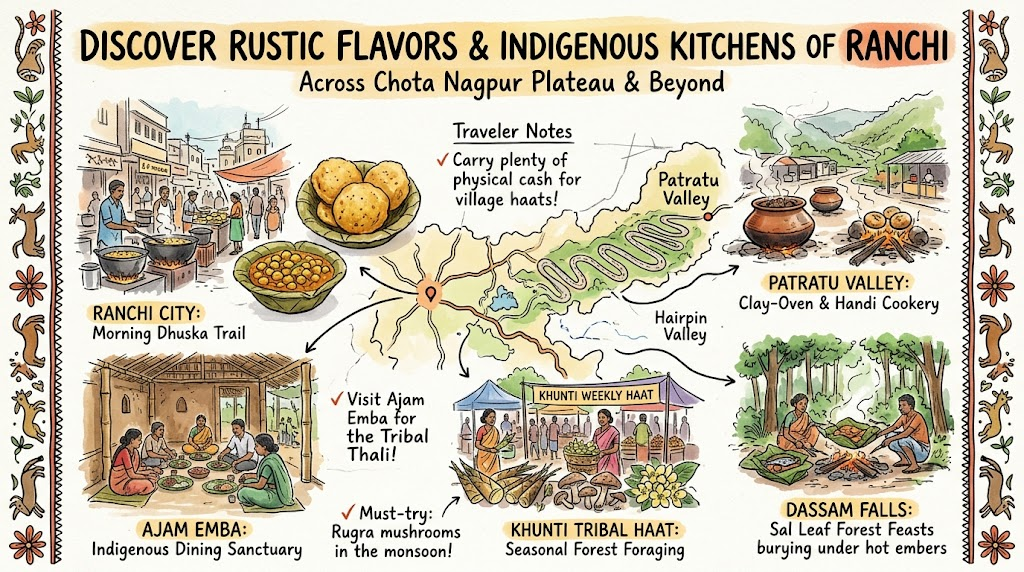
Walking beneath the corrugated roofing and open canopies reveals towering mounds of seasonal greens, wild bamboo shoots (karil), and regional specialties like rugra (indigenous earth truffles). It is an unmissable stop for anyone eager to understand the plateau’s foodways and sustainable culinary roots.
- Location: Main Road, Lower Bazaar, Ranchi (Approx. 1.8 km from Ranchi Junction)
- Why it is worth visiting: It offers an authentic look at Jharkhand’s tribal agricultural biodiversity and indigenous cooking ingredients.
- Best things to do: Source seasonal rugra mushrooms and fresh karil; discover indigenous whole spices; interact with regional vendors.
- Best time to visit: 7:00 AM to 10:00 AM when the morning produce arrives fresh from nearby villages.
- Ideal for whom: Culinary travelers, adventurous foodies, documentary photographers, and cultural explorers.
- Travel tip: Wear sturdy, washable closed shoes as the market passageways can get wet and muddy near the vegetable crates.

Potala Tibetan Market
Potala Tibetan Market Click to open side panel for more information is a vibrant seasonal winter collective established annually by Tibetan refuge communities and trans-Himalayan wool merchants. For decades, this marketplace has transformed open festival grounds into a cheerful bazaar filled with colorful knitwear, thick thermal apparel, and Himalayan goods.
The market provides exceptional quality woolens—from finely tailored cardigans and wool jackets to heavy fleece coats and hand-knit beanies. Its cheerful atmosphere and friendly shop owners make it a beloved cold-weather ritual for locals and winter visitors alike.
- Location: Circular Road, P&T Colony, Lalpur, Ranchi (Approx. 4 km north of Ranchi Junction)
- Why it is worth visiting: It provides high-grade, durable winter woolens and warm apparel at honest, pocket-friendly prices.
- Best things to do: Shop for thick Tibetan wool cardigans and windcheaters; purchase colorful mufflers and caps; browse Buddhist prayer flags and incense.
- Best time to visit: Late afternoon (3:00 PM to 6:00 PM) during its active operational window (October through February).
- Ideal for whom: Winter travelers, budget fashion hunters, families, and student shoppers.
- Travel tip: The market prices are generally fixed with small margins, so approach bargaining respectfully.

Nucleus Mall
For travelers looking to pair artisanal hunting with modern retail comfort, Nucleus Mall Click to open side panel for more information stands out as Ranchi’s most polished modern lifestyle destination. Spanning seven well-planned levels, this landmark center combines Indian high-street fashion labels with entertainment and dining.
It offers a comfortable, climate-controlled pause from bustling street bazaars. Here, you will find contemporary lifestyle outlets, cosmetics counters, a cinema, and a vibrant food court that serves regional snacks alongside global quick-service fare.
- Location: Circular Road, Lalpur, Ranchi (Approx. 4.2 km from Ranchi Junction)
- Why it is worth visiting: It is the city’s premier modern shopping hub for upscale apparel, electronics, and entertainment under one roof.
- Best things to do: Browse contemporary Indian fashion brands; grab refreshments at the food court; enjoy an evening movie.
- Best time to visit: 1:00 PM to 4:00 PM on weekdays for a calm and leisurely experience.
- Ideal for whom: Urban shoppers, families traveling with young children, and comfort seekers.
- Travel tip: Utilize the underground multi-level parking facility if you are driving a rental car or personal vehicle.
Offbeat Exploration: Hidden Gems Tourists Miss
Kusai Colony Bamboo Weaving Enclave
Tucked away near the southern bends of the Subarnarekha River corridor, Kusai Colony Click to open side panel for more information houses small multi-family workshops of traditional Mahli artisans. These craftsmen transform wild plateau bamboo into functional art, creating handwoven bread baskets, rustic lampshades, and garden fixtures right on their doorsteps.
Buying directly here channels financial support straight to these artisan families. It also gives travelers an intimate glimpse into the rhythmic dexterity required to split and weave bamboo canes without industrial machinery.
Doranda Bazar Antique & Silver Stalls
While most visitors focus solely on central Main Road, Doranda Bazar Click to open side panel for more information offers an offbeat walk through colonial-era heritage quarters. Among its quiet lanes are traditional jewelers who specialize in ethnic tribal silver ornaments, including chunky hasli neck collars, engraved anklets, and brass amulets.
These stalls often carry restored vintage brass cookware and ceremonial oil lamps. They provide an authentic destination for collectors searching for rustic home accents that large retail stores do not stock.
Detailed Practical Guidance for Travelers
| Destination | Standard Entry Fee | General Timings | Best Local Food Options Nearby | Recommended Nearby Attractions |
|---|---|---|---|---|
| Jharcraft Megastore | Free Entry | 10:00 AM – 7:00 PM | Kaveri Restaurant (North Indian & Thalis) | Albert Ekka Chowk, GEL Church Complex |
| Upper Bazar | Free Entry | 11:00 AM – 8:30 PM | Mohan Ji Kachori & Bhartiya Sweets | Pahari Mandir, Ranchi Lake |
| Firayalal Chowk | Free Entry | Open Public Intersection (Shops: 10:30 AM – 9:00 PM) | Radharani Sweets & Street Litti Stalls | Tagore Hill, Tribal Research Museum |
| Daily Market | Free Entry | 6:00 AM – 8:00 PM | Local roadside Dhuska and Bara stalls | Jagannath Temple, Rock Garden |
| Potala Tibetan Market | Free Entry | 10:00 AM – 8:30 PM (Seasonal: Oct–Feb) | Lalpur Momo corners and street tea kiosks | Morabadi Ground, Oxygen Park |
| Nucleus Mall | Free Entry | 10:00 AM – 11:00 PM | Multi-cuisine Food Court & Urban Cafes | Ranchi Science Centre, Tagore Hill |
Logistics & On-Ground Navigation
Local Transport Options
- Shared & Private E-Rickshaws (Totos): The quietest and most affordable way to travel short distances within the city center (fares range from ₹10 to ₹20 per shared hop).
- Auto-Rickshaws: Widely available across all major street crossings; always negotiate the fare upfront before boarding if the driver is not using a digital meter.
- App-Based Cabs (Ola/Uber): Ideal for traveling to outer craft pockets, waterfalls, or evening shopping with luggage; they offer fixed, hassle-free pricing.
- City Bus Network: Government city buses run along the main corridors (such as Ratu Road to Dhurwa), providing an economical choice for light backpackers.
Budget Planning
- Backpacker / Cultural Explorer Tier (₹1,000 – ₹1,800 per day):
- Accommodation: Clean budget guesthouse or traveler lodge near the station (₹700 – ₹1,000).
- Food: Street-side breakfast (Dhuska-Chana Ghugni) and local thalis (₹300 – ₹450).
- Commute: Shared e-rickshaws and public transport (₹100 – ₹150).
- Mid-Range / Comfort Shopper Tier (₹3,500 – ₹6,500 per day):
- Accommodation: 3-star boutique or business hotel in Lalpur or Main Road (₹2,200 – ₹4,000).
- Food: Established heritage restaurants and casual dining cafes (₹800 – ₹1,500).
- Commute: Dedicated private cabs for the entire day (₹1,200 – ₹1,800).
Safety and Inclusivity Tips
- For Families: The historic markets feature narrow, bustling alleys. Keep young children close by the hand, especially in Upper Bazar during evening trade hours.
- For Couples: Ranchi’s markets and shopping arcades are friendly and welcoming; casual, modest clothing matching regional sensibilities ensures effortless interactions.
- General Street Safety: Keep backpacks zipped and positioned forward in dense market areas; avoid carrying excessive cash, as digital UPI payments are accepted almost everywhere.
Strategic Travel Planning Guardrails
Travel Planning Tips for Ranchi
- Plan Around Seasonal Festivals: Plan your visit around Sohrai (harvest season in November) or Sarhul (spring) to see handcraft traditions celebrated live across local markets.
- Carry a Compact Reusable Tote: Bring a sturdy foldable cotton or jute tote bag, as many traditional street markets charge extra for paper carry bags.
- Embrace UPI Digital Payments: Scan-and-pay UPI QR codes work at nearly every tea stall, street vendor, and handloom store across Ranchi.
- Wear Comfortable Slip-On Footwear: Street shopping here involves continuous walking and stepping into traditional shoe-off textile showrooms.
- Check Holiday Closures: Upper Bazar and select retail pockets observe partial or full store closures on Sundays; plan your visits for Tuesday through Saturday.
Common Mistakes to Avoid
- Assuming Fixed Prices in Bazaars: Do not accept initial prices at unorganized street stalls; polite, respectful bargaining is standard practice outside government emporiums.
- Skipping Government Handloom Stores: Never overlook state-run stores like Jharcraft, assuming they are dull; they offer the highest grade of certified organic silk in the state.
- Taking Large Rental Cars into Old Bazaars: Navigating a large sedan through Upper Bazar or Daily Market will lead to frustrating traffic bottlenecks.
- Missing Street-Side Regional Food: Do not confine all your meals to hotel buffets; you will miss out on authentic local staples like crisp, fried dhuskas.
- Purchasing Bulk Goods on Day One: Avoid loading your luggage immediately; browse multiple artisan stalls to compare weave textures and brass weight before purchasing.
Suggested Itinerary Blueprints
1. Day Quick Dash (The Central Heritage Express)
Target Audience: Business travelers or weekenders on a tight, fast-paced timeline.
- Morning (9:00 AM – 12:00 PM): Start at Jharcraft Megastore to secure certified Tussar silks and Dokra showpieces in air-conditioned comfort.
- Afternoon (1:00 PM – 4:00 PM): Head to Firayalal Chowk; savor an authentic thali lunch followed by quick street-market browsing.
- Evening (5:00 PM – 8:00 PM): Finish the circuit at Nucleus Mall for casual evening leisure, specialty dining, and cafe relaxation.
2. Day Deep-Dive (The Artisan & Street Culture Explorer)
Target Audience: Curious culture travelers and dedicated handicraft collectors.
- Day 1: The Formal Artisanal Circuit
- Spend the morning exploring Jharcraft and adjacent khadi emporiums along Main Road.
- Enjoy a relaxed traditional meal featuring local seasonal curries.
- Dedicate the late afternoon to the quiet bamboo-weaving households of Kusai Colony.
- Spend your evening browsing handicrafts around the vibrant Albert Ekka Chowk.
- Day 2: The Historic Old-City Hustle
- Begin early at 7:30 AM taking in the vibrant agricultural displays of Daily Market.
- Savor a breakfast of piping hot dhuska and fried sweets at a legacy street sweet shop.
- Spend midday navigating the narrow wholesale textile and brass alleys of Upper Bazar.
- End your evening exploring the winter stalls at Potala Tibetan Market (seasonal) or Lalpur bazaar.
3. Complete Weekend Travel Plan (The Plateau Craft & Culture Circuit)
Target Audience: Travelers looking for an immersive 3-day deep dive into urban markets and local culture.
- Friday: Arrive and settle into your hotel. Spend your late afternoon visiting Jharcraft, followed by an evening stroll and street food around Firayalal Chowk.
- Saturday: Start with an energetic morning walk through Daily Market. Continue into the old lanes of Upper Bazar for textiles and brassware, and finish with a peaceful sunset visit to nearby Pahari Mandir.
- Sunday: Head south to explore the antique silver stalls of Doranda Bazar. Pick up bamboo crafts from Kusai Colony, and spend your final evening enjoying the food and shopping at Nucleus Mall.
Common Tourist Mistakes to Avoid
- Geographic Blunders: Grouping far-flung waterfalls like Hundru or Jonha with dense inner-city walking markets on the exact same morning causes unnecessary rushing and road fatigue.
- Commercial Traps: Spending your entire trip browsing standard, multi-brand fashion chains in modern malls, while skipping the rich, authentic handloom stores that make Jharkhand unique.
- Neglecting Modern/Alternative Zones: Overlooking pleasant residential shopping neighborhoods like Morabadi and Ashok Nagar, which host serene artisan pop-ups, quiet coffee roasters, and open park bazaars.
- Transport Overpayment: Agreeing to unmetered auto-rickshaw rides outside major transit hubs without checking rideshare estimates on Ola or Uber first.
- Luxury Dining Bias: Restricting your dining solely to upscale hotel dining rooms, which deprives you of tasting genuine street-side culinary staples like chilka roti, dhuska, and fresh forest chutneys.
Frequently Asked Questions
1. What is the most famous authentic souvenir to buy in Ranchi?
The most iconic souvenir from Ranchi is authentic Kuchai or Tussar silk, celebrated for its rich natural texture and golden sheen. Pair this with genuine Dokra brass artifacts, created using ancient lost-wax casting techniques by indigenous tribal artisans of the plateau.
2. Are credit and debit cards widely accepted across markets in Ranchi?
While large emporiums like Jharcraft and modern shopping malls accept all major credit and debit cards, street markets like Upper Bazar and Daily Market rely heavily on cash or UPI QR-code payments (via PhonePe, Google Pay, or Paytm).
3. Which market in Ranchi is best for budget clothing and wholesale shopping?
Upper Bazar is the premier wholesale market for budget apparel, fabrics, unstitched suit materials, and everyday ethnic wear. It houses hundreds of multi-generational dealers offering goods at wholesale prices that comfortably beat standard mall rates.
4. Where can tourists find authentic tribal jewelry in Ranchi?
Authentic tribal jewelry—including traditional brass cuffs, silver hasli neckpieces, and beaded adornments—is best sourced from Jharcraft emporiums or the heritage family-run goldsmith stalls nestled inside the historic alleys of Doranda Bazar.
5. What seasonal local foods should tourists sample while market-hopping?
Do not leave Ranchi without tasting dhuska (deep-fried spiced rice-and-lentil cakes served with spicy chana curry), rugra (wild plateau truffles available during the monsoons), and sweet, warm regional malpuas from old-city confectioners.
6. When is the best time of year to visit the Tibetan Market in Ranchi?
The Potala Tibetan Market operates seasonally during the cool autumn and winter months, typically opening in mid-October and running through February. It offers high-grade woolens, jackets, scarves, and cold-weather clothing brought by trans-Himalayan traders.
7. Is street shopping in Ranchi safe for solo female travelers?
Yes, street shopping in Ranchi is generally very safe and welcoming. As with any vibrant market across India, staying aware of personal belongings in dense crowds and opting for modest clothing ensures a comfortable and hassle-free experience.
8. What are the typical operating hours for local markets in Ranchi?
Most standalone shops and traditional bazaars open around 10:30 AM to 11:00 AM and wind down by 8:30 PM to 9:00 PM. Produce hubs like Daily Market start much earlier at 6:00 AM, whereas modern shopping malls remain open until 10:30 PM.
9. Are prices fixed in government handloom emporiums like Jharcraft?
Yes, prices at government-run institutions like Jharcraft and Khadi Gramodyog are fixed and non-negotiable. These prices reflect fair-wage remuneration for the tribal weavers and artisans who create the pieces, alongside certified Silk Mark authenticity.
10. How do I travel between Ranchi’s different shopping districts economically?
The most economical way to travel between city markets is by using shared electric rickshaws (Totos) or auto-rickshaws, which run fixed routes for ₹10 to ₹20 per trip. For greater comfort, app-based cabs provide quick, affordable point-to-point transit.
11. Is Upper Bazar open on Sundays?
Most wholesale establishments and retail textile shops in Upper Bazar remain closed on Sundays. However, a handful of street vendors and sweet shops stay open. It is best to schedule dedicated shopping trips from Tuesday through Saturday.
12. Can I ship large handicraft items directly from Ranchi to my home city?
Yes, major retail centers like Jharcraft can coordinate domestic courier shipping for high-value silk packages and heavy brass sculptures, or you can use reputable private courier hubs located along Main Road and Circular Road.
Conclusion
Choosing Ranchi’s lively bazaars over predictable, cookie-cutter shopping destinations offers a deeply satisfying journey into authentic regional artistry. Every handwoven Tussar silk weave, Dokra brass sculpture, and hand-carved bamboo keepsake carries a living piece of Jharkhand’s rich tribal heritage. As you pack your bags with handloom treasures and the lingering aroma of local street delicacies, you take home more than simple mementos—you preserve an authentic cultural story shaped by the welcoming spirit of the Chota Nagpur plateau.
