Introduction
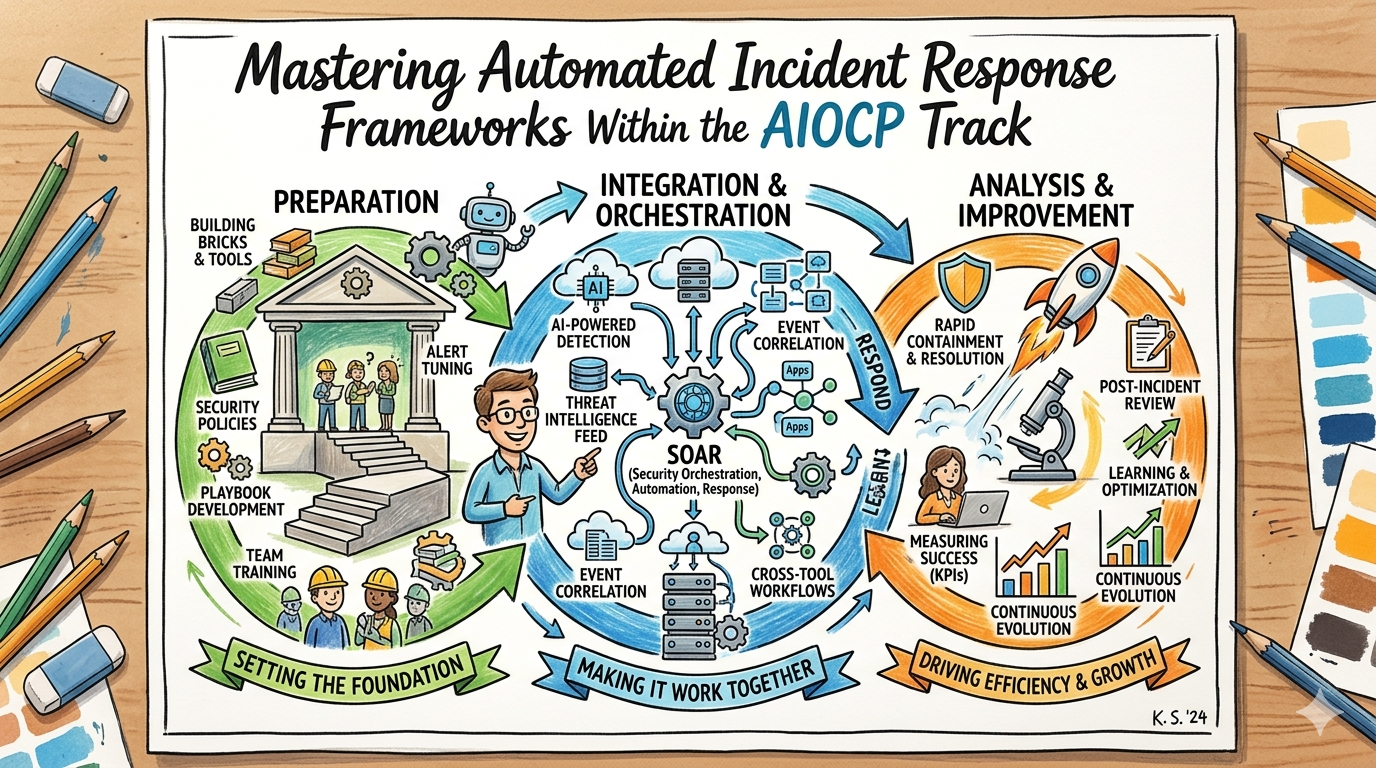
Artificial Intelligence for IT Operations is fundamentally changing how we monitor and manage modern infrastructure. The AiOps Certified Professional (AIOCP) is designed to help professionals understand and implement these intelligent automation systems. This guide is crafted for working engineers who want to integrate predictive analytics and machine learning into their daily operational workflows.
You can start your journey at aiopsschool to build a solid foundation. Whether you are troubleshooting complex microservices or proactively preventing system failures, this certification provides the practical knowledge needed. It will help you make informed career decisions and stay ahead in the rapidly evolving platform engineering space.
What is the AiOps Certified Professional (AIOCP)?
The AiOps Certified Professional (AIOCP) is a comprehensive program that bridges the gap between traditional IT operations and artificial intelligence. It exists because modern enterprise environments produce far too much telemetry data for manual human analysis. This certification emphasizes real-world, production-focused learning rather than just theoretical algorithms.
It aligns perfectly with modern engineering workflows by teaching you how to build self-healing systems and automate incident response. By focusing on practical enterprise practices, it ensures you can immediately apply what you learn to reduce alert fatigue and improve system reliability.
Who Should Pursue AiOps Certified Professional (AIOCP)?
This certification is highly beneficial for engineers, Site Reliability Engineers, and cloud professionals looking to upgrade their automation skills. Security and data roles will also find immense value in learning how advanced anomaly detection can improve their respective domains. It is suitable for both new engineers establishing a niche and experienced professionals wanting to modernize their toolset.
Engineering managers and technical leaders will gain the necessary perspective to lead intelligent automation initiatives within their teams. The practical skills taught are highly relevant for the growing tech market in India as well as global enterprise environments.
Why AiOps Certified Professional (AIOCP)
The demand for intelligent operations is growing rapidly as companies scale their complex cloud infrastructure. This certification offers longevity because it focuses on core principles of machine learning applied to operations, rather than fleeting tool-specific workflows. Enterprise adoption of intelligent automation means professionals with these skills are highly sought after.
It helps you stay relevant by teaching you how to adapt to new analytical tools and methodologies efficiently. The return on your time and career investment is substantial, opening doors to advanced engineering roles and leadership positions.
AiOps Certified Professional (AIOCP) Certification Overview
The program is delivered via the official curriculum and hosted on devopsschool to provide a structured learning environment. It offers different certification levels tailored to your current experience and career goals. The assessment approach is highly practical, ensuring you can solve actual operational challenges rather than just answering multiple-choice questions.
Ownership of your learning path is encouraged, allowing you to focus on the modules most relevant to your daily work. The entire structure is designed to build your competence progressively, moving from foundational concepts to advanced architectural design.
AiOps Certified Professional (AIOCP) Certification Tracks & Levels
The program is broken down into foundation, professional, and advanced levels to suit different stages of your career. The foundation level focuses on core concepts, professional tackles active implementation, and advanced covers strategic system architecture.
Specialization tracks are available to align with DevOps, SRE, and FinOps disciplines. This structure shows exactly how the levels map to your career progression and technical growth. You can easily choose the depth that matches your current responsibilities and your future ambitions.
Complete AiOps Certified Professional (AIOCP) Certification Table
| Track | Level | Who it’s for | Prerequisites | Skills Covered | Recommended Order |
| Core Operations | Foundation | Junior Engineers, Managers | Basic Linux, Scripting | Data ingestion, basic alerting, telemetry basics | 1 |
| Core Operations | Professional | SREs, DevOps Engineers | Foundation Certification | Anomaly detection, automated remediation | 2 |
| Architecture | Advanced | Principal Engineers, Architects | Professional Certification | Predictive modeling, system scaling, AI pipelines | 3 |
Detailed Guide for Each AiOps Certified Professional (AIOCP) Certification
AiOps Certified Professional (AIOCP) – Foundation Level
What it is
This certification validates your understanding of basic intelligent operations concepts. It covers how machine learning can be applied to standard monitoring and alerting workflows.
Who should take it
It is perfect for junior engineers, system administrators, and engineering managers. It sets the baseline for anyone intending to work with smart infrastructure.
Skills you’ll gain
- Understanding telemetry and data ingestion pipelines
- Reducing alert noise and configuring intelligent routing
- Basic principles of predictive monitoring
Real-world projects you should be able to do
- Setting up centralized logging with automated anomaly tags
- Creating dashboards that highlight predictive failure rates
- Configuring alert suppression for routine maintenance tasks
Preparation plan
- 7–14 days: Focus entirely on understanding core terminology and telemetry concepts.
- 30 days: Build a small lab environment to practice basic data ingestion.
- 60 days: Review enterprise use cases and take practice assessments to build confidence.
Common mistakes
Candidates often focus too much on learning data science algorithms instead of focusing on operational outcomes and infrastructure integration.
Best next certification after this
- Same-track option: AiOps Certified Professional (AIOCP) – Professional Level
- Cross-track option: DevOps Foundation Certification
- Leadership option: Engineering Management Foundation
AiOps Certified Professional (AIOCP) – Professional Level
What it is
This certification proves your ability to implement and configure intelligent automation tools in a production environment. It moves beyond theory into active system remediation.
Who should take it
Mid-level DevOps engineers, SREs, and cloud administrators should pursue this. It is intended for those who actively build and maintain infrastructure.
Skills you’ll gain
- Implementing automated root cause analysis tools
- Building self-healing scripts triggered by intelligent alerts
- Integrating machine learning models with incident management platforms
Real-world projects you should be able to do
- Automating server restarts based on predictive memory leak detection
- Building a pipeline that correlates security and operational logs
- Creating an incident routing system that assigns tickets based on past resolutions
Preparation plan
- 7–14 days: Review the foundation concepts and set up a complex monitoring lab.
- 30 days: Practice writing remediation scripts and integrating them with APIs.
- 60 days: Run failure simulations in your lab and ensure your automation resolves them correctly.
Common mistakes
Many candidates struggle because they lack sufficient scripting knowledge to build the automated remediation workflows required by the exams.
Best next certification after this
- Same-track option: AiOps Certified Professional (AIOCP) – Advanced Level
- Cross-track option: SRE Professional Certification
- Leadership option: Cloud Architecture Leadership
AiOps Certified Professional (AIOCP) – Advanced Level
What it is
This certification validates your ability to architect enterprise-grade intelligent operations platforms. It proves you can design systems that handle massive scale and complexity.
Who should take it
Principal engineers, cloud architects, and senior automation leaders. It requires deep technical knowledge and architectural vision.
Skills you’ll gain
- Designing custom telemetry pipelines for unique enterprise applications
- Evaluating and deploying custom machine learning models for infrastructure
- Architecting highly available self-healing distributed systems
Real-world projects you should be able to do
- Designing a global operations center powered entirely by predictive analytics
- Replacing legacy monitoring systems with unified intelligent platforms
- Creating custom machine learning models to predict rare system outages
Preparation plan
- 7–14 days: Study advanced architectural patterns and large-scale data handling.
- 30 days: Design complex system diagrams and review real enterprise case studies.
- 60 days: Build a proof-of-concept custom model and evaluate its performance against standard tools.
Common mistakes
Candidates often fail by designing solutions that are too complex and hard to maintain, ignoring the principle of simplicity in architecture.
Best next certification after this
- Same-track option: Deep Specialization in specific AI platforms
- Cross-track option: DataOps Architecture Certification
- Leadership option: VP of Engineering / Technical Director Training
Choose Your Learning Path
DevOps Path
The DevOps path integrates intelligent automation into continuous integration and delivery pipelines. You will learn how to use predictive analytics to identify deployment risks before they reach production. This path focuses heavily on accelerating release velocity while maintaining stability. It is ideal for engineers who manage the entire software development lifecycle.
DevSecOps Path
The DevSecOps path focuses on using intelligent systems to detect security anomalies and automate compliance checks. You will learn how to correlate operational data with threat intelligence to stop attacks proactively. This path ensures security is a continuous, automated process. It is built for professionals who want to secure cloud environments efficiently.
SRE Path
The SRE path is heavily focused on maintaining system reliability, optimizing error budgets, and reducing manual toil. You will utilize intelligent systems to automate incident response and perform instant root cause analysis. This path teaches you how to keep massive distributed platforms running smoothly. It is the perfect choice for dedicated reliability engineers.
AIOps Path
The dedicated AIOps path teaches you the core mechanics of applying machine learning directly to infrastructure management. You will master telemetry ingestion, alert correlation, and predictive system monitoring. This path focuses purely on transforming raw operational data into actionable automated responses. It is essential for modern operations specialists.
MLOps Path
The MLOps path guides you through the operational lifecycle of deploying and maintaining machine learning models. You will learn how to monitor model drift, automate model retraining, and ensure high availability for AI services. This path focuses on the infrastructure required to support data science workloads. It is critical for platform engineers supporting AI teams.
DataOps Path
The DataOps path applies operational principles to data pipelines and analytics workflows. You will learn how to automate data quality checks and ensure reliable data delivery across the enterprise. This path emphasizes reducing cycle times for data analytics. It is crucial for engineers managing large-scale data infrastructure.
FinOps Path
The FinOps path utilizes intelligent automation to optimize cloud costs and enforce financial accountability. You will learn how to predict cloud spending spikes and automate resource right-sizing. This path bridges the gap between engineering decisions and financial outcomes. It is ideal for architects focused on cloud efficiency.
Role → Recommended AiOps Certified Professional (AIOCP) Certifications
| Role | Recommended Certifications |
| DevOps Engineer | Foundation, Professional |
| SRE | Professional, Advanced |
| Platform Engineer | Professional, Advanced |
| Cloud Engineer | Foundation, Professional |
| Security Engineer | DevSecOps Specialization |
| Data Engineer | DataOps Specialization |
| FinOps Practitioner | FinOps Specialization |
| Engineering Manager | Foundation, Leadership Track |
Next Certifications to Take After AiOps Certified Professional (AIOCP)
Same Track Progression
After completing your initial level, the logical step is to move up the same track to deepen your expertise. If you finish Foundation, move to Professional to learn active implementation. Completing the Advanced level allows you to pursue vendor-specific master certifications to become a true domain expert.
Cross-Track Expansion
Broadening your skills across different tracks makes you a more versatile engineer. If you specialize in operations, taking a DevSecOps or FinOps certification will provide a holistic view of enterprise architecture. This cross-track knowledge is highly valued for solving complex, multi-domain system issues.
Leadership & Management Track
For those aiming to step away from daily technical execution, the leadership track is the best next step. It teaches you how to build technical teams, manage budgets, and align engineering goals with business objectives. These certifications prepare you to lead large-scale digital transformation initiatives.
Training & Certification Support Providers for AiOps Certified Professional (AIOCP)
DevOpsSchool
DevOpsSchool is a globally recognized platform offering specialized training for IT professionals seeking to upgrade their infrastructure skills. They focus heavily on practical, hands-on learning rather than just theoretical concepts. By participating in their programs, engineers can learn how to build, deploy, and monitor complex production environments. Their curriculum is constantly updated to reflect the most current industry standards and enterprise practices. Mentors at DevOpsSchool guide students through real-world scenarios, ensuring they are prepared for the challenges of modern software delivery. Whether you are transitioning from system administration or looking to master advanced cloud native architectures, DevOpsSchool provides a highly structured environment to help you achieve your career objectives effectively and confidently.
Cotocus
Cotocus serves as a premier consulting and training organization dedicated to transforming how enterprise teams approach software engineering and operations. They emphasize the integration of automation across the entire deployment lifecycle. Through their specialized courses, professionals learn how to implement scalable infrastructure solutions that reduce manual effort and minimize system downtime. The trainers bring extensive real-world knowledge into the classroom, sharing insights from large-scale enterprise implementations. Cotocus is particularly known for helping organizations bridge the gap between development and operations teams through practical methodologies. For an individual learner, this means gaining skills that are immediately applicable to production environments, making it a strong choice for those looking to advance their technical capabilities and operational intelligence.
Scmgalaxy
Scmgalaxy is a comprehensive community and training provider focused on software configuration management, build automation, and release engineering. They offer a vast library of resources and structured programs to help engineers master continuous integration and continuous delivery pipelines. Their approach is deeply technical, ensuring that learners understand the underlying mechanics of source code management and deployment strategies. Scmgalaxy provides hands-on labs that simulate real enterprise challenges, preparing students for high-stakes operational roles. By focusing on exact technical execution, they equip professionals with the tools needed to standardize and streamline complex software delivery processes. It is an excellent platform for individuals who want to specialize deeply in release management and operational stability across diverse cloud platforms.
BestDevOps
BestDevOps provides targeted training solutions designed to simplify the complexities of modern platform engineering and cloud infrastructure. Their courses are structured to deliver maximum practical value, cutting through industry noise to focus on what truly matters in production. They cater to both individuals and corporate teams, offering scalable learning paths that align with immediate business needs. BestDevOps focuses on building resilient systems, teaching engineers how to automate repetitive tasks and improve overall system reliability. Their expert instructors provide clear, step-by-step guidance on implementing effective automation frameworks. For IT professionals seeking to quickly upgrade their skill set and apply modern operational practices, BestDevOps offers a direct, highly effective route to mastering essential infrastructure technologies.
devsecopsschool
devsecopsschool specializes in integrating security practices directly into the software development and operations lifecycle. Their training programs are tailored for engineers who need to understand how to build secure systems without slowing down the deployment process. They teach practical methods for automating vulnerability scanning, compliance checks, and access controls within continuous integration pipelines. By learning through devsecopsschool, professionals can confidently implement proactive security measures across complex cloud environments. The curriculum focuses on real-world threat modeling and automated remediation strategies. For anyone looking to specialize in cloud security or platform engineering, this provider offers the critical knowledge required to protect enterprise assets while maintaining high-speed software delivery and operational efficiency.
sreschool
sreschool is dedicated to the discipline of Site Reliability Engineering, teaching professionals how to build and maintain highly available systems. Their programs focus on service level objectives, error budgets, and advanced incident response strategies. They provide practical training on how to monitor distributed systems and automate operational tasks to reduce manual toil. By engaging with sreschool, engineers learn the critical balance between releasing new features quickly and maintaining absolute system stability. The coursework is heavily focused on real-world reliability challenges, drawing from practices used by top technology companies. It is the perfect training ground for operations professionals who want to transition into dedicated reliability roles and master the art of keeping complex software platforms running smoothly.
aiopsschool
aiopsschool focuses exclusively on the intersection of artificial intelligence and IT operations, providing cutting-edge training for modern engineers. They teach professionals how to implement machine learning algorithms to automate anomaly detection, root cause analysis, and system remediation. Their curriculum is built around practical use cases, allowing learners to understand how predictive analytics can prevent system outages before they occur. The instructors at aiopsschool bring deep expertise in telemetry data analysis and intelligent automation frameworks. By studying here, engineers gain the ability to transform massive amounts of operational data into actionable insights. This makes aiopsschool an essential resource for those wanting to lead the next generation of automated, self-healing enterprise infrastructure environments.
dataopsschool
dataopsschool provides specialized education focused on streamlining data management and analytics workflows. Their courses teach engineers how to apply agile and operations principles to data pipelines, ensuring high data quality and faster delivery times. They cover essential topics like automated data testing, version control for data models, and continuous deployment of analytical systems. By training with dataopsschool, professionals learn to eliminate data silos and improve collaboration between data scientists and operations teams. The hands-on labs focus on building robust, scalable data architectures that can handle modern enterprise demands. For those building careers in data engineering or analytics operations, this platform offers the foundational and advanced skills necessary to drive reliable data delivery.
finopsschool
finopsschool is dedicated to the emerging field of cloud financial management, helping professionals understand how to optimize technology costs. Their training programs bridge the gap between engineering, finance, and business teams. They teach practical strategies for cloud cost allocation, usage optimization, and rate negotiation. Through finopsschool, engineers learn how to architect cost-effective systems without sacrificing performance or reliability. The curriculum emphasizes creating a culture of financial accountability within technical teams. By mastering these concepts, professionals can ensure their organizations maximize the business value of their cloud investments. It is an ideal training provider for engineering leaders and cloud architects who need to balance technical excellence with strict financial efficiency in modern enterprise environments.
Frequently Asked Questions
1. Is the AiOps Certified Professional (AIOCP) hard to pass?
It requires practical experience and study, but it is entirely manageable for those with a background in operations or system administration.
2. Do I need programming experience to start?
Basic scripting knowledge in Python or Bash is highly recommended, though deep software development experience is not strictly required.
3. How long does it take to prepare?
Most professionals prepare successfully in 30 to 60 days, depending on their prior experience with automation tools.
4. Can beginners take this certification?
Yes, the foundation level is designed specifically to introduce the core concepts to those new to intelligent operations.
5. Does it improve my salary prospects?
Yes, specialized automation skills are highly valued, often leading to better compensation in platform engineering roles.
6. Do I have to renew this certification?
Most technical certifications recommend renewal or upgrading to the next level every few years to stay current.
7. Is this relevant for managers?
Absolutely. Managers benefit greatly from understanding how these systems improve team efficiency and reduce downtime.
8. Can I study for this while working full-time?
Yes, the curriculum is designed with working professionals in mind, allowing for flexible, self-paced study.
9. Will this replace my current DevOps skills?
No, it enhances your existing skills by adding intelligent automation capabilities to your standard workflows.
10. Do I need a powerful computer for the labs?
Most lab environments are cloud-based, meaning a standard computer with a good internet connection is sufficient.
11. Does it cover specific vendor tools?
It focuses on core principles and methodologies that can be applied across various enterprise toolsets and platforms.
12. Is the training hands-on?
Yes, practical labs and real-world project scenarios are a core component of the learning experience.
FAQs on AiOps Certified Professional (AIOCP)
1. What makes the AiOps Certified Professional (AIOCP) different from standard cloud certifications?
Standard cloud certifications focus on how to provision and configure basic infrastructure within a specific provider’s ecosystem. The AiOps Certified Professional (AIOCP) focuses on what happens after the infrastructure is running. It teaches you how to apply machine learning to the massive streams of telemetry data generated by that infrastructure. The goal is to move from reactive monitoring to proactive, automated system management. This unique focus on intelligent data analysis and automated remediation sets it apart from traditional certifications that only cover standard operational practices.
2. How does the AiOps Certified Professional (AIOCP) help in reducing alert fatigue?
Alert fatigue happens when engineers are overwhelmed by hundreds of meaningless operational alerts daily. This certification teaches you how to implement intelligent event correlation. Instead of receiving ten different alerts for a single database failure, the system learns to group them into one actionable incident ticket. You learn how to suppress noise, prioritize critical issues, and apply historical data to ignore routine system spikes. By mastering these techniques, engineers can focus on actual problems rather than spending hours sifting through irrelevant operational noise.
3. Will the AiOps Certified Professional (AIOCP) teach me how to write machine learning algorithms from scratch?
No, the primary focus of this certification is not on deep data science or creating custom algorithms from scratch. Instead, it teaches you how to practically apply existing machine learning models and intelligent tools to operational challenges. You will learn how to configure anomaly detection, train models on your specific telemetry data, and integrate these capabilities into your incident response pipelines. It is about practical engineering and operations management rather than purely theoretical mathematics and algorithm development.
4. What kind of return on investment can a company expect from hiring an AiOps Certified Professional (AIOCP)?
Companies experience a significant return on investment through reduced system downtime and lower operational costs. A certified professional can automate routine troubleshooting tasks, allowing the engineering team to focus on building new features rather than fighting daily fires. Furthermore, predicting system failures before they impact customers protects the company’s reputation and revenue. The efficiency gained by having a self-healing infrastructure managed by a knowledgeable professional far outweighs the cost of training or hiring specialized talent in this domain.
5. How does this certification align with Site Reliability Engineering (SRE) practices?
The principles taught in this certification are natural extensions of Site Reliability Engineering. SRE focuses on maintaining service level objectives and eliminating manual toil through automation. The AiOps Certified Professional (AIOCP) provides the advanced tools to achieve these exact goals. By integrating intelligent predictive analytics into the SRE workflow, engineers can manage error budgets more effectively and resolve incidents faster. It essentially superpowers traditional SRE methodologies with data-driven automation, making it a highly complementary certification for reliability engineers.
6. Can I apply the skills learned in the AiOps Certified Professional (AIOCP) to legacy on-premise infrastructure?
Yes, the skills are highly transferable. While intelligent automation is frequently discussed in the context of cloud-native environments, the principles of data ingestion, alert correlation, and predictive analytics apply everywhere. Legacy systems often generate massive amounts of log data that are perfect candidates for machine learning analysis. You will learn how to extract this data and feed it into modern analytical platforms, bringing intelligent operational capabilities to older, on-premise infrastructure environments just as effectively as modern cloud setups.
7. Is the AiOps Certified Professional (AIOCP) recognized globally?
The methodologies and practical skills validated by this certification are aligned with global enterprise standards. Intelligent automation is a massive priority for organizations worldwide, from financial institutions in Europe to tech startups in India. Because the certification focuses on solving universal operational pain points—like reducing downtime and automating incident response—the skills are highly sought after in any market. Achieving this certification demonstrates a commitment to modern engineering practices that global technical recruiters actively look for.
8. What is the most challenging aspect of preparing for the AiOps Certified Professional (AIOCP)?
The most challenging part for many candidates is shifting their mindset from reactive troubleshooting to proactive system design. Engineers are often used to fixing things after they break. This certification requires you to think about how to use data to predict and automate the fix before the breakage occurs. Additionally, mastering the integration between various telemetry tools and automated scripting platforms requires hands-on practice. Dedicating sufficient time to building and testing scenarios in a lab environment is crucial for overcoming these challenges.
Final Thoughts: Is AiOps Certified Professional (AIOCP) Worth It?
Investing your time in the AiOps Certified Professional (AIOCP) is a highly practical decision if you work in modern infrastructure. The industry is moving rapidly away from manual system administration and toward data-driven, automated operations. This certification provides a structured, proven path to acquiring the exact skills needed for this transition.
It does not promise overnight success, but it equips you with the tools to solve complex operational problems efficiently. By focusing on real-world outcomes rather than theory, it ensures you can bring immediate value to your engineering team. If you want a resilient career in platform engineering or system reliability, this path is definitely worth pursuing.
